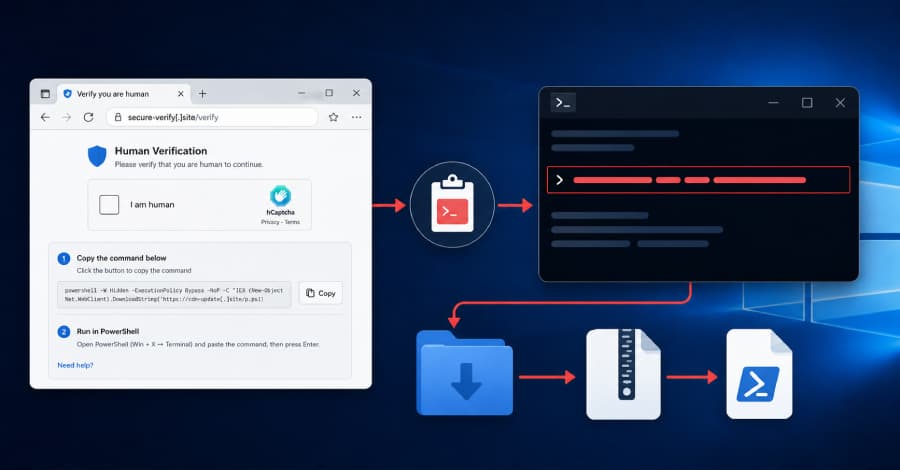
ClickFix, the trick that fools people into running malware by hand, has quietly grown a back office. New research shows the malicious commands behind its fake "prove you're human" pages are now handed out by API-driven servers that give each visitor the same malware in a different disguise. The same
Key Insights
10 editorial insights.
The analysis of 3,000 ClickFix payloads reveals a covert evolution in malware delivery, where API-driven servers now distribute malicious commands disguised as human verification prompts. This shift complicates detection and mitigation efforts, highlighting the need for enhanced cybersecurity measures to protect users from falling victim to these deceptive tactics.
Key players in this scenario include the developers behind ClickFix and cybersecurity firms that work to counteract such threats. Companies like CrowdStrike and FireEye are pivotal in dissecting and combating these API-driven attacks, as their expertise in threat detection is vital to safeguarding digital environments from evolving malware strategies.
This development underscores a strategic pivot in the malware landscape, where attackers are increasingly leveraging API technologies for distribution. As the industry grapples with this shift, firms must prioritize adaptive security frameworks to counteract the growing sophistication of malware delivery methods, which could reshape defensive strategies across the sector.
For businesses, the implications are profound, as the rise of API-driven malware could lead to increased operational costs and liability. Companies may need to invest significantly in advanced threat detection systems and employee training to mitigate risks, impacting budgets and diverting resources away from innovation and growth.
Over the past 12-24 months, there has been a noticeable trend towards the use of APIs in various cyber threats, driven by the increasing sophistication of cybercriminals. This trend indicates a broader movement towards more complex, layered attacks that exploit the interconnected nature of modern software development and deployment.
The global cybersecurity market is projected to grow from approximately $217 billion in 2021 to about $345 billion by 2026, representing a compound annual growth rate (CAGR) of around 9.7%. This rapid expansion reflects the escalating threats posed by malware like ClickFix, emphasizing the urgent need for robust security solutions.
The primary risks associated with this malware delivery method include the potential for widespread data breaches and significant financial losses for affected organizations. Additionally, the challenge of keeping pace with rapidly evolving cyber threats raises unresolved questions about the effectiveness of current cybersecurity protocols and frameworks.
Competitors in the cybersecurity space, such as Palo Alto Networks and McAfee, are likely to respond by enhancing their threat intelligence capabilities and promoting solutions that specifically address API vulnerabilities. This competitive landscape may lead to increased innovation as companies strive to differentiate their offerings in the face of sophisticated malware threats.
In the next 6-12 months, watch for potential regulatory milestones, including increased scrutiny on API security practices and the establishment of more stringent compliance requirements for software developers. These developments could influence how companies approach security in their development cycles and the tools they choose to implement.
Ultimately, the significance of this analysis for technology professionals and investors lies in recognizing the evolving threat landscape. As malware delivery methods become more sophisticated, the demand for advanced cybersecurity solutions will only grow, presenting both challenges and opportunities for those engaged in technology investment and development.
Recent findings reveal a significant escalation in the use of ClickFix, an API-driven malware scheme that manipulates users into executing malicious commands. This development is crucial as it highlights the evolving nature of malware distribution, posing increased risks to both individual and organizational cybersecurity. Understanding these tactics is essential for tech professionals and users alike, especially in the face of growing cyber threats.
ClickFix operates by using deceptive "prove you're human" pages that trick users into executing malware. The innovation lies in its API-driven architecture, which allows for dynamic command distribution. Each user is served a unique version of the same malware, obscuring its nature and complicating detection efforts. This method leverages automated systems to enhance scalability and efficiency, making it challenging for traditional security measures to respond effectively.
In the broader cybersecurity landscape, the proliferation of API-driven malware underscores a troubling trend toward automation in cybercrime. Competitors in the malware space are increasingly adopting similar tactics, reflecting a shift in how threats are orchestrated. Market research indicates that the global cybersecurity market is projected to reach $345.4 billion by 2026, driven in part by the rise of sophisticated malware techniques like ClickFix.
For India, the implications of ClickFix are profound. As a burgeoning tech hub, the country is home to numerous startups and enterprises that rely heavily on digital platforms. The increased sophistication of malware poses a direct threat to these businesses, particularly in sectors such as fintech and e-commerce, where user trust is paramount. Indian cybersecurity firms must adapt their strategies to counteract these evolving threats.
Key Highlights
- New research reveals ClickFix's API-driven malware distribution
- Utilizes dynamic command generation to evade traditional security
- Cybersecurity market projected to reach $345.4 billion by 2026
- Startups in India, particularly in fintech, are most vulnerable
- Expect increased regulatory scrutiny on cybersecurity measures
Real-World Impact
The rise of ClickFix and similar malware schemes is immediately affecting cybersecurity professionals, software developers, and businesses across various sectors. Companies must prioritize strengthening their security frameworks and educating employees on recognizing deceptive tactics, particularly in user interaction scenarios. As threats become more automated and harder to trace, job roles focused on cybersecurity will become more critical.
Why This Matters
This trend signifies a pivotal shift in how malware is distributed and executed, emphasizing the need for enhanced security protocols. CTOs and developers must reassess their current defenses, implementing more robust API security measures and continuous monitoring systems. Adapting to these changes will be vital in protecting sensitive data and maintaining user trust.
As the threat landscape evolves, keeping a close eye on emerging malware tactics like ClickFix will be crucial. Organizations should prepare for an increase in regulatory requirements surrounding cybersecurity and invest in advanced detection technologies.
Found this useful? Share it!