OSINT Isn’t About Skill Anymore. It’s About Systems
The profile looked clean. Too clean. No messy posts from five years ago. No awkward phase. No late-night arguments that should have been deleted but weren’t. Just a smooth timeline, polished like it had been sanded down and rebuilt. People used to call that discipline. Now it reads like infrastructu
v. Splicer
Original Source
Dev.to
https://dev.to/numbpill3d/osint-isnt-about-skill-anymore-its-about-systems-4jdkThe profile looked clean.
Too clean.
No messy posts from five years ago. No awkward phase. No late-night arguments that should have been deleted but weren’t. Just a smooth timeline, polished like it had been sanded down and rebuilt.
People used to call that discipline.
Now it reads like infrastructure.
Most analysts still think OSINT is about what you can find. They picture a person, a laptop, maybe a few browser tabs open, pulling threads until something gives. That model hasn’t aged well. Not because the techniques stopped working, but because the environment changed underneath them.
The raw material is different now. The volume is obscene. The signals don’t sit still. And more importantly, the people you’re investigating are starting to understand how they’re seen.
That changes everything.
The Illusion of Individual Skill
There was a time when OSINT felt like a craft.
You learned how to pivot from a username. You memorized niche search operators. You got good at reading metadata, spotting reused photos, tracing domain registrations. It had the shape of a discipline where individual ability mattered. The more you practiced, the better you got. Clean inputs, clean outputs.
That illusion still hangs around. It’s comfortable. It flatters the analyst.
But it breaks the moment you scale.
Because OSINT is no longer about finding one thing. It’s about managing thousands of weak signals that only mean something when they’re seen together. And no human, no matter how sharp, can reliably hold that many threads in their head without a structure to support it.
The problem isn’t that people lack skill. It’s that skill alone doesn’t survive contact with volume.
You can be excellent at manual investigation and still miss the obvious pattern sitting across fifty data points. Not because you’re careless, but because the system you’re working inside can’t show it to you.
So you compensate. You open more tabs. You take more notes. You build fragile little workflows in your head. It feels like progress, but it’s just friction accumulating.
Eventually, something slips.
It always does.
The Quiet Shift Toward Systems
What replaced skill wasn’t a single tool or technique. It was a shift in how the work is structured.
The people who are effective now aren’t necessarily the ones who know the most tricks. They’re the ones who build environments where those tricks become unnecessary or at least secondary.
They think in pipelines, not steps.
Collection is automated or semi-automated. Data flows into a place where it can be normalized, tagged, and revisited. Relationships are stored, not remembered. Queries can be rerun without starting from scratch. Patterns emerge because the system allows them to.
It sounds obvious when you say it out loud. Of course you would want that.
But most people don’t actually work this way. They still operate in sessions. Sit down, investigate, close everything, move on. Each case is treated like a separate island.
That approach doesn’t scale, and it doesn’t compound.
Systems do.
A good OSINT system does three things quietly, almost invisibly:
It preserves context. Not just what you found, but how you found it and why it mattered at the time.
It reduces cognitive load. You don’t have to remember every pivot because the system holds those connections for you.
It enables iteration. You can revisit old data with new questions without rebuilding everything from zero.
Without those properties, you’re just doing digital archaeology with a very short memory.
The Data Is No Longer Passive
There’s another problem people don’t like to talk about.
The targets are adapting.
Five years ago, most individuals didn’t think about how their online presence could be analyzed as a system. They posted casually. They reused handles. They leaked patterns without realizing it.
Now, even moderately aware users are fragmenting themselves.
Different usernames across platforms. Separate email accounts. Compartmentalized social circles. Sometimes this is intentional. Sometimes it’s just the byproduct of platform design. Either way, the result is the same.
The data you’re collecting is no longer a single coherent identity. It’s a set of partial masks.
And those masks are getting better.
If you’re still approaching OSINT as a linear process, find a handle, pivot, extract, you’re going to hit dead ends that look like privacy but are really just fragmentation.
The response isn’t to get more clever with individual pivots. It’s to change how you aggregate and correlate.
You stop asking, “What can I find about this person?”
You start asking, “What system would make this person visible again?”
That’s a different kind of question. It pushes you away from tactics and into design.
Building Instead of Hunting
Most people approach OSINT like a hunt.
You have a target. You gather tools. You go out and look for traces.
That mindset works for small, contained problems. It fails when the environment is fluid and adversarial.
A systems approach flips the direction.
Instead of chasing data, you build a structure that attracts and organizes it. You define inputs, you standardize how information is stored, and you create ways to query across it that don’t depend on your memory.
This is where things start to feel less like investigation and more like engineering.
You might have a database that stores usernames, emails, domains, and associated metadata. Each new piece of information is not just an endpoint. It’s a node that can be linked to others.
You might have scripts that periodically check for changes. New posts, updated profiles, domain expirations. The system keeps watching even when you’re not actively investigating.
You might integrate tools that enrich your data automatically. Geolocation hints, language patterns, posting times. Individually, these signals are weak. Together, they form something closer to a fingerprint.
None of this is glamorous. It doesn’t look like the dramatic OSINT threads people like to post.
But it works.
And once it’s in place, it compounds in a way that manual skill never will.
Where Most People Stall
There’s a predictable point where people stop.
They recognize that systems matter. They start building something. Maybe a note-taking setup, maybe a small database, maybe a collection of scripts.
And then they hit friction.
The system becomes harder to maintain than the work itself. Data gets messy. Naming conventions drift. Queries break. The structure that was supposed to reduce effort starts demanding more of it.
So they abandon it.
They go back to ad hoc investigation, telling themselves they’ll “clean it up later.” Later never comes.
The issue isn’t that systems are inherently complex. It’s that most people try to build them all at once, without a clear model of what they actually need.
They overfit early. Too many fields, too many categories, too many assumptions about how the data will be used.
Then reality doesn’t match the model, and everything starts to feel brittle.
A better approach is slower, almost restrained.
You start with something minimal that captures relationships. Not perfection, just enough structure to avoid losing context.
You let it get used. You watch where it breaks. Then you adjust.
It’s less satisfying in the short term. There’s no sense of having built a complete system.
But it survives contact with real work.
The Role of Automation
Automation gets misunderstood in this space.
People either ignore it completely or try to automate everything at once.
Neither approach holds up.
Automation isn’t about replacing the analyst. It’s about removing the parts of the process that don’t benefit from human attention.
Repetitive data collection. Routine checks. Simple correlations.
If you’re manually refreshing profiles, copying data between tools, or re-running the same searches, you’re spending cognitive energy on tasks that a system could handle quietly in the background.
That energy should be reserved for interpretation.
Because interpretation is still where humans matter. For now.
The system gathers and organizes. You decide what it means.
When people say OSINT is becoming less about skill, this is what they’re reacting to. The mechanical parts of the work are being absorbed into systems. What remains is the ability to ask better questions and recognize patterns that aren’t explicitly labeled.
That’s a different kind of skill. Less about technique, more about judgment.
A Short List For Thinking About
If your current workflow depends on any of these, you’re operating in the old model:
• You rely on memory to track relationships between entities
• You start each investigation from a blank slate
• You manually repeat the same searches across cases
• You store findings in static notes that can’t be queried dynamically
None of these are fatal on their own. Together, they create a ceiling you won’t break through.
You can get very good within that ceiling. You can even outperform people who have worse habits.
But you won’t scale.
The New Shape of Expertise
So what does expertise look like now?
It’s quieter.
It doesn’t announce itself through clever tricks or obscure tools. It shows up in how cleanly someone can move through a problem without losing context.
An experienced analyst today is someone who has built a system that makes them look faster and more accurate than they actually are.
Because the system is doing part of the thinking.
(see what i did there? cheeky grin)
That’s the part people resist. It feels like cheating, or at least like outsourcing something that should be internal.
But every field that deals with complexity ends up here.
You build scaffolding around your cognition so you can operate at a higher level.
Refusing to do that doesn’t make you more skilled. It just makes you slower.
What This Means Going Forward
The gap is going to widen.
Not between beginners and experts in the traditional sense, but between people who build systems and people who don’t.
The former will accumulate context over time. Every investigation feeds the next. Patterns that were invisible become obvious because they’ve been seen before in a slightly different form.
The latter will keep rediscovering the same things.
It won’t feel like they’re falling behind. Each individual investigation can still be successful. The work still “works.”
But it doesn’t compound.
And in an environment where data is increasing and identities are fragmenting, non-compounding workflows quietly become obsolete.
You don’t notice it all at once. It shows up as missed connections, slower turnaround, a vague sense that things are harder than they should be.
Most people attribute that to the world getting more complex.
It is.
But the real issue is that their approach hasn’t adapted.
The Part No One Wants to Admit
There’s a psychological cost to this shift.
When skill is the center of the work, success feels personal. You found something. You connected the dots. It’s your win.
When systems take over part of the process, that feeling gets diluted. The system found something, or at least made it obvious.
Some people don’t like that.
They want the work to feel like a craft, not an engineered process. They want to be the one pulling the threads, not the one maintaining the loom.
That preference is understandable.
It’s also limiting.
Because the people who let go of that attachment and focus on building systems are the ones who end up seeing more, faster, with less effort.
Not because they’re smarter.
Because they stopped trying to do everything in their head.
A Final Shift
There’s a moment, if you spend enough time in this space, where your attention changes.
You stop looking at individual data points as things to extract. You start seeing them as inputs to a larger structure.
A username isn’t just a lead. It’s a node.
A timestamp isn’t just context. It’s a signal.
A pattern isn’t something you notice. It’s something your system surfaces.
At that point, OSINT stops feeling like investigation.
It starts feeling like control.
And once you’ve experienced that, going back to pure manual skill feels like trying to navigate a city with a paper map after you’ve already seen the satellite view.
You can still get where you’re going.
It just takes longer, and you miss what’s right in front of you.
If your system can’t remember for you, it’s not a system.
Obsidian is where I built mine.
Details are here:
Obsidian + Claude Daily Ops System: Automate Your Entire Intel & Tooling Pipeline
Obsidian OSINT Workflows — Intelligence Mapping for the Local Analyst
Found this useful? Share it!
Read the Full Story
Continue reading on Dev.to
Related Stories
Majority Element
about 2 hours ago
Building a SQL Tokenizer and Formatter From Scratch — Supporting 6 Dialects
about 2 hours ago
Markdown Knowledge Graph for Humans and Agents
about 2 hours ago
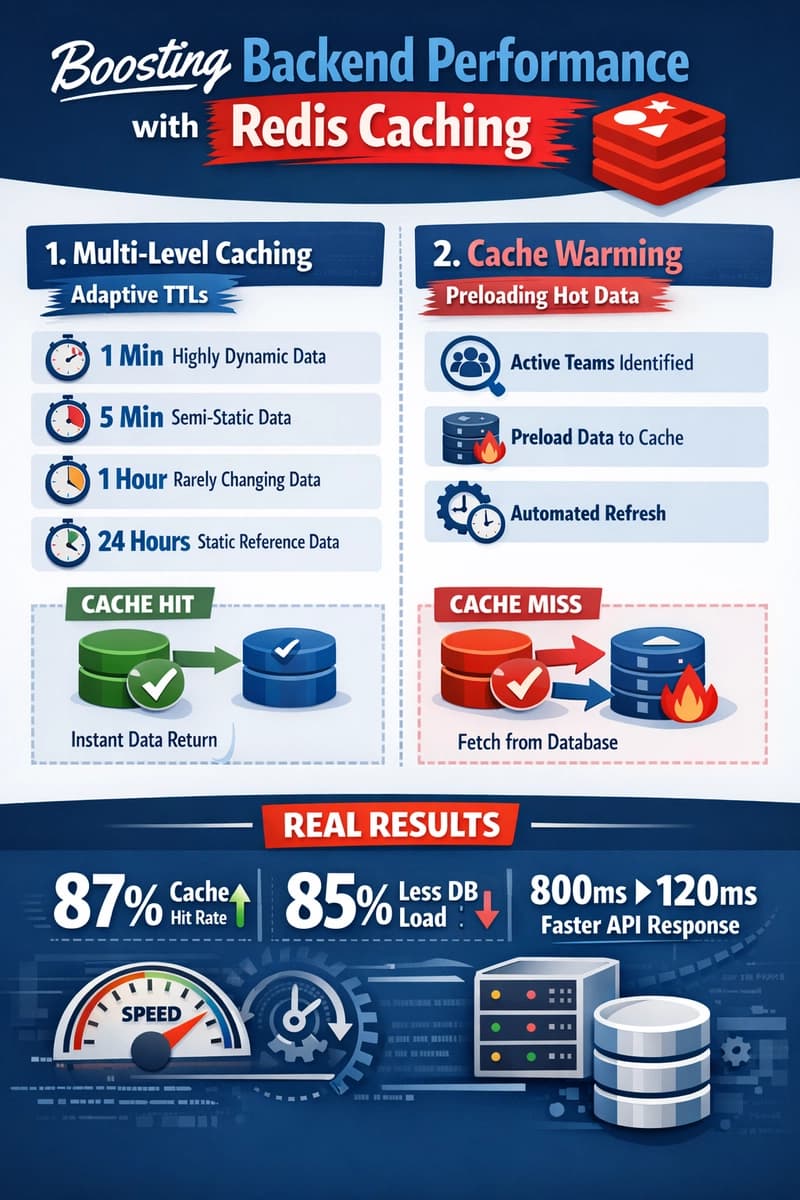
Moving Beyond Disk: How Redis Supercharges Your App Performance
about 2 hours ago