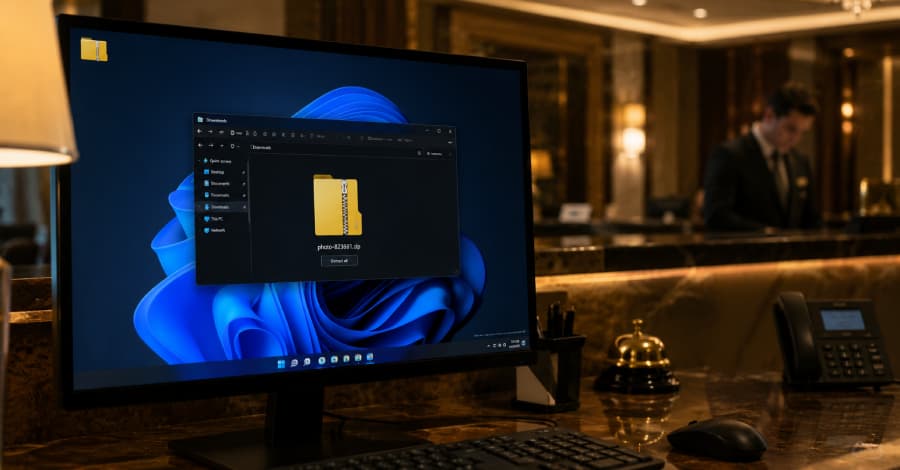
An active phishing campaign has been targeting hotel and other hospitality organizations across Europe and Asia since April 2026, using photo-themed ZIP files to drop a Node.js implant and dig into front-desk machines, Microsoft says. The company has not attributed the activity to a known threat act
Key Insights
10 editorial insights.
The recent phishing campaign targeting hotels through photo-themed ZIP files highlights a sophisticated method of attack, leveraging social engineering to bypass traditional security protocols. This is significant as it exposes vulnerabilities in hospitality IT systems that are often less protected compared to other sectors, prompting an urgent need for improved cybersecurity measures across the industry.
Microsoft's identification of this campaign underscores the company's increasing focus on cybersecurity threats in the hospitality sector. Given Microsoft's dominant role in enterprise software, their insights are crucial as they provide a benchmark for security practices that hotels and similar organizations should adopt to mitigate risks.
This development is strategically important as it reveals a shift in the tactics employed by cybercriminals, moving towards more targeted phishing schemes rather than broad-based attacks. The hospitality industry, which often relies on customer-facing technology, must now prioritize cybersecurity to protect sensitive customer data and maintain trust.
The impact on hotel chains could be significant, as breaches could lead to customer data theft and financial losses. If sensitive information is compromised, hotels may face hefty fines under GDPR and other regulations, in addition to reputational damage that can deter future business.
This incident connects to a larger trend of increasing cyberattacks targeting service-oriented sectors, especially as remote work and digital transactions have surged during the pandemic. The hospitality industry's reliance on digital solutions makes it a prime target, reflecting a broader market vulnerability that necessitates enhanced cybersecurity protocols.
The global cybersecurity market was valued at approximately $217 billion in 2021, projected to grow at a CAGR of over 10% through 2028. As the hospitality sector becomes more aware of phishing threats like this campaign, investment in cybersecurity solutions is expected to increase, potentially driving market growth further.
The primary risks arising from this campaign include the possibility of widespread data breaches and the challenge of maintaining customer trust in a sector already reeling from pandemic-related setbacks. Unresolved questions remain regarding the specific vulnerabilities exploited and the measures that can effectively counteract such targeted attacks.
Competitors in the hospitality sector, particularly those with less robust cybersecurity frameworks, may feel pressure to enhance their security measures in response to this campaign. Additionally, technology vendors may pivot to offer tailored cybersecurity solutions for hotels to address these emerging threats.
In the next 6-12 months, watch for potential regulatory responses aimed at tightening data security requirements for the hospitality sector. As incidents like this increase, regulators may impose stricter compliance measures, compelling companies to invest in more comprehensive cybersecurity strategies.
The ultimate bottom-line significance for technology professionals and investors lies in the recognition that cybersecurity is now a fundamental component of operational strategy for hospitality businesses. As threats evolve, there is an increasing opportunity for tech firms to innovate and provide solutions that effectively address these vulnerabilities, potentially leading to lucrative investment opportunities.
A sophisticated phishing campaign has emerged, targeting hotels and hospitality organizations across Europe and Asia since April 2026. The attack leverages photo-themed ZIP files to deploy a Node.js implant, compromising front-desk systems. This escalation in cyber threats is particularly alarming for the hospitality sector, which is still recovering from the pandemic's impact and must now contend with heightened cybersecurity vulnerabilities.
The phishing campaign operates by enticing users to download seemingly innocuous ZIP files that contain malicious code. Once activated, this code installs a Node.js implant, allowing attackers to infiltrate front-desk systems and extract sensitive information. This method highlights a growing trend toward using legitimate-looking files to bypass security protocols, emphasizing the need for robust endpoint protections. Microsoft has noted that while this campaign is active, it hasn't attributed it to any known threat actors, suggesting a potentially new or evolving group behind these attacks.
The hospitality industry, particularly in regions like Europe and Asia, is gradually digitizing its operations, which has inadvertently expanded its attack surface. Competitors in the sector are increasingly investing in cybersecurity measures, driven by the need to protect customer data and maintain trust. As data breaches and cyberattacks become more prevalent, the industry is expected to spend over $20 billion on cybersecurity in the next five years, reflecting a shift in strategic priorities that could reshape competitive dynamics.
In India, the impact of this phishing campaign could be significant, particularly for the rapidly growing hospitality sector, which includes major hotel chains and boutique establishments. As these businesses adopt more digital tools for operations, they become prime targets for sophisticated cyber threats. Indian companies like OYO and Taj Hotels need to bolster their cybersecurity defenses, ensuring that staff are trained to recognize phishing attempts and that systems are equipped with advanced threat detection capabilities.
Key Highlights
- Hotels are urged to enhance cybersecurity protocols immediately.
- The Node.js implant can access sensitive front-desk data.
- The hospitality sector may invest over $20 billion in cybersecurity over five years.
- Small and mid-sized hotels stand to gain from improved security measures.
- Ongoing monitoring of cyber threats is essential for all hospitality businesses.
Real-World Impact
The immediate effects of this phishing campaign will be felt across the hospitality sector, particularly among IT and cybersecurity teams. Front-desk staff may require additional training to recognize phishing attempts, while hotel management must prioritize investments in cybersecurity solutions. Additionally, third-party vendors providing digital services to hotels will also need to strengthen their security protocols to protect against potential breaches.
Why This Matters
This incident underscores a larger shift in the cyber threat landscape, where industries like hospitality are increasingly targeted due to their substantial customer data holdings. CTOs and developers should prioritize implementing advanced security measures, such as multi-factor authentication and regular employee training, to mitigate risks. A proactive approach to cybersecurity will be essential in maintaining customer trust and safeguarding organizational integrity.
As cyber threats continue to evolve, the hospitality industry must remain vigilant. One key area to watch is the implementation of AI-driven security solutions, which could provide real-time threat detection and response capabilities. Staying ahead of these trends will be crucial for organizations looking to protect themselves in an increasingly digital world.
Found this useful? Share it!