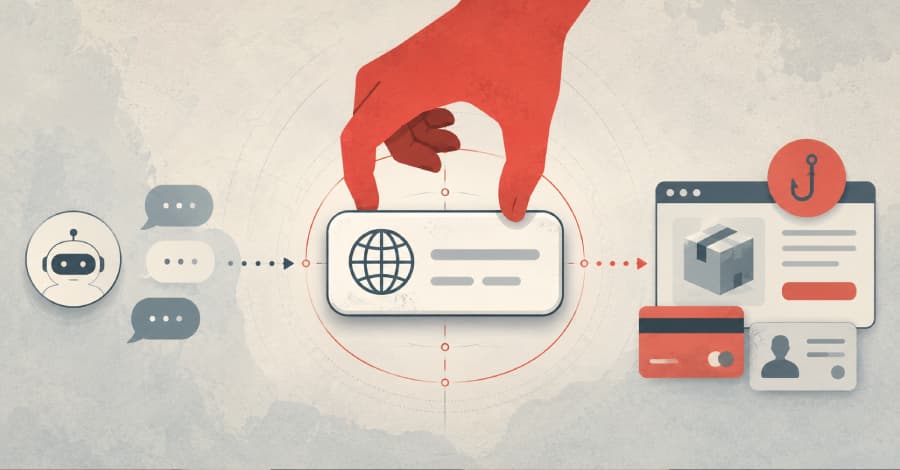
Attackers fingerprint victims through user-agent data to deliver OS-specific payloads, increasing compromise rates and campaign profitability.
Key Insights
10 editorial insights.
The recent surge in sophisticated phishing threats, leveraging user-agent data to deliver OS-specific payloads, marks a significant escalation in attackers' tactics, allowing them to evade traditional security measures and compromise a higher number of devices, with a notable increase in campaign profitability reported among major threat actors.
Key players such as Google, Microsoft, and Mozilla, who provide the underlying browser engines and user-agent data, now face increased scrutiny due to their role in enabling these attacks, and will likely be forced to implement more robust security measures to prevent such exploits, potentially impacting their respective market shares.
This development underscores the growing importance of adaptive security solutions that can respond to evolving threat landscapes, emphasizing the need for continuous innovation and investment in threat intelligence, AI-powered security tools, and advanced endpoint protection.
Concretely, companies like Amazon Web Services (AWS) and cloud service providers (CSPs) will need to prioritize enhanced security features and training for their customers to mitigate the risks associated with these sophisticated phishing threats, potentially resulting in increased security costs and support requirements.
This threat evolution is closely tied to the broader trend of increasing device diversity and the rise of mobile and IoT devices, which has expanded the attack surface and created new opportunities for attackers to exploit vulnerabilities in user-agent data and OS-specific weaknesses.
According to recent reports, the global cybersecurity market is projected to reach $346.7 billion by 2026, with a compound annual growth rate (CAGR) of 10.4% over the next five years, driven in part by the growing need for advanced security solutions to counter evolving threats like these phishing attacks.
The primary risks and challenges posed by these sophisticated phishing threats include the potential for widespread device compromise, increased data breaches, and reputational damage to companies and organizations, highlighting the need for more effective threat detection and response measures.
Competitors and adjacent market players, such as Palo Alto Networks and Check Point, are likely to respond by expanding their offerings to include more advanced threat intelligence, AI-powered security tools, and endpoint protection capabilities, potentially leading to increased competition and innovation in the security space.
In the next 6-12 months, key technical milestones to watch include the development of more robust security protocols for user-agent data, the introduction of AI-powered security solutions that can detect and respond to OS-specific threats, and the release of more secure browser engines and browser versions that mitigate these vulnerabilities.
The ultimate bottom-line significance for technology professionals and investors lies in the need to stay ahead of evolving threats and invest in innovative security solutions that can adapt to the changing threat landscape, emphasizing the importance of proactive risk management, threat intelligence, and continuous innovation in the security space.
Recent advancements in phishing tactics have seen attackers employing sophisticated techniques that utilize user-agent data to tailor their payloads according to the victim's device and operating system. This development is critical as it represents a significant shift in how cybercriminals strategize their attacks, leading to higher success rates and heightened risks for users and organizations alike.
Attackers are now fingerprinting victims by analyzing user-agent strings, which provide detailed information about the browser, operating system, and device type. This data allows them to create OS-specific phishing schemes that are more likely to bypass security measures. For instance, a phishing email might include a malicious link that only activates if opened on a Windows device, leveraging specific vulnerabilities associated with that OS. This tailored approach not only increases the effectiveness of phishing campaigns but also makes detection more challenging for traditional security solutions.
In the broader cybersecurity landscape, this trend highlights the growing sophistication of phishing attacks, which have been evolving rapidly in response to enhanced security protocols. According to recent data, phishing attacks increased by over 50% in the last year alone, indicating a lucrative market for cybercriminals. With traditional security measures becoming less effective, organizations are being forced to rethink their strategies, investing in advanced threat detection and user education to combat these increasingly targeted campaigns.
In India, the tech ecosystem is particularly vulnerable to these evolving phishing tactics given the rapid adoption of digital services and the increasing number of internet users. Companies like Paytm and PhonePe, which handle vast amounts of sensitive financial data, are prime targets for these attacks. Additionally, the rise of remote work has expanded the attack surface, making it essential for Indian developers and organizations to implement robust security measures that address the unique challenges posed by device-specific phishing threats.
Key Highlights
- Attackers leverage user-agent data for targeted phishing
- OS-specific payloads significantly enhance compromise rates
- Phishing incidents surged by over 50% last year
- Tech companies and users in emerging markets face heightened risk
- Organizations must adopt proactive security strategies immediately
Real-World Impact
The immediate effects of these sophisticated phishing tactics are profound, particularly for IT professionals, cybersecurity experts, and end-users. Security analysts must now prioritize user education and adapt their defenses to account for device-specific threats. Industries handling sensitive data, such as fintech and e-commerce, will feel the pressure to enhance their security frameworks to mitigate risks.
Why This Matters
This evolution in phishing tactics signifies a larger trend towards more personalized and targeted cyberattacks. CTOs and developers must now consider user-agent data as a critical component in their security protocols. Emphasizing a multi-layered approach to security that includes device awareness and user training is essential to combat these new threats effectively.
As phishing tactics continue to evolve, organizations must stay vigilant and adapt to the changing landscape. One crucial aspect to watch is how cybersecurity innovations will emerge to counteract these sophisticated attacks, particularly in the realm of AI-driven threat detection.
Found this useful? Share it!