How I Got a Google Merchant Center Misrepresentation Suspension Lifted Without Contacting Support
I've been running Google Ads for e-commerce clients since 2013. In that time I've seen Shopping campaigns get hit with almost every policy violation imaginable. But a Merchant Center misrepresentation suspension is different. It's not a feed error. Google won't tell you exactly what triggered it. An
Ishant Sharma
I've been running Google Ads for e-commerce clients since 2013. In that time I've seen Shopping campaigns get hit with almost every policy violation imaginable. But a Merchant Center misrepresentation suspension is different. It's not a feed error. Google won't tell you exactly what triggered it. And submitting a reconsideration request without actually fixing the root cause just burns your one shot and resets the clock.
This is the process I used to get a client's account reinstated. No support ticket. No back-and-forth with reps. Just fixing what Google's crawlers were actually flagging.
What does a Google Merchant Center misrepresentation suspension actually mean?
When Google suspends a Merchant Center account for misrepresentation, it means their automated systems found a gap between what the site claims and what a real customer would actually experience. That gap can be almost anything: missing policies, checkout friction, contact information that doesn't match, prices that differ between the feed and the live site, or a returns policy that exists in the feed but not on the website.
The notification reads like a catch-all because it is one. Google groups a wide range of trust signals under this policy, which makes diagnosing it harder than a standard feed rejection.
Why most reconsideration requests fail the first time
The mistake most account managers make is submitting the request too fast. They see the suspension, they skim Google's policy page, they add a contact form and a returns policy page, and they click submit. Google's crawler comes back, finds the same underlying issue, and the request gets denied.
Then you're waiting 7 days or more before you can try again.
In my client's case, the account was for a niche hardware e-commerce store running on nopCommerce. The site had been live for years with a clean feed history. The suspension came out of nowhere in the middle of an active campaign.
How to diagnose what actually triggered the suspension
Before touching anything in the account, I ran through this checklist on the live website.
Business identity and contact signals
Is there a visible physical address on the contact page and in the site footer? Does the phone number work and match the address country? Does the "About Us" page describe who actually runs the business, not just what they sell? This sounds basic, but a lot of sites have a contact form with no actual address or phone number. Google's crawlers look for this. If they can't find a real human point of contact, the site fails the business identity check.
Policy pages
Is there a standalone Privacy Policy page? Not a cookie banner, not a paragraph buried in the Terms and Conditions. A dedicated /privacy-policy URL that Google can crawl and index. Is the Returns and Refunds policy specific? Vague language like "ships within a few business days" or "returns accepted" with no timeframe will flag. Is there a Shipping policy that names carriers and gives real delivery windows?
Payment icons and accepted methods
This one catches people off guard. If your site displays payment icons in the footer or on product pages, those icons have to match what actually works at checkout. A site that shows Visa, Mastercard, PayPal, and Amex icons but only processes Visa and Mastercard is a misrepresentation signal. Google's crawler reads those icons as implied promises. We found a client's footer showing six payment icons from a previous payment gateway. Three of them were no longer supported. That alone can trigger a suspension.
Checkout experience
Can a guest complete a purchase without being forced to create an account? Are the prices on product pages exactly what's in the feed, including tax display consistency? Are there any checkout steps that feel broken or incomplete on mobile?
SSL and technical trust signals
Is the entire site served over HTTPS with no mixed content? Do all policy page URLs resolve without redirects?
What we actually found
In this client's case, there were four issues, not two.
The site had no standalone Privacy Policy page. There was a paragraph buried in the Terms and Conditions about data use, but Google's crawler expects a dedicated /privacy-policy URL it can index separately.
The returns policy page returned a 404 on mobile due to a platform-level URL caching bug in nopCommerce. The feed had a returns_policy attribute pointing to that page, and on desktop it resolved fine. On mobile it didn't. Neither of us had caught it because we always tested on desktop.
The contact page had a form but no phone number and no physical address. There was an email address, but no other signal that a real business was behind the site.
The footer showed payment icons for three methods that were no longer connected to the active payment gateway. They were left over from an earlier integration and nobody had removed them.
None of these were obvious from normal use. That's why the account had been clean for years. A platform update broke the mobile URL, and the other three issues had always been there, sitting under the threshold until something else changed.
What we fixed before submitting the reconsideration request
Created a standalone Privacy Policy page
We wrote a privacy policy covering data collection, third-party sharing (Google Ads remarketing pixels), cookie use, and contact information for privacy requests. We put it at /privacy-policy and linked it in the site footer and in the checkout flow. Then we submitted it to Google Search Console for indexing and waited 48 hours before touching anything else.
Fixed the returns policy URL
We identified the nopCommerce URL caching issue on mobile, patched it, and verified the /returns-policy URL resolved correctly on both desktop and mobile across three browsers. We updated the Merchant Center feed to point to the corrected URL.
Updated the contact page
We added a physical address and a phone number to the contact page and mirrored both in the site footer. The address had to be real and verifiable. We also made sure the phone number had a voicemail greeting that mentioned the business name, because that's a trust signal too.
Removed mismatched payment icons
We stripped the footer down to only the payment methods the checkout actually accepted. We also added an explanatory line below the icons that read "Secure checkout processed by [gateway name]" to add one more layer of clarity.
Audited all policy pages for specificity
Vague shipping windows got replaced with specific carrier names and delivery timeframes. The returns policy got a clear "30 days from delivery date" statement with step-by-step instructions for initiating a return.
Added structured data to policy pages
We added WebPage schema to the privacy policy and returns pages to help Google's crawler identify them as policy content rather than general informational pages.
Waited 5 full days
This part is hard when a client's Shopping campaign is paused and revenue has stopped. But submitting before Google's crawler has re-indexed the changes is one of the most common reasons reinstatement requests get denied. We used Search Console's URL Inspection tool to confirm all affected pages were indexed before we touched the reconsideration form.
How to write the reconsideration request
Be specific. Don't write "we updated our policies." Write:
"We created a standalone Privacy Policy page at [URL], now linked in the site footer and checkout flow. We resolved a mobile URL resolution bug in our platform that was causing the returns policy page to return a 404 on mobile. We updated the contact page to include a physical business address and phone number. We removed three payment icons from the site footer that no longer corresponded to active payment methods. Both policy pages are now indexed in Google Search Console as of [date]."
Specific dates and URLs tell Google's reviewers you understand what was wrong. Vague language tells them you're guessing.
How long did reinstatement take?
Seven days after submission, the account status changed from "Suspended" to "Active." No communication from Google. No rep involvement. Shopping campaigns went back live the same day.
The client had lost about 11 days of Shopping traffic total, from suspension to reinstatement. Because we didn't rush the submission, we got through it in one attempt.
What to do if the reconsideration request gets denied
If your first request gets denied, don't resubmit the same fixes. Go deeper. Use a different device or a VPN and visit the site as a first-time visitor with no prior sessions. Look at the checkout from the perspective of someone who's never heard of the brand.
Common things that get missed on second diagnosis: auto-applied discount codes that lower the checkout price below the feed price, pop-ups that interrupt checkout on mobile, or a phone number that goes to voicemail with no business name in the greeting. Also check your payment icons again. Any icon that doesn't match actual checkout capability is a liability.
Google's systems are looking for trust signals. The checklist above is a starting point, not a complete answer. Every site has its own version of the problem.
I run paid media and SEO for e-commerce brands at Hustle Marketers. If you've dealt with a Merchant Center suspension and found something I didn't cover here, drop it in the comments. Real-world edge cases are more useful than theory.
Found this useful? Share it!
Read the Full Story
Continue reading on Dev.to
Related Stories
Majority Element
about 2 hours ago
Building a SQL Tokenizer and Formatter From Scratch — Supporting 6 Dialects
about 2 hours ago
Markdown Knowledge Graph for Humans and Agents
about 2 hours ago
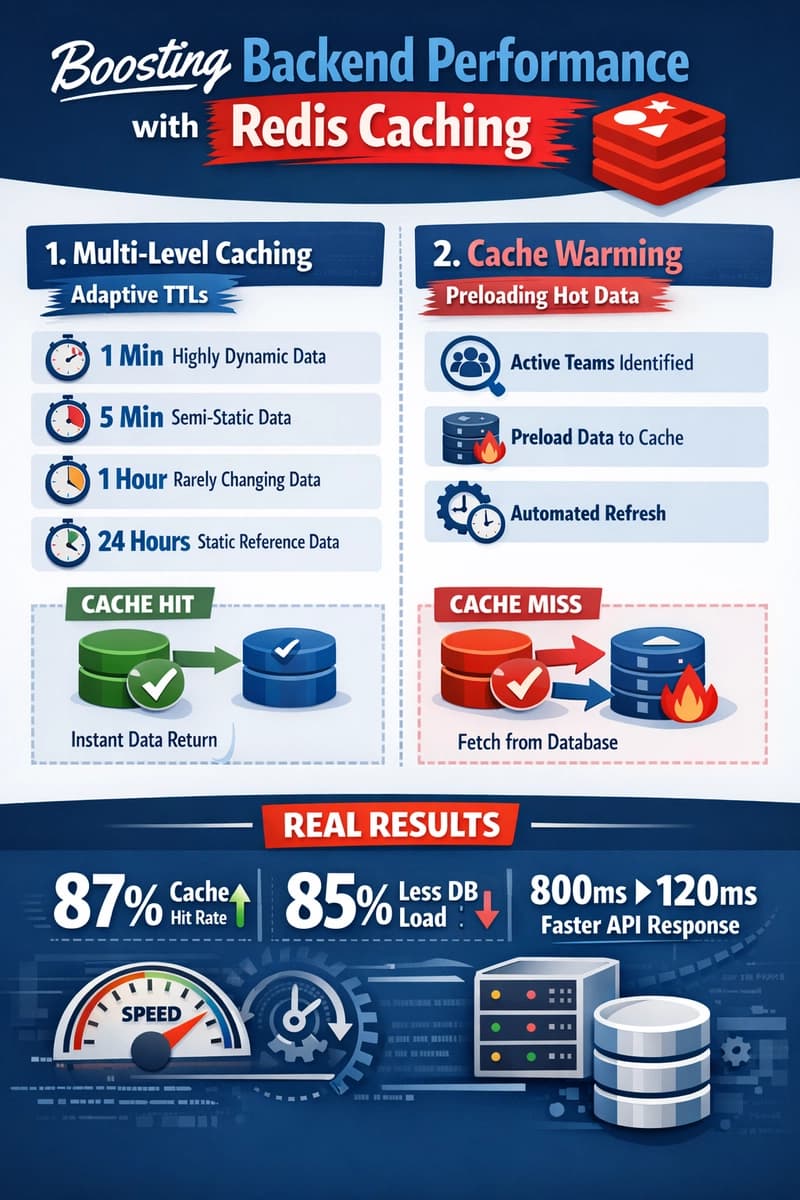
Moving Beyond Disk: How Redis Supercharges Your App Performance
about 2 hours ago