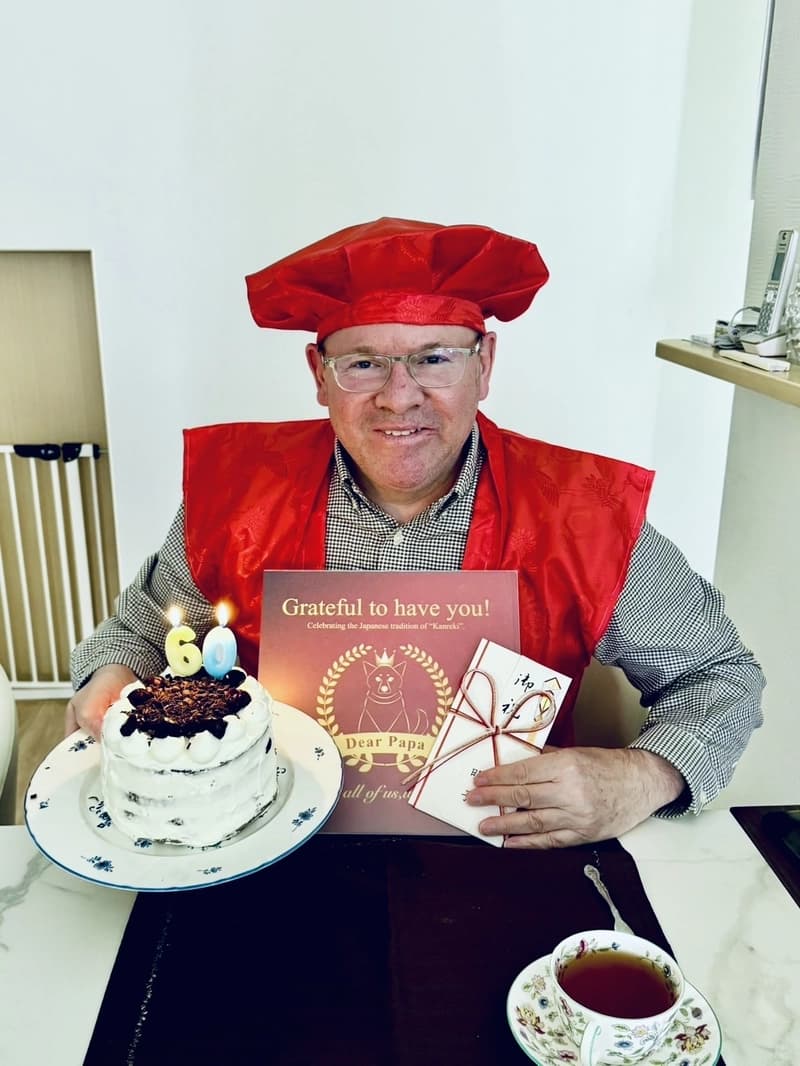
The morning of January 1st, 2026, I turned 60 — a milestone that in Japan carries a significance far beyond the usual birthday fanfare. I celebrated my kanreki (還暦), one of the most meaningful longevity celebrations in Japanese culture. The word itself tells the story: kan (還) means "return" and rek
Rick Cogley
The morning of January 1st, 2026, I turned 60 — a milestone that in Japan carries a significance far beyond the usual birthday fanfare. I celebrated my kanreki (還暦), one of the most meaningful longevity celebrations in Japanese culture.
What is Kanreki?
The word itself tells the story: kan (還) means "return" and reki (暦) means "calendar." At 60, you've completed a full cycle of the traditional East Asian zodiac calendar and symbolically returned to your birth year.
Think of it like an odometer rolling over. The zodiac system combines 12 animals (the jūnishi) with 5 elements (wood, fire, earth, metal, water), each appearing in both yin and yang forms. Multiply these together — 12 × 5 = 60 — and you get the complete cycle. When you turn 60, the same animal-element combination that marked your birth year comes around again.
I was born in 1966, the Year of the Fire Horse — hinoe-uma (丙午) in Japanese. This year, 2026, is once again hinoe-uma. The circle is complete.
The Fire Horse's Shadow
Being born hinoe-uma carries a peculiar weight in Japan. An old superstition holds that women born in Fire Horse years possess a fierce, strong-willed temperament that brings misfortune to their husbands—even, in darker versions of the tale, driving them to early graves. The belief is baseless, of course, but its demographic impact was strikingly real: Japan's birth rate dropped by roughly 25% in 1966 as families avoided having daughters in that year.
The superstition traces back centuries, reinforced by kabuki plays and folk tales featuring hinoe-uma women as dangerous figures. It's a sobering example of how cultural narratives can shape actual human decisions at a national scale.
For those of us born male in 1966, the stigma never applied directly—though we still carry that fire-horse energy, for whatever that's worth. And now, with 2026 marking the first hinoe-uma year since 1966, demographers are watching closely to see whether the old belief still influences family planning in modern Japan.
The Red of Rebirth
The most recognizable symbol of kanreki is the akai chanchanko — a red padded vest traditionally worn by the celebrant, often paired with a red cap called an eboshi or zukin. Red carries deep meaning here: it's the color associated with babies in Japan, representing a symbolic rebirth. Having completed one full life cycle, you begin another.
There's also a practical folk belief at work. Red was thought to ward off evil spirits and illness—protection that seemed especially appropriate as one entered the later chapters of life.
A Tradition Transformed
Kanreki's meaning has shifted over generations. When life expectancy was shorter, reaching 60 genuinely meant entering old age. The celebration acknowledged that you'd lived a full life and were now an elder deserving of respect and, frankly, rest.
Today, with people commonly living into their 80s and 90s, 60 feels less like an ending and more like a transition—perhaps the start of a new chapter rather than the final pages. Many people are still working, traveling, and starting new projects at 60. The "rebirth" metaphor feels apt in a different way: not returning to infancy, but having the freedom and experience to begin something new.
The Longevity Calendar
Kanreki is just the first in a series of Japanese age celebrations, each with its own name and meaning:
| Age | Color | Name | Meaning |
|---|---|---|---|
| 60 | 還暦 (kanreki) | Return of the calendar | |
| 70 | 古希 (koki) | Rare since ancient times | |
| 77 | 喜寿 (kiju) | Joy and celebration | |
| 80 | 傘寿 (sanju) | Umbrella year | |
| 88 | 米寿 (beiju) | Rice year | |
| 90 | 卒寿 (sotsuju) | Graduation year | |
| 99 | 白寿 (hakuju) | White longevity | |
| 100 | 百寿 (hyakuju) | Century celebration |
Each milestone builds on the last, a kind of curriculum for growing old with intention and community recognition.
Beginning Again
Standing at this threshold, I find myself thinking less about what I've accumulated and more about what comes next. The zodiac has reset. The calendar has returned to its starting point. The Fire Horse rides again.
There's something clarifying about that image—the idea that experience doesn't just pile up linearly but can circle back, offering a fresh vantage point on familiar terrain. Sixty years of context, zero years into the next cycle.
The chanchanko may be a bit theatrical for daily wear, but the idea it represents stays with me: that reaching a milestone isn't about looking backward at the distance covered, but about recognizing you're standing at a new beginning.
How do you mark significant birthdays? I'd be curious to hear about milestone traditions from other cultures.

Originally published at cogley.jp
Rick Cogley is CEO of eSolia Inc., providing bilingual IT outsourcing and infrastructure services in Tokyo, Japan.
Found this useful? Share it!
Read the Full Story
Continue reading on Dev.to
Related Stories
i.MX6ULL Porting Log 02: Project Layout, a Serial Port Trap, and the Current Board Baseline
about 2 hours ago
Why Your AI Coding Agent Keeps Failing at Specialized Tasks (and How to Fix It)
about 2 hours ago
What Rotifer Protocol Is Not: Positioning Beyond the AGI Hype
about 2 hours ago

Microsoft's Agent Governance Toolkit and Where Rynko Flow Fits In
about 2 hours ago