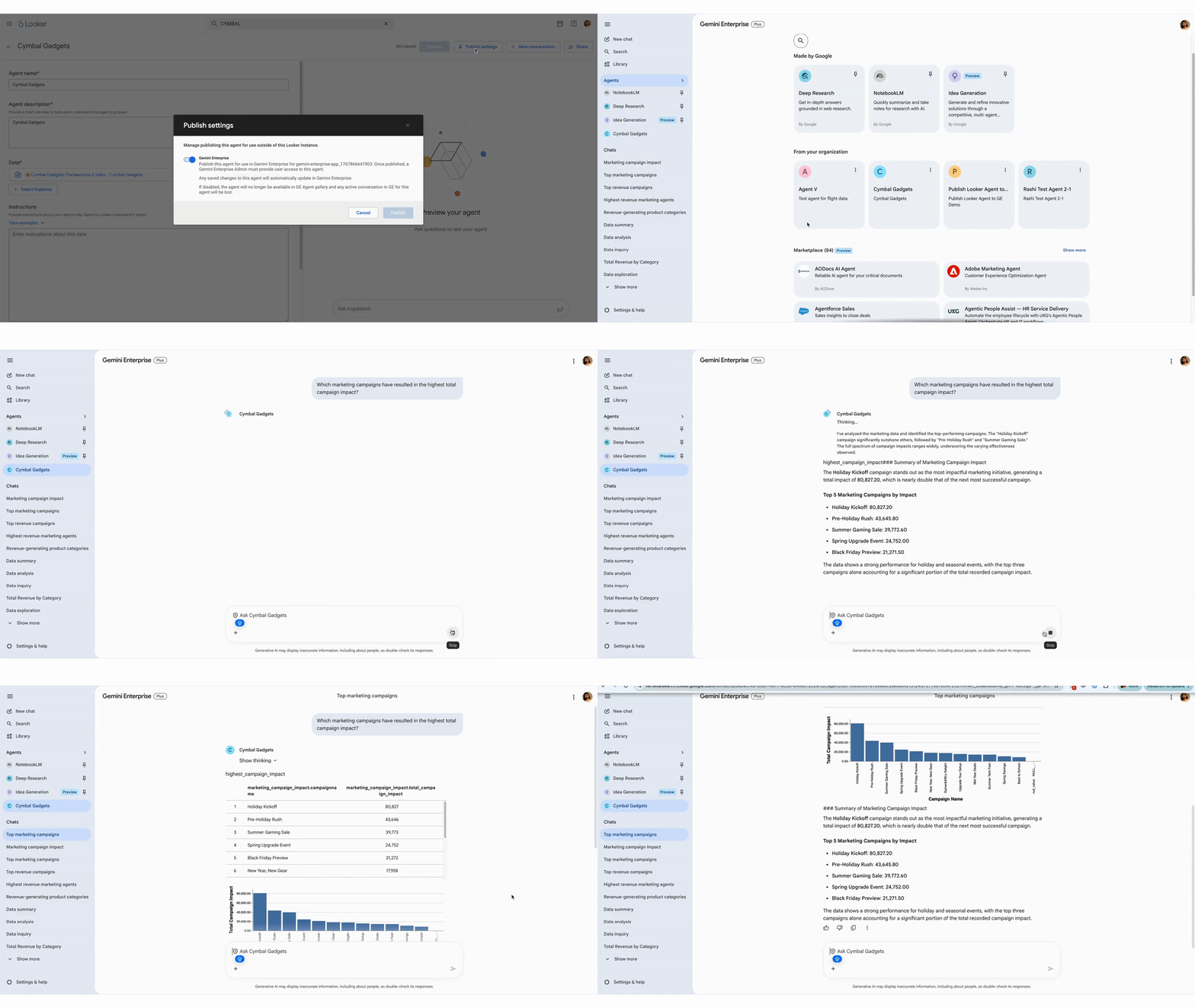
For organizations deploying AI agents at scale, there’s often a critical divide between structured and unstructured data. While large language models (LLMs) excel at parsing text documents, emails, and PDFs, they can struggle when presented with raw enterprise databases. Meanwhile, standard natural-
Key Insights
10 editorial insights.
Gemini Enterprise has upgraded its data governance capabilities using Looker's semantic layer, bridging the gap between structured and unstructured data for AI-driven insights. This development matters now as organizations increasingly deploy AI agents at scale, requiring seamless data integration.
The integration of Looker's semantic layer into Gemini Enterprise works by providing a unified data model that allows for effortless interaction between different data sources, including enterprise databases and unstructured data. This is made possible through Looker's ability to create a metadata layer that simplifies data access and analysis, enabling large language models (LLMs) to parse complex data sets more effectively.
In the broader industry context, this move reflects a trend towards enhanced data governance and semantic layers as key enablers of AI scalability. Competitors such as Tableau and Power BI also offer data governance solutions, but Looker's semantic layer stands out for its flexibility and ease of use. Market data indicates a growing demand for such solutions, with the global data governance market expected to reach $3.6 billion by 2025.
In the Indian tech ecosystem, this development is particularly significant for companies like Tata Consultancy Services (TCS) and Infosys, which provide AI-driven services to global clients. Indian developers working on AI projects will also benefit from the streamlined data integration and governance offered by Looker's semantic layer, enhancing their ability to work with complex data sets and deliver insights more efficiently.
Key Highlights
- Released an enhanced data governance capability
- Features a unified data model for simplified data access
- Expected to reach a $3.6 billion market size by 2025
- Benefits Indian developers and companies like TCS and Infosys
- Next development expected to focus on further AI scalability
Real-World Impact
The immediate effect of this development is on data analysts, AI engineers, and business intelligence professionals, who will experience improved data integration and analysis capabilities. This will lead to more accurate insights and better decision-making across industries, particularly in finance, healthcare, and technology.
Why This Matters
This represents a strategic shift towards prioritizing data governance and semantic layers in AI scalability. CTOs and developers should focus on adopting similar solutions to enhance their data analysis capabilities and stay competitive in the market. This requires a deeper understanding of data integration and governance best practices.
Looking ahead, the key thing to watch is how Gemini Enterprise and other companies leverage enhanced data governance to drive AI innovation. As the industry continues to evolve, the importance of seamless data integration and governance will only grow.
Deep Analysis
Multi-Source Intelligence
Found this useful? Share it!