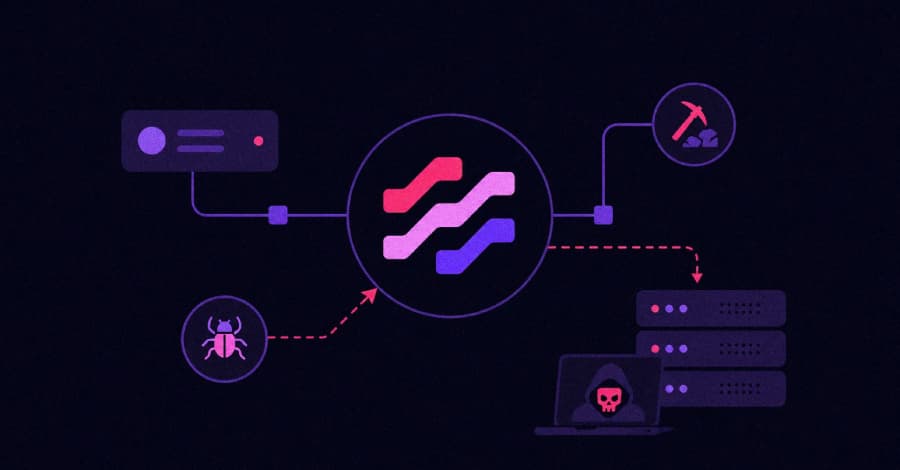
Threat actors are continuing to exploit a critical Langflow vulnerability as part of fresh attacks designed to deliver a Monero cryptocurrency miner. The activity has been found to weaponize CVE-2026-33017 (CVSS score: 9.3), an unauthenticated remote code execution (RCE) vulnerability in Langflow, i
Key Insights
10 editorial insights.
The exploitation of the Langflow vulnerability, CVE-2026-33017, highlights the growing trend of cybercriminals targeting AI applications for financial gain. By deploying a Monero miner, attackers are leveraging the exposed endpoints for illicit cryptocurrency mining, which poses immediate risks to operational integrity and resource availability for affected organizations.
Langflow, being a platform utilized for developing AI applications, has now found itself in the crosshairs of threat actors. Key players in this space include companies like OpenAI and Google, which rely on similar frameworks; thus, the implications of this vulnerability extend beyond Langflow to affect broader AI development environments.
This incident underscores the critical need for robust security measures in AI development tools. As organizations increasingly adopt AI technologies, the strategic importance of securing these applications cannot be overstated, particularly in light of rising cybersecurity threats, making proactive security a business imperative.
The deployment of a Monero miner through this vulnerability can lead to significant financial losses for companies relying on Langflow, both from resource drain and potential downtime. Developers may face increased operational costs while also needing to invest in remediation and preventive measures, impacting overall project budgets.
Over the past 12-24 months, there has been a marked increase in cyberattacks targeting development frameworks and platforms, reflecting a broader trend of attackers shifting focus from traditional enterprise targets to supply chains and development tools. This signals a worrying evolution in attack vectors, emphasizing the need for heightened awareness and preparedness.
The global cybersecurity market is projected to grow from approximately $200 billion in 2023 to over $300 billion by 2026, indicating a strong demand for security solutions. As incidents like the Langflow exploitation become more common, companies are likely to allocate more resources towards securing their development environments, driving market growth.
The primary risks associated with this vulnerability include the potential for widespread exploitation across various AI applications, which could lead to a domino effect of breaches. Additionally, unresolved questions about the extent of the vulnerability's reach and the effectiveness of current security measures raise concerns for many organizations using Langflow.
Competitors in the AI development space may respond by enhancing their security protocols and offering more robust tools for vulnerability management. Companies like Hugging Face and TensorFlow could capitalize on this incident by promoting their security-first approach, thus differentiating themselves in a competitive market.
In the coming 6-12 months, it will be vital to monitor regulatory developments around software security, particularly in the AI sector. Initiatives aimed at establishing stricter compliance requirements for software vulnerabilities may emerge, prompting companies to prioritize security in their development processes.
For technology professionals and investors, the exploitation of Langflow serves as a stark reminder of the inherent risks in the growing AI landscape. As the demand for AI solutions escalates, ensuring security will become a key differentiator, affecting investment decisions and the long-term viability of tech companies focused on AI development.
Recent reports indicate that threat actors are exploiting a critical vulnerability in Langflow, identified as CVE-2026-33017, to deploy Monero miners through unauthenticated remote code execution (RCE). With a CVSS score of 9.3, this vulnerability poses significant risks to users of AI applications, highlighting urgent security gaps that must be addressed.
The vulnerability in question allows attackers to execute arbitrary code on affected systems without authentication. Exploitation typically involves crafting specific requests that leverage the flaw, enabling the installation of Monero mining software. This not only consumes computational resources but also can lead to further infiltration of the system, as attackers gain unauthorized access. Langflow, popular among developers for building AI applications, has become a target due to its widespread use and the ease of exploiting this vulnerability.
In a broader context, the trend of exploiting vulnerabilities for cryptojacking is rising, as cybercriminals increasingly seek alternative revenue streams. Many companies are still unprepared for such risks, especially in sectors that heavily utilize AI and machine learning technologies. With the cryptocurrency market fluctuating, the motivation for deploying mining operations has intensified, leading to a surge in these types of attacks across various platforms.
In India, the tech landscape is notably impacted due to the rapid adoption of AI technologies by numerous startups and established enterprises. Companies like Zomato and Flipkart, which leverage AI for operational efficiency, may be vulnerable to such exploits. As the nation strengthens its digital infrastructure, awareness and proactive measures against vulnerabilities like CVE-2026-33017 are critical to safeguarding the burgeoning tech ecosystem.
Key Highlights
- Exploited Langflow vulnerability enables unauthorized code execution
- CVSS score of 9.3 highlights the severity of the flaw
- Cryptojacking incidents up by 30% in recent months
- AI application developers and enterprises bear the brunt of attacks
- Security updates and patches expected within the next month
Real-World Impact
The immediate impact of this vulnerability affects IT security personnel, AI developers, and organizations utilizing Langflow for application development. Increased system resource consumption and potential data breaches can disrupt operations and lead to financial losses. Real-time monitoring and incident response teams will need to be on high alert as these attacks evolve.
Why This Matters
This incident underscores the urgent need for robust security practices in the rapidly evolving AI sector. As vulnerabilities like CVE-2026-33017 become common targets, CTOs and developers must prioritize security assessments and implement stringent access controls. Continuous education on potential threats can help mitigate risks associated with emerging technologies.
As the landscape of cyber threats continues to shift, the focus on securing AI applications is paramount. Observing how Langflow addresses this vulnerability will be crucial for developers and organizations alike, particularly in a market as dynamic as India's.
Found this useful? Share it!