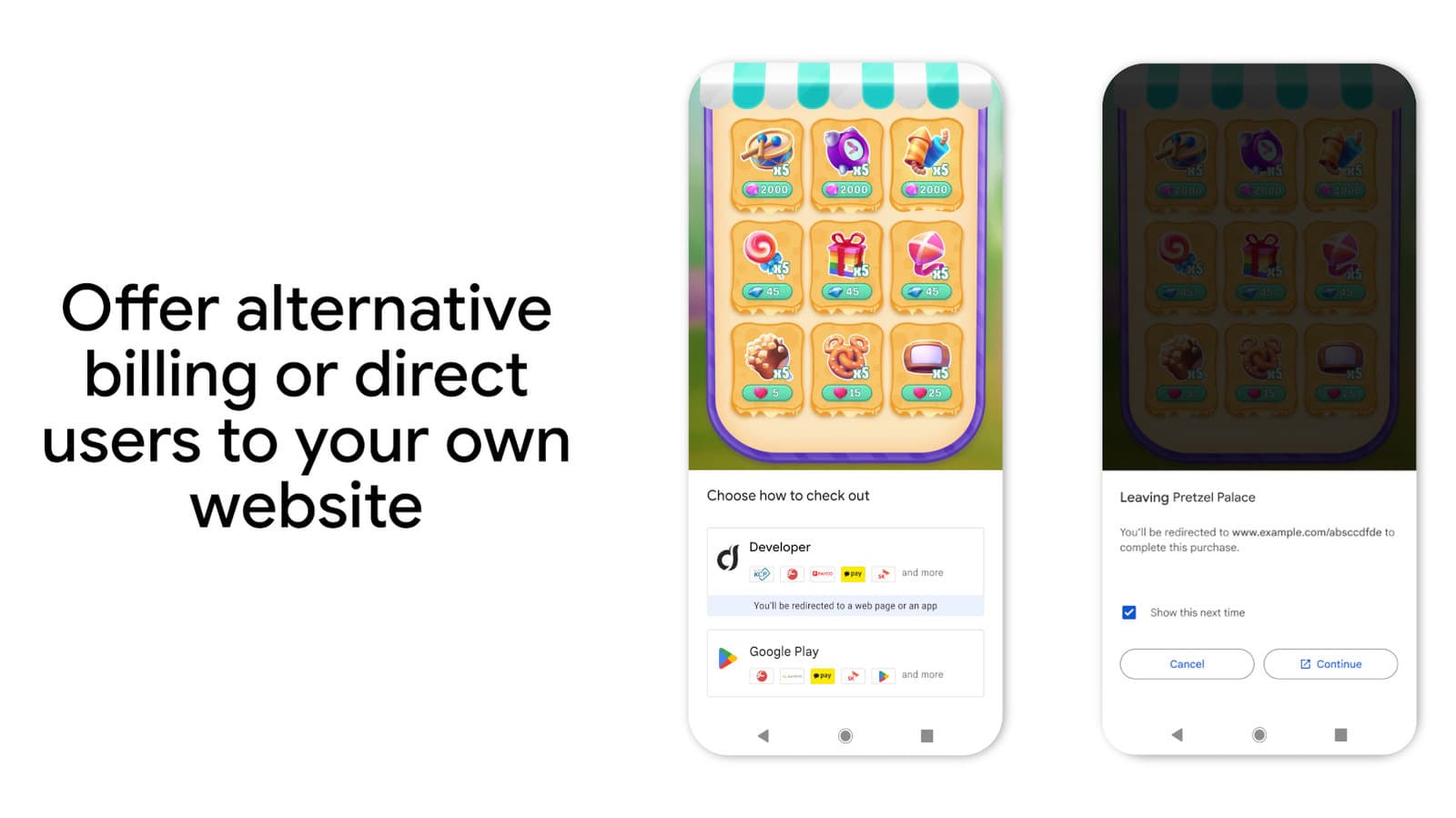
Google will allow developers to offer alternative billing in the US, the UK and Europe starting on June 30.
Key Insights
10 editorial insights.
Google's decision to enable alternative billing options in the Play Store starting June 30 marks a significant shift in its longstanding policy of enforcing a 30% commission on in-app purchases. This move responds to mounting regulatory pressure and developer dissatisfaction, potentially reshaping the entire app marketplace landscape by promoting competition and innovation among payment systems.
Key players in this scenario include Google as the platform provider, alongside major developers like Epic Games and Spotify, who have previously voiced concerns regarding high commission fees. Their influence in the market is substantial as they represent a significant portion of app revenue, which can lead to broader adoption of alternative billing methods if successful.
Allowing alternative billing is strategically important as it could set a precedent within the app ecosystem, potentially prompting Apple to reconsider its own App Store policies. This decision may catalyze a shift towards a more developer-friendly environment, which could ultimately enhance user experience and foster competition among payment processors.
For developers, this change could result in substantial cost savings, as they could choose more favorable billing options compared to Google's standard fees. An example can be seen in Spotify, which has been vocal about reducing its payment processing fees, indicating that developers may pass these savings onto consumers through lower subscription costs.
This development aligns with the broader trend of regulatory scrutiny on tech giants, particularly concerning monopolistic practices and consumer rights. Over the past year, there has been increased momentum in antitrust actions against major tech companies, suggesting a growing demand for fairer competition in digital marketplaces.
The global app market is projected to reach $407.31 billion by 2026, growing at a CAGR of 18.4%, highlighting the significant revenue potential at stake. The introduction of alternative billing could influence how much revenue flows to developers and ultimately affect the market dynamics as new players may enter with competitive pricing structures.
However, this shift creates risks surrounding the fragmentation of payment systems and potential security issues as developers may implement varying degrees of compliance with regulations. Unresolved questions also remain about how this will affect user trust in app security and the overall consumer experience in managing billing across different platforms.
Competitors, particularly Apple, will likely feel pressured to respond with similar changes to their App Store policies or risk losing market share to platforms that offer more flexible billing options. This could lead to a competitive arms race in app marketplaces as companies seek to retain developers and users by improving their service offerings.
In the next 6-12 months, key milestones to watch will include how developers implement alternative billing and any resulting changes in user behavior regarding in-app purchases. Additionally, regulatory bodies in various regions will likely monitor the impact of this decision closely, potentially leading to further legislation aimed at tech companies.
For technology professionals and investors, this signifies a pivotal moment in mobile commerce and app economics, where the balance of power is shifting towards developers. Investors should closely observe how this change affects revenue models, market share among platforms, and potential innovations in payment solutions across the app landscape.
In a significant shift for app developers, Google has announced that it will permit alternative billing systems on the Play Store starting June 30. This change is crucial as it opens new revenue streams for developers and addresses longstanding criticisms regarding the dominance of Google’s billing system. By allowing developers in the US, UK, and Europe to use third-party payment processors, the company is responding to regulatory pressures and competition in the app marketplace.
Google's technical framework for this change involves allowing developers to integrate their own billing systems alongside Google's Play Billing. This means developers can choose how they want to process payments, potentially reducing transaction fees. The new system will require developers to implement compliance measures to ensure security and user trust. Developers will still be obligated to give users clear information about their payment options, which could lead to greater transparency in transactions.
This move comes amid increasing scrutiny of app store policies from regulators and competitors like Apple, who face similar pressures. The app economy has been shifting towards more flexible payment options, with companies like Epic Games leading the charge against restrictive billing practices. Market analysts predict that this could lead to a decrease in the 30% commission typically charged by app stores, prompting a potential overhaul of pricing structures in the industry.
For Indian developers, this change could be a boon, particularly for startups and independent app creators who have often struggled with high fees. Companies like Paytm and Razorpay may see increased adoption as developers explore alternative billing solutions. The shift could also invigorate the Indian gaming industry, which has seen rapid growth, by allowing developers to retain more revenue from in-app purchases.
Key Highlights
- Google allows alternative billing for developers starting June 30
- Developers can integrate third-party payment systems with compliance
- Market analysts predict a potential decrease in app store commissions
- Independent developers and startups could benefit the most from reduced fees
- Next steps include monitoring developer responses and user adoption rates
Real-World Impact
This policy shift will directly affect app developers, particularly those in gaming and mobile services. Financial roles within these companies may need to adapt to new billing practices, while marketing teams will have to communicate these changes effectively to users. As a result, customer service teams may also experience a higher volume of inquiries related to billing and payment options.
Why This Matters
This transition marks a pivotal moment in the app economy, signaling a move towards more developer-friendly practices. CTOs and developers should start evaluating their current payment systems and consider integrating alternative options that could enhance user experience and improve profitability. This change challenges the traditional app store model and could encourage further innovation in payment processing.
As the June 30 date approaches, monitoring the impact on user behavior and developer responses will be crucial. The next big question will be how quickly and effectively developers adopt these alternative billing practices.
Found this useful? Share it!