· 3 days ago· Gizmodo
Claude Mythos Unveils Glasswing Features by Anthropic
It's dangerous, but not TOO dangerous to give to more organizations.
#anthropic#claude-mythos#ai-safety#machine-learning
Topic
182 articles found
It's dangerous, but not TOO dangerous to give to more organizations.
Anthropic’s IPO filing marks the maturation of generative AI from a research-heavy venture phase into a stabilised enterprise utility. Model developers operating in private markets have prioritised rapid iteration and maximum compute performance over predictable billing cycles. Taking a foundational
Introduction Artificial intelligence tools, particularly large language models (LLMs), are not like traditional software. AI is probabilistic, so the same instructions and inputs can produce different results, especially when using non-zero temperature or other sampling methods, and those results ca
Most "just use a GPU" advice is wrong for how anyone actually runs small models. I spent yesterday benchmarking a 33M parameter embedding model across five hardware backends. The results were not what I expected. Model: BAAI/bge-small-en-v1.5. 33M params, 384-dim output. The workhorse small embedder
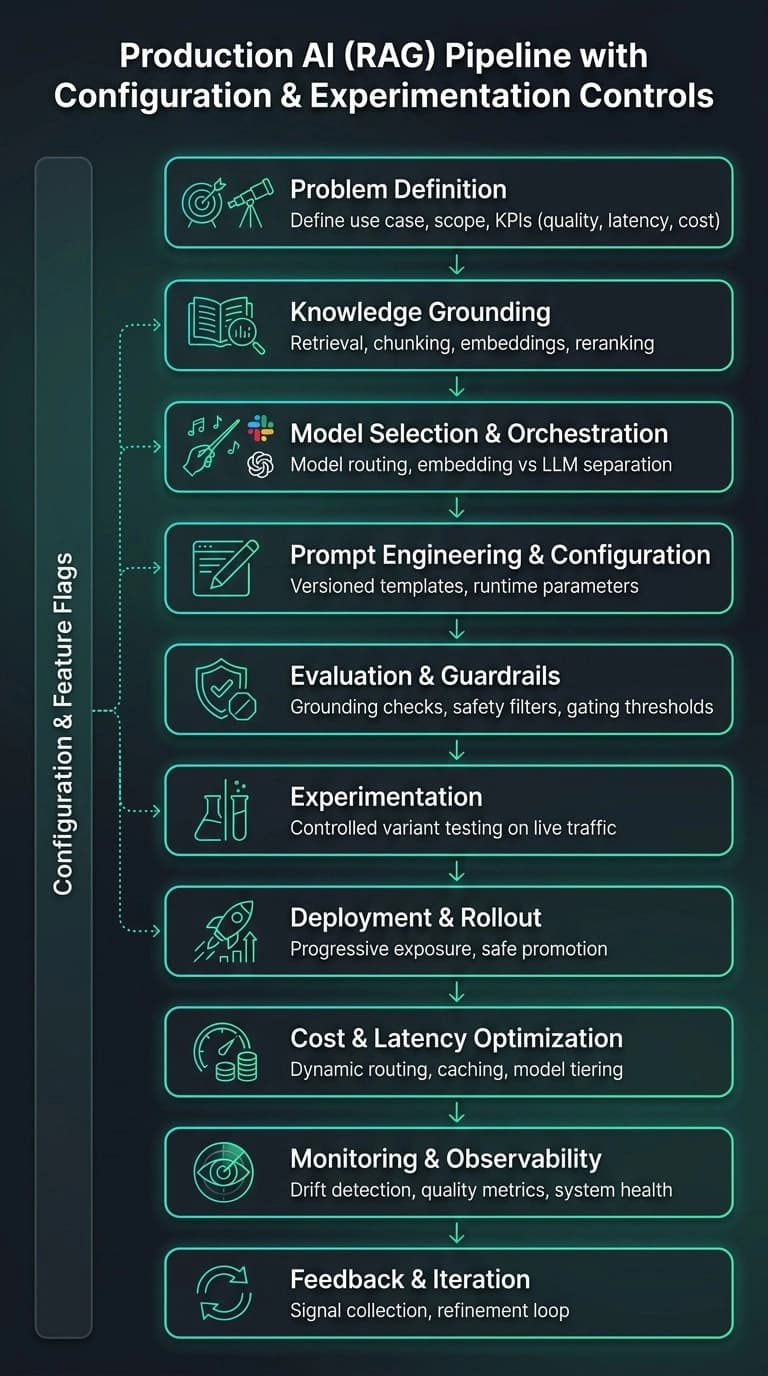
A common failure pattern in a retrieval-augmented generation (RAG) system is a progressive decline in performance. This decline, which can be difficult for users to detect initially, often begins with a reduction in retrieval relevance. Over time, it may lead to longer response times and increasingl
This article was originally published on aicoderscope.com ML engineers aren't software engineers who happen to write some Python. They live in notebooks, build training loops, fight CUDA dependency hell, and write code that often exists in a Jupyter cell for six months before it becomes a real file.
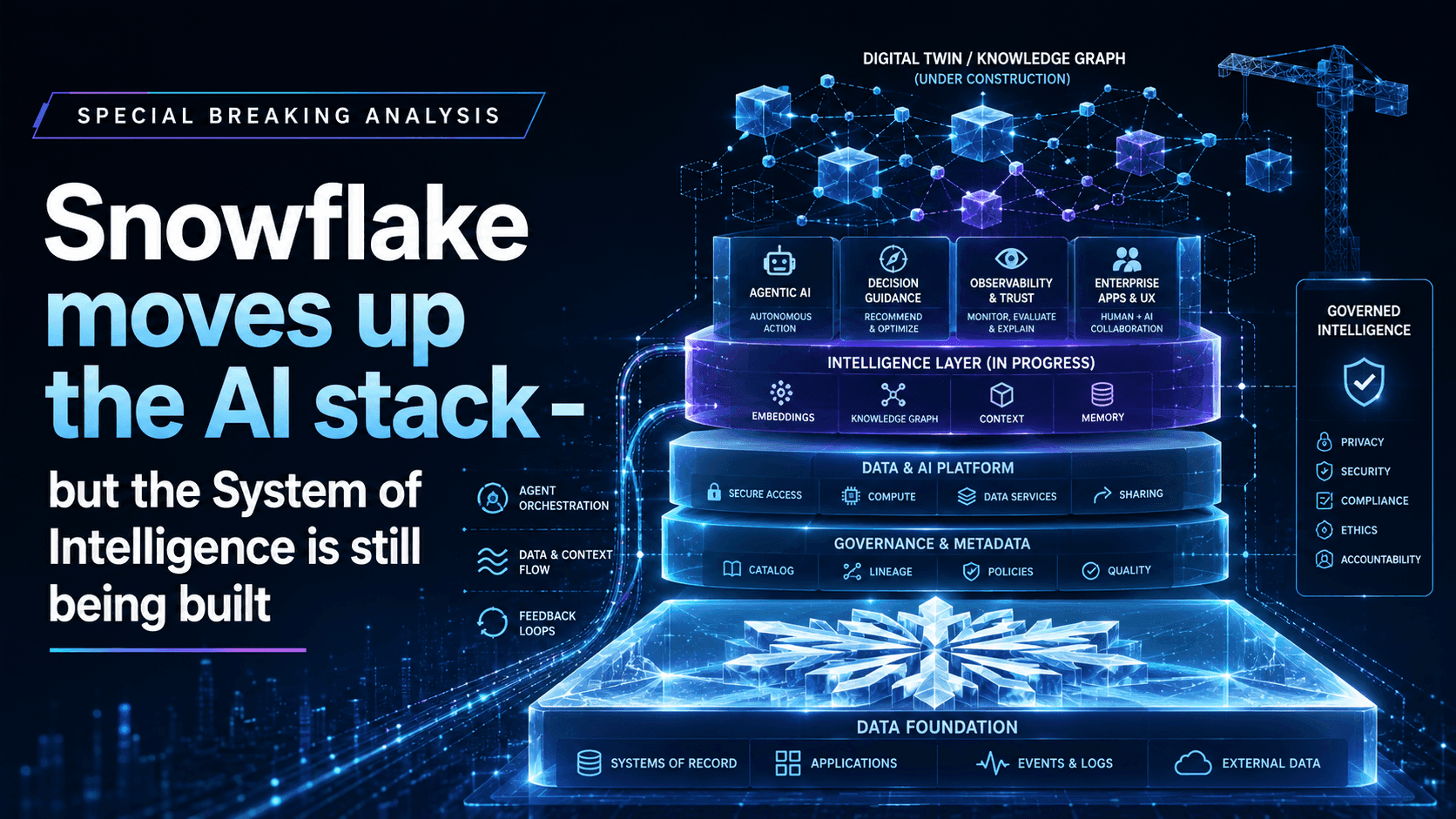
This research note is based on four primary inputs: 1) An assessment of Snowflake Inc.’s announcements at this year’s Summit; 2) Information captured in private analyst and journalist sessions with Snowflake executives; 3) Interactions and queries with Snowflake Inquirer, a proprietary artificial in
This is neither a research paper nor an attempt to propose a new AGI architecture. It’s simply a chain of thoughts I arrived at while trying to understand the limitations of modern LLMs and answer a simple question for myself: What should we actually call intelligence? Some of these ideas may be wro
Enterprise Document Intelligence [Vol.1 #4] - A diagnostic across PDFs and questions, and a map of the techniques the rest of the series will cover The post From Regex to Vision Models: Which RAG Technique Fits Which Problem appeared first on Towards Data Science.
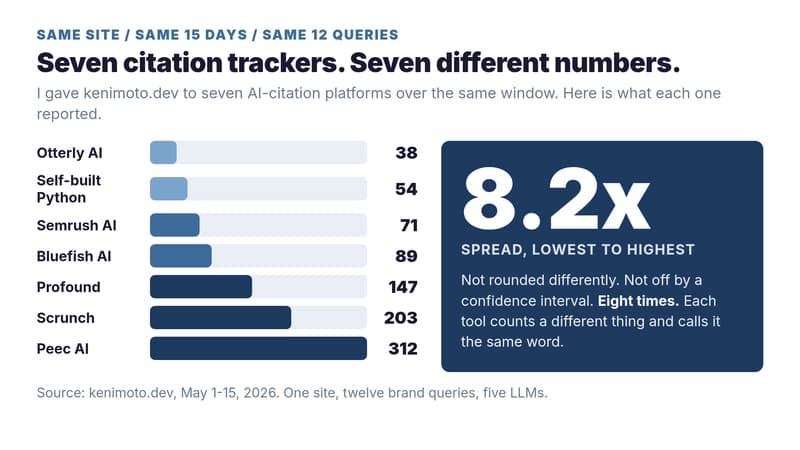
I expected the seven citation trackers to vary by maybe 20%. The smallest gap I got was 4x. The widest was 8x. Same site, same fifteen days, same twelve brand queries. My favorite tracker turned out to be the cheapest one. Not because it was the most accurate. Because it was the most honest about wh
A new AI compliance service sits between AI models and end users to flag and replace any messages that might present a compliance problem.
I went looking for GPT-5.6 details this morning because half the dev YouTube and Medium feed has "GPT-5.6 benchmarks revealed" thumbnails. None of them link to OpenAI. None of them link to API docs. Most of them link to each other. So here's what I actually found and what I'm tagging as invented. Da
This article is from Making AI Work, MIT Technology Review’s limited-run newsletter examining how to apply LLMs across industries. To receive it in your inbox,sign up here. From accounting to design to market research and product development, there’s a staggering breadth of skills needed to run a bu
The post AI Prediction Models Are Becoming Popular Beyond Financial Markets appeared first on Coinpedia Fintech News Prediction models used to be something only big finance firms could afford to use. Hedge funds and crypto trading desks were among the first to invest in this technology, feeding mass
Key Challenges in Serving AI Models Taking AI models live, or "deploying" them, is often one of the most critical and complex stages of a project. It's not enough for models to simply make accurate predictions; they also need to be scalable, reliable, and economical. This is where balancing cost and
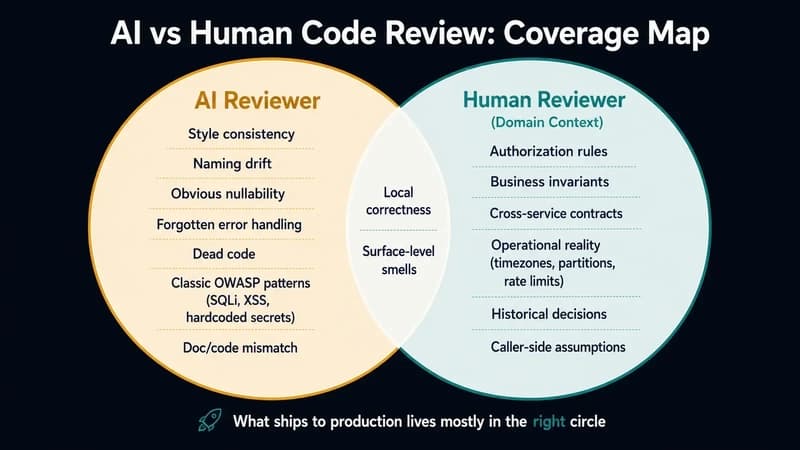
You open a pull request. Thirty seconds later, an AI reviewer drops a comment: "Looks good to me. No issues found." You feel a tiny chemical reward. Approval. Speed. You're one click closer to merging. The cognitive cost of waiting for a human reviewer just got compressed into half a minute, and the
OpenAI frontier models and Codex are now generally available on AWS, giving enterprises a new path to build with OpenAI through the AWS environments, controls, and procurement workflows they already use. Customers can get started with OpenAI on AWS and move faster from evaluation to production.
Some news: The Vergecast is now a daily podcast! Starting today, we'll be posting every weekday, with even more gadgets and rankings and conversations and feelings and podcasts-within-podcasts. We're excited for all the ways this new schedule lets us tell new kinds of stories, experiment with new te
Enterprise Document Intelligence [Vol.1 #3] - Why the ML toolkit (hyperparameter sweeps, train/test splits, explainability frameworks) solves the wrong problem, and what to use instead The post RAG Is Not Machine Learning, and the ML Toolkit Solves the Wrong Problem appeared first on Towards Data Sc
Get the most out of each coding model to have a very powerful coding setup The post How to Combine Claude Code and Codex for Maximum Coding Power appeared first on Towards Data Science.