Circle Gives AI Agents USDC Stablecoin Powers Alongside $222M Arc Token Sale
USDC issuer Circle launched a suite of tools designed to let AI agents hold money, pay for services, and transact without human involvement.
Topic
678 articles found
USDC issuer Circle launched a suite of tools designed to let AI agents hold money, pay for services, and transact without human involvement.
Shawn Bice, who left AWS for Microsoft's security organization in 2022, is returning to Amazon as VP of AI Services to lead the Automated Reasoning Group under Swami Sivasubramanian's Agentic AI organization. Read More
A doctor in a hospital exam room watches as a medical transcription agent updates electronic health records, prompts prescription options, and surfaces patient history in real time. A computer vision agent on a manufacturing line is running quality control at speeds no human inspector can match. Bot
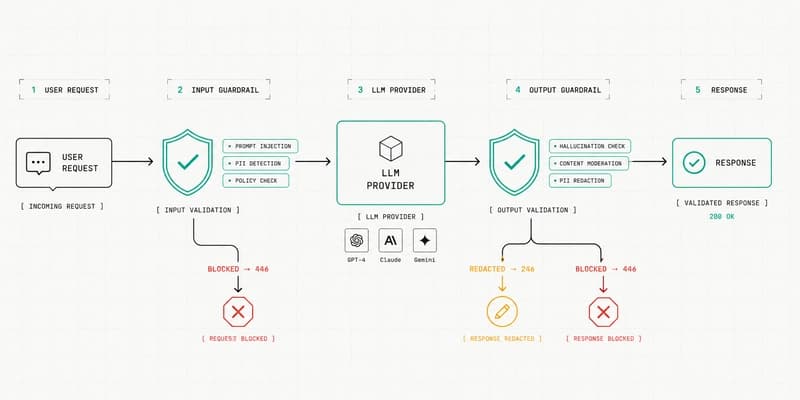
Two years ago, most conversations about LLM guardrails were about content filtering, stopping a chatbot from saying something offensive. That was a real problem, but a small one. The model produced text. The text was either safe or unsafe. A classifier could usually tell. In 2026, the problem has co
A few months ago, I was reviewing a customer support agent who had a strange failure pattern. A user would The post Why your AI agent doesn’t actually remember anything appeared first on The New Stack.
The Problem Nobody Talks About You ship an AI agent. It runs in production. Something goes wrong. Now what? You dig through stdout logs, reconstruct what the LLM "decided," and try to figure out why it did that at that moment. It's painful — and most teams solve it by building a custom observability
The new AI-powered tool is designed to help "non-technical users" craft prediction market trading strategies.
xBubble allows users to complete specific tasks with simpler prompts by automatically building and dispatching task-specific AI agents.
Artificial intelligence customer service platform provider Quiq Inc. today launched a new voice product and refreshed its brand, betting that customer experience teams are ready to move beyond isolated pilots to scaled production deployments. The new voice capability extends Quiq’s platform into rea
Tyler Cadwell runs a small Arizona business called Everything Etched. He sells custom-engraved glassware on Etsy and Shopify. When he wants to brainstorm or build something new, he drives his Ford Bronco out into the canyons around Flagstaff and Tucson with a Mac mini in the passenger seat. The desk
Quick Answer: Context engineering is the practice of designing the right information, tools, and structure around an AI agent so it produces reliable, high-quality output. Unlike prompt engineering (optimizing what you ask), context engineering optimizes the conditions under which the agent works. S
AI agents need “food,” and that food is not physical food; it is tokens, said Jordi Visser.
An experimental cafe in Stockholm is being run by an AI agent named Mona, overseeing operations from hiring to inventory. While customers find the concept amusing, the AI is struggling financially and making questionable inventory orders, highlighting potential ethical and practical challenges of au
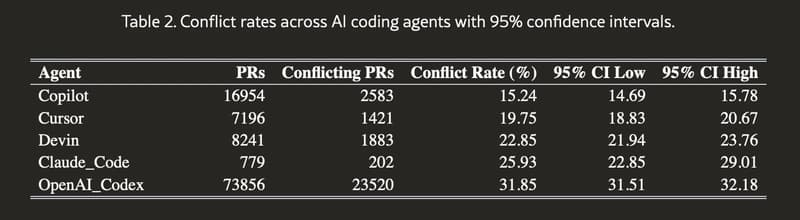
The missing coordination primitive. New research (AgenticFlict, arXiv 2604.03551) confirms what a lot of teams are learning the hard way: AI-generated PRs are producing a measurable new class of merge conflicts. The agents have no concept of each other's intent. "What are you working on?" is not a q
Most multi-agent setups I've seen are basically a room full of people wearing headphones. Agents running in parallel, no shared awareness, no idea who's doing what. That's not collaboration. That's coexistence. I've been building this in public for almost 12 weeks. 12 agents, 6,500+ tests, 95 stars.
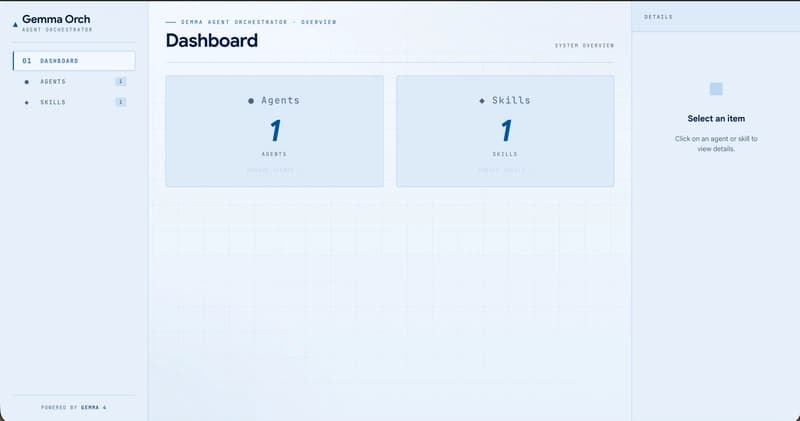
This is a submission for the Gemma 4 Challenge: Build with Gemma 4 GemmaOrch is a skill-based AI agent orchestrator: you define what an agent knows by dropping Markdown files into a folder, assign those skills to a named agent, and chat with it. The agent powered by Gemma 4 will only answer within t
If you've ever wired up an AI agent to do real work, you've probably hit the same wall I did: filesystem access is a minefield. Give it too much rope and it'll happily rm -rf something important. Lock it down too hard and it can't actually do anything useful. I've been bouncing between three approac
TL;DR: For 2026 office productivity, don’t pick “the best Excel assistant.” Pick the stack that matches your workflow: in-app agents for single-tool tasks, MCP + connectors for cross-tool work, and a governed file workspace with scoped access + version history when multiple agents must collaborate s
You've been doing this for a while now: response = client.chat.completions.create( model="gemini-2.0-flash", messages=[{"role": "user", "content": f"Extract the following fields from this text: {fields}. Text: {text}"}] ) data = json.loads(response.choices[0].message.content) proposal = Proposal(**d
Every agent developer hits the same wall. The demo works. Then it goes to production — and the cracks show up fast. No retry logic when APIs fail. Identical queries hammering your LLM endpoint over and over. No visibility into what's actually happening. And before long, you're writing the same cache