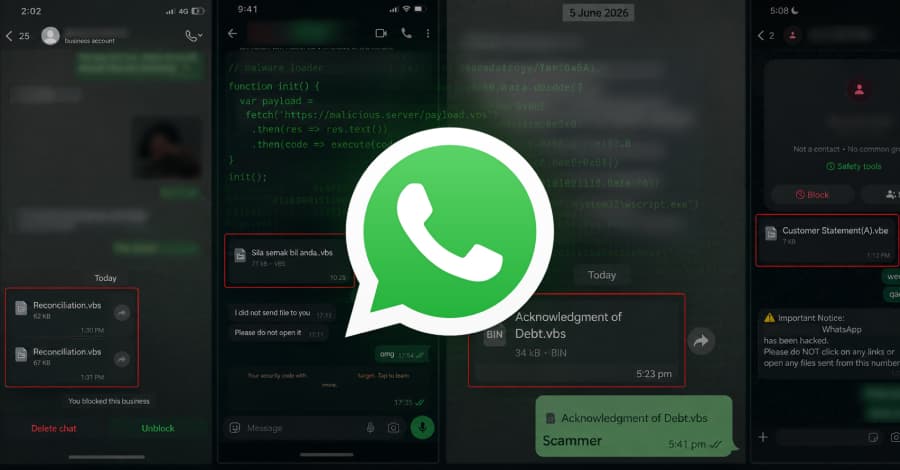
Direct messages sent via WhatsApp are being used to distribute malicious Visual Basic Script (VBScript) files that lead to the installation of legitimate Remote Monitoring and Management (RMM) software. Per findings from Kaspersky, the active campaign is targeting users of WhatsApp Desktop and Whats
Key Insights
10 editorial insights.
The recent WhatsApp VBScript campaign highlights a new vector for malware distribution, using social engineering tactics to exploit user trust in messaging applications. By masquerading as legitimate documents, attackers are not only compromising individual devices but also potentially gaining access to corporate networks, which raises significant security concerns for businesses relying on remote communication tools.
Key players in this incident include WhatsApp, owned by Meta, and Kaspersky, which uncovered the attack. WhatsApp's widespread use, with over 2 billion users globally, makes it an attractive target for cybercriminals, while Kaspersky's reputation for cybersecurity solutions positions it as a crucial player in identifying and mitigating such threats.
This development underscores a strategic shift in how cyber attacks are executed, moving from traditional email phishing to more instantaneous platforms like WhatsApp. As companies increasingly adopt remote work technologies, the attack's success could encourage similar tactics among cybercriminals, thereby escalating the need for enhanced security measures across messaging platforms.
For end users, the immediate impact is a heightened risk of malware infection, which can lead to data breaches and financial losses. Companies that utilize the affected RMM tools could face regulatory scrutiny and reputational damage, especially if they are found to have inadequate protections in place against such attacks.
This incident is reflective of a broader trend where messaging apps are becoming prime targets for cyber attacks, paralleling the rise of phishing attacks observed over the past two years. As remote work continues to proliferate, the attack vectors targeting these platforms are expected to evolve, necessitating a reevaluation of security protocols.
The global RMM software market is projected to reach approximately $6.6 billion by 2025, growing at a compound annual growth rate (CAGR) of about 14%. This significant market potential makes RMM tools highly desirable for both legitimate users and cybercriminals looking to exploit their capabilities to gain unauthorized access to sensitive information.
The primary risks posed by this campaign include the potential for widespread organizational breaches and the challenge of detecting such sophisticated attacks. Furthermore, there is a question of whether current cybersecurity frameworks are sufficient to address these emerging threats, particularly in the context of user behavior and software vulnerabilities.
Competitors in the cybersecurity space, such as CrowdStrike and Palo Alto Networks, may enhance their offerings to include more robust detection mechanisms for threats originating from messaging platforms. Additionally, companies may invest in user education programs to raise awareness about the risks associated with downloading files from unverified sources.
In the next 6-12 months, key regulatory milestones may include increased scrutiny of messaging platforms regarding their security protocols and data protection measures. Additionally, developers may face pressure to implement stricter verification processes for file sharing, particularly in light of escalating cyber threats targeting remote work environments.
For technology professionals and investors, this incident serves as a stark reminder of the evolving landscape of cybersecurity threats. The necessity for continuous investment in security solutions and awareness programs is paramount, as the implications of such attacks can lead to substantial financial losses and undermine consumer trust in digital communication channels.
A recent surge in cyberattacks has been identified, utilizing WhatsApp to distribute malicious VBScript files that install legitimate Remote Monitoring and Management (RMM) tools. This alarming trend not only threatens individual users but raises significant concerns about security vulnerabilities in remote management systems, especially amid the rising reliance on such tools for IT operations.
The modus operandi involves attackers sending deceptive messages through WhatsApp that appear to contain legitimate documents. When these are opened, they execute a VBScript designed to install RMM software like ManageEngine. This approach capitalizes on users' trust in known communication platforms and disguises the malicious activity behind a veil of legitimacy, evading many traditional security measures.
This campaign reflects a broader trend in the cybersecurity landscape, where attackers increasingly leverage popular communication tools to bypass conventional security defenses. This tactic is particularly concerning given that the RMM market is expanding rapidly, with expected growth rates of over 15% annually. As more companies adopt these tools, the potential attack surface widens, and the consequences of such breaches can be severe.
In India, the tech ecosystem, particularly in the IT services and software development sectors, is significantly affected by these threats. Indian IT companies, many of which rely on RMM tools to manage client systems remotely, must now reassess their security protocols. High-profile firms like TCS and Infosys might face increased scrutiny as they navigate the complexities of these new vulnerabilities.
Key Highlights
- Cybercriminals exploit WhatsApp to distribute malicious scripts
- Targets include legitimate RMM software installation processes
- RMM market projected to grow over 15% annually, raising risks
- Indian IT firms and developers are particularly vulnerable
- Expect increased cybersecurity measures and awareness campaigns
Real-World Impact
The immediate impact of this campaign is felt among IT professionals and companies relying on RMM tools for remote operations. Security analysts, system administrators, and software developers may need to enhance their security protocols to guard against these targeted attacks, leading to a potential shift in operational practices.
Why This Matters
This incident underscores a pivotal shift in cyber threats, highlighting the need for a paradigm change in how organizations approach cybersecurity. CTOs and developers must prioritize enhancing their security frameworks, integrating advanced threat detection capabilities, and educating end-users about the risks associated with seemingly benign communications.
As cyber threats evolve, companies must remain vigilant and proactive in safeguarding their systems. One key area to watch is the enhancement of security measures around communication platforms, as attackers adapt their strategies to exploit emerging vulnerabilities.
Found this useful? Share it!