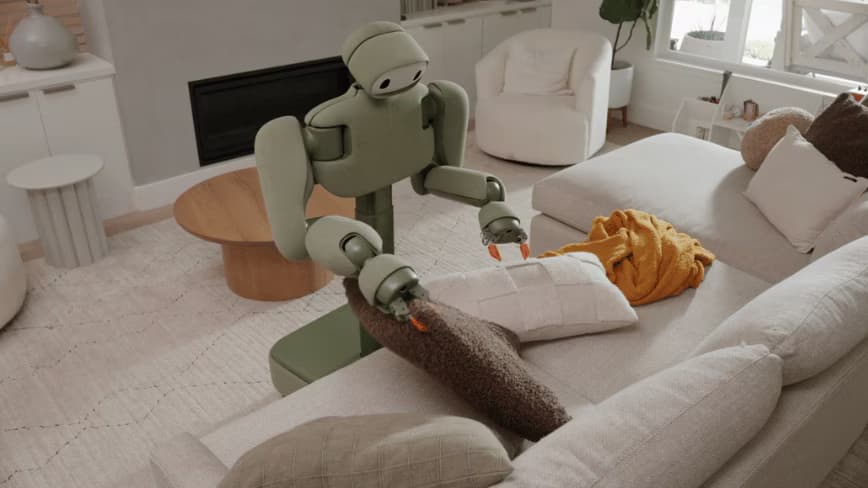
The robot butler has been five years away for about twenty years. Weave Robotics thinks the trick is to aim lower. Its new home robot, Isaac 1, does not walk, has no fingers, and mostly just wants to do your laundry. It also costs a fraction of its humanoid rivals. The Y Combinator-backed startup un
Key Insights
10 editorial insights.
Weave Robotics has launched the Isaac 1, a $7,999 home robot designed primarily for laundry tasks. This marks a significant shift in home robotics, moving away from the ambitious humanoid models that have dominated the narrative for two decades, highlighting a more pragmatic approach to consumer robotics.
Key players in this launch include Weave Robotics, a Y Combinator-backed startup, which signifies a growing interest in practical home automation solutions. The company's focus on a functional, cost-effective robot could reshape competitive dynamics in the robotics space, especially against entrenched players like iRobot and Samsung.
The introduction of Isaac 1 is strategically important as it lowers the entry barriers for consumers seeking automation in daily chores. By not attempting to create a humanoid robot, Weave addresses consumer hesitance towards complex robots, potentially accelerating adoption rates among households.
For end users, the Isaac 1 presents a tangible solution to mundane household tasks at an accessible price point compared to its $20,000+ humanoid counterparts. This could lead to increased market penetration of home robots, making automation a standard feature in modern homes.
This development connects to the broader trend of simplifying technology for everyday use, as seen in the rise of smart home devices and AI assistants. Over the last 12-24 months, the focus has shifted from advanced capabilities to practical applications that enhance user convenience and efficiency.
The consumer robotics market is projected to reach $22 billion by 2025, growing at a CAGR of over 20%. The competitive pricing of Isaac 1 could capture a significant share of this market, particularly among budget-conscious consumers who may have previously overlooked robotic solutions.
Challenges remain, particularly around the limitations of a non-humanoid design, including tasks it cannot perform, which might frustrate consumers expecting more versatility. Additionally, the long-term durability and reliability of such a product will be critical to build trust among users.
Competitors like iRobot and Roomba might respond by diversifying their product lines to include more affordable, task-specific robots. Others may accelerate the development of their own simplified models to maintain market share and appeal to cost-sensitive consumers.
In the next 6-12 months, watch for milestones related to consumer feedback and performance metrics of Isaac 1, as user experiences will significantly influence its market success. Regulatory considerations regarding home automation technology may also evolve, impacting future product iterations.
For technology professionals and investors, the launch of Isaac 1 highlights a shift towards practical robotics that prioritize user needs over complex features. This trend suggests that companies focusing on usability and affordability may capture greater market interest, making it a critical area for investment and development.
Weave Robotics has unveiled its latest creation, the Isaac 1, a groundbreaking home robot priced at $7,999. Unlike its humanoid counterparts, this robot focuses on practical household tasks like laundry, making it a potentially game-changing innovation in home automation. This launch signals a shift in the robotics industry, emphasizing functionality over form, particularly in the consumer market.
The Isaac 1 operates on a simplified design, foregoing limbs and complex mobility for efficiency in specific tasks. Powered by advanced AI algorithms, the robot is equipped with sensors and machine learning capabilities that allow it to navigate domestic environments and perform laundry chores. Its design architecture incorporates a robust vision system that can identify and sort clothes, contributing to a user-friendly experience. By prioritizing essential functions, Weave aims to provide a more accessible solution for homeowners looking to reduce their chore burden.
In the broader robotics landscape, the introduction of Isaac 1 comes amidst a surge of interest in home automation solutions. Competitors like iRobot and Samsung have traditionally dominated this space with high-end models, often priced significantly higher. The market is expected to grow as more consumers seek affordable, efficient alternatives to traditional housekeeping methods. Recent reports indicate that the global home robot market is projected to expand at a CAGR of over 20% in the next five years, highlighting the growing acceptance of robotic assistants.
In India, the tech ecosystem stands to benefit significantly from innovations like Isaac 1. As urbanization increases, the demand for affordable domestic solutions is also rising. Indian startups focusing on robotics, such as GreyOrange and Farmley, may find inspiration in Weave's approach to creating practical, cost-effective devices for everyday use. Additionally, collaboration opportunities may arise between Indian tech firms and international players looking to penetrate the rapidly growing Indian market.
Key Highlights
- Weave Robotics launches Isaac 1, a specialized home robot.
- Isaac 1 is designed for laundry tasks, utilizing AI for navigation.
- The market for home robots is projected to grow at over 20% CAGR.
- Homeowners looking for affordable automation solutions benefit most.
- Future developments include expanding Isaac 1's capabilities and market reach.
Real-World Impact
The introduction of Isaac 1 is poised to affect various job roles, particularly in domestic service industries where traditional housekeeping tasks are performed. As households adopt such robots, there may be a decline in demand for manual labor in these roles, prompting a shift in job training and employment strategies. Moreover, companies involved in household appliances may need to adapt their offerings to integrate seamlessly with robotic solutions.
Why This Matters
This launch signifies a pivotal moment in the robotics sector, illustrating a move towards more utilitarian designs that prioritize practicality over aesthetics. CTOs and developers should reassess their strategies, focusing on creating solutions that address specific consumer needs rather than competing solely on high-end features and designs. This trend may lead to increased investment in AI and automation technologies.
The market will be watching closely to see how Isaac 1 performs in real-world applications. Future updates may include expanded functionalities, such as integration with smart home systems, further enhancing its appeal to tech-savvy consumers.
Found this useful? Share it!