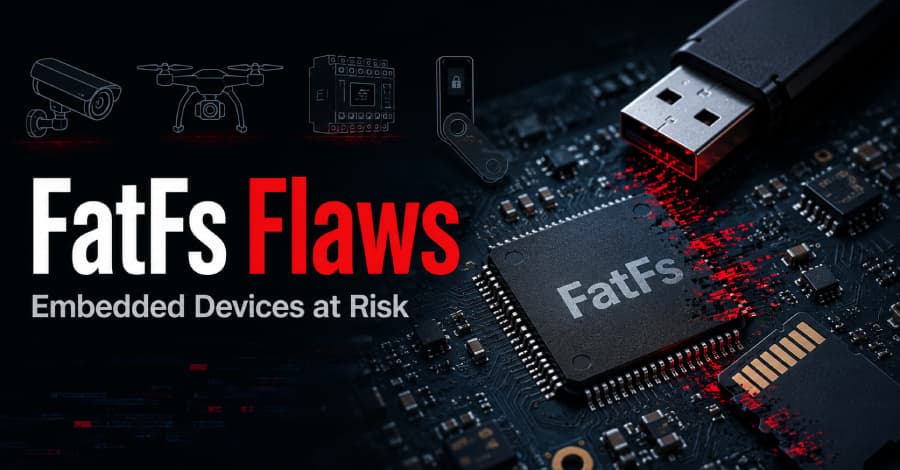
Security firm runZero has disclosed seven vulnerabilities in FatFs, a small filesystem library that lets a device read and write the FAT and exFAT formats used on USB drives and SD cards. The flaws matter because FatFs is nearly everywhere. It ships inside the firmware that runs security cameras, dr
Key Insights
10 editorial insights.
The recent disclosure of seven vulnerabilities in FatFs, a widely used filesystem library for embedded devices, is significant as it exposes millions of devices, including security cameras and drones, to potential exploitation. This vulnerability underscores the critical need for improved security practices in the development of embedded systems, which are often overlooked despite their prevalence in daily life.
Key players affected by these vulnerabilities include manufacturers of embedded devices such as Hikvision and Axis Communications, which dominate the security camera market. Their reliance on FatFs means that any compromise could lead to a loss of consumer trust and potential legal ramifications, highlighting the need for robust supply chain security measures.
This development is strategically important as it highlights the vulnerabilities inherent in the supply chain of embedded systems, prompting manufacturers to reassess their security protocols. As the Internet of Things (IoT) continues to grow, ensuring the security of foundational components like filesystem libraries becomes paramount for the integrity of connected ecosystems.
For companies relying on embedded devices, the vulnerabilities can lead to significant business impact, including potential recalls, increased cybersecurity costs, and reputational damage. Developers may face pressure to patch vulnerabilities quickly, diverting resources from other projects and impacting overall innovation timelines.
This incident connects to a larger trend of increasing scrutiny on cybersecurity within the tech industry over the past 12-24 months. With rising cyberattacks and data breaches, there is a growing consensus that security must be integrated into the design and development processes of all technology products, especially those interconnected through IoT.
The embedded systems and IoT market is projected to reach $1 trillion by 2026, growing at a compound annual growth rate (CAGR) of over 25%. This exponential growth emphasizes the urgency for robust security solutions, as vulnerabilities could undermine consumer confidence and stall market expansion if not addressed effectively.
The primary risks arising from these vulnerabilities include potential mass exploitation of devices and the challenge of updating legacy systems. Companies may face difficulties in deploying patches across diverse hardware, raising concerns about the long-term security of existing installations and the potential for widespread breaches.
In response to these vulnerabilities, competitors in the embedded systems space may accelerate their focus on security enhancements and alternative filesystem solutions. Companies like FreeRTOS and other open-source solutions may see increased adoption as developers seek to mitigate risks associated with widely used libraries like FatFs.
In the next 6-12 months, it will be crucial to watch for regulatory milestones related to cybersecurity standards for embedded devices, driven by increasing governmental scrutiny. Initiatives such as the National Institute of Standards and Technology (NIST) guidelines for IoT security could influence industry compliance and reshape development practices.
Ultimately, the significance of these vulnerabilities for technology professionals and investors lies in the heightened awareness of security as a fundamental component of product development. Investors may reconsider their strategies when evaluating companies in the embedded systems market, favoring those with proactive security measures and a clear response plan for vulnerabilities.
runZero, a prominent security firm, has identified seven critical vulnerabilities in FatFs, a popular filesystem library essential for reading and writing FAT and exFAT formats. These flaws are particularly alarming given FatFs's widespread adoption in embedded devices like security cameras and IoT gadgets. The discovery highlights an urgent need for manufacturers and developers to address security in their firmware.
FatFs is a lightweight filesystem library used extensively in embedded systems, enabling devices to manage storage media like USB drives and SD cards. The vulnerabilities found by runZero pertain to potential buffer overflows and improper input validation, which could allow attackers to execute arbitrary code on devices utilizing FatFs. Given its lightweight nature, FatFs is often integrated into devices without thorough security assessments, increasing the risk of exploitation.
This issue underscores a broader trend in the embedded systems market, where security often takes a backseat to performance and efficiency. As the Internet of Things (IoT) continues to expand, many manufacturers prioritize rapid deployment over robust security measures, leading to a precarious situation. Competitors in this space face increasing scrutiny as consumers demand safer devices, prompting a market shift toward enhanced security protocols.
In India, the burgeoning IoT sector, projected to reach $15 billion by 2025, stands to be significantly affected by these vulnerabilities. Indian tech companies, especially those in the smart home and security camera industries, may need to reassess their firmware strategies to address these newfound security risks. Developers and manufacturers must prioritize updates to mitigate potential threats and bolster consumer confidence.
Key Highlights
- runZero identified seven critical vulnerabilities in FatFs
- FatFs is widely used in various embedded devices and IoT applications
- The IoT market in India is projected to reach $15 billion by 2025
- Manufacturers and developers focusing on security will gain consumer trust
- Expect firmware updates and security patches from affected vendors soon
Real-World Impact
The vulnerabilities identified pose immediate risks to various job roles, including firmware developers, security analysts, and product managers in the IoT sector. Industries focused on smart technology applications, particularly in security and home automation, must act quickly to patch their systems and protect consumers. Failure to address these issues could lead to significant reputational damage and loss of consumer trust.
Why This Matters
This situation illustrates a critical shift in the embedded systems landscape, where security cannot be an afterthought. For CTOs and developers, it is essential to integrate security assessments into their development cycles from the outset. The vulnerabilities in FatFs are a cautionary tale, emphasizing the need for rigorous testing and validation in the rapidly evolving tech ecosystem.
Moving forward, the focus will likely shift towards implementing more stringent security measures in embedded systems. Stakeholders should keep a close eye on firmware updates and industry responses to these vulnerabilities as they unfold.
Found this useful? Share it!