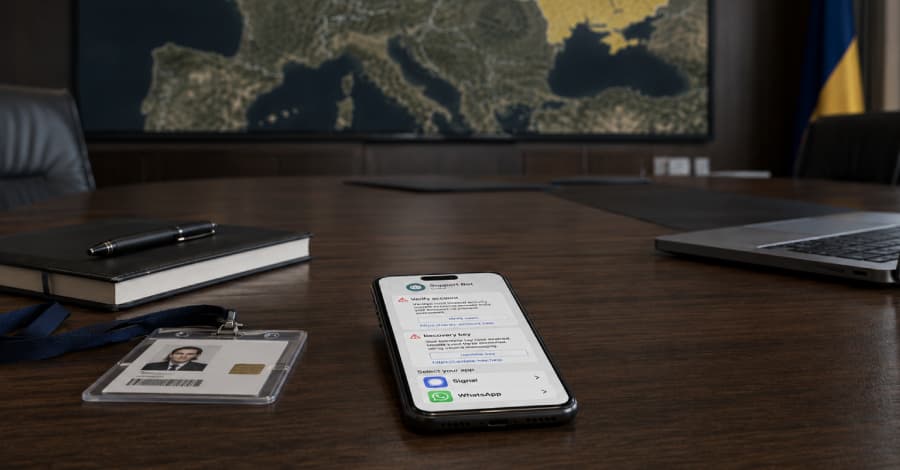
The Security Service of Ukraine (SSU) said it, together with the U.S. Federal Bureau of Investigation (FBI), uncovered a long-running campaign orchestrated by Russian intelligence services to break into the messaging accounts of government officials, military personnel, politicians, and activists in
Key Insights
10 editorial insights.
The Security Service of Ukraine (SSU) and the FBI uncovered a Russian intelligence campaign that exploited fake support texts to gain unauthorized access to messaging accounts of key individuals. This breach highlights the critical vulnerabilities in communication platforms, where even government-level personnel are not immune to sophisticated phishing tactics, raising alarms about the overall cybersecurity posture of these essential tools.
Key players in this scenario include the SSU and the FBI, who represent significant national security entities from Ukraine and the U.S., respectively. Their collaboration emphasizes the importance of international partnerships in countering espionage and cyber threats, which are increasingly becoming a global concern as state-sponsored attacks proliferate.
This incident underscores the ongoing arms race in the cybersecurity landscape, particularly regarding the protection of communication platforms. As digital communication becomes a frontline in geopolitical conflicts, companies developing secure messaging solutions will need to enhance their security protocols and user education to combat such threats effectively.
For businesses and end-users, the implications are stark; organizations must re-evaluate their cybersecurity strategies and invest in advanced threat detection solutions. With the cost of data breaches averaging $4.24 million per incident, as reported by IBM, the financial stakes for failing to protect sensitive communications are higher than ever.
This development aligns with a broader trend of increasing state-sponsored cyberattacks that have surged over the past 12-24 months, particularly from countries like Russia and China. As remote work and digital collaboration become the norm, the attack surface has expanded, making it more vital for companies to adopt robust cybersecurity measures.
The global cybersecurity market is projected to grow from $217 billion in 2021 to an estimated $345 billion by 2026, reflecting a compound annual growth rate (CAGR) of 9.7%. This incident could further drive investments in cybersecurity solutions as organizations recognize the necessity of safeguarding their digital communications against sophisticated threats.
The primary risks stemming from this incident include the potential for sensitive information to be leaked, which could jeopardize national security and individual safety. Furthermore, unresolved questions about the extent of the breach and whether other nations are similarly vulnerable remain critical as organizations assess their risk management practices.
In response to this incident, competitors in the secure messaging space, such as Signal and Telegram, may ramp up their marketing efforts to position their platforms as more secure alternatives. Additionally, they might enhance their encryption technologies and user authentication mechanisms to attract users concerned about privacy and security.
In the coming 6-12 months, key milestones to watch include potential regulatory changes regarding data protection laws and cybersecurity standards, particularly in the EU and U.S. Additionally, companies may face increased scrutiny from regulatory bodies concerning their ability to protect user data from state-sponsored threats.
For technology professionals and investors, the bottom-line significance of this incident is profound; it signals the urgent need for enhanced cybersecurity measures in communication technologies. As the threat landscape evolves, there is a compelling opportunity for investment in cybersecurity firms and technologies that prioritize user security and resilience against cyberattacks.
The Security Service of Ukraine, in collaboration with the FBI, has revealed a significant cyber espionage effort led by Russian intelligence. This operation involved the use of deceptive support texts to gain unauthorized access to the messaging accounts of key government officials, military personnel, and activists. The implications of this breach are profound, as it highlights vulnerabilities in secure communications, especially in politically sensitive contexts.
The operation used social engineering tactics, particularly fake messages that appeared to be official support communications. These texts were designed to elicit sensitive information, such as login credentials, from unsuspecting targets. By mimicking legitimate support inquiries, attackers could exploit human trust rather than relying solely on technical vulnerabilities. This method underscores the effectiveness of social engineering in modern cyber warfare and the need for heightened awareness and training among potential targets.
In the broader context, this incident illustrates a growing trend in cyber espionage where state actors increasingly rely on sophisticated social engineering tactics. The global cybersecurity landscape is witnessing an uptick in such campaigns, particularly amid geopolitical tensions. Organizations are now prioritizing not just technical defenses but also user education to mitigate risks associated with human error, which is often the weakest link in security protocols.
In India, the tech ecosystem, especially in sectors like government services and telecommunications, must take heed. Companies involved in secure communications or critical infrastructure are at risk, similar to their counterparts in Ukraine. With the rise of digital governance and increased connectivity, Indian firms must bolster their cybersecurity measures and proactively engage in user education to prevent social engineering attacks, which are becoming increasingly sophisticated.
Key Highlights
- Unveiled a Russian intelligence campaign targeting messaging apps
- Attackers utilized social engineering techniques to deceive targets
- Rising cybersecurity threats could lead to increased spending by enterprises
- Government officials and activists are most at risk in this scenario
- Expect a shift towards enhanced user training and awareness programs
Real-World Impact
The immediate effects of this cyber campaign are being felt across various sectors. Government officials, military personnel, and activists are now under heightened risk of credential theft, which could lead to unauthorized access to sensitive information. Organizations in India that rely on secure messaging for operational communications must now reassess their security protocols and training programs to mitigate these risks effectively.
Why This Matters
This incident represents a strategic shift in the landscape of cyber warfare, emphasizing the importance of human factors in security. As social engineering becomes a more prominent tool for attackers, CTOs and developers should prioritize user awareness training and invest in technology that can help identify and mitigate these types of threats. Understanding the psychology of users is becoming just as crucial as technical defenses.
Looking ahead, organizations should keep a close watch on emerging trends in social engineering. The ongoing evolution of cyber threats will necessitate continuous adaptation and innovation in security strategies.
Found this useful? Share it!