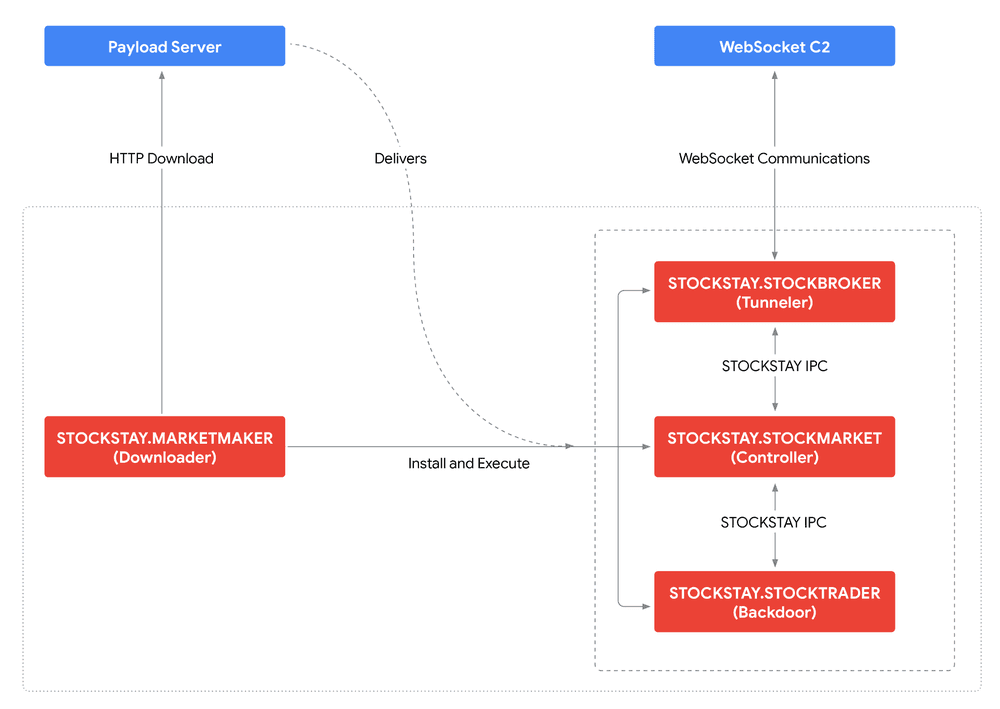
Written by: Jordan Jones Introduction Google Threat Intelligence Group (GTIG) has conducted an in-depth analysis of a .NET backdoor, tracked as STOCKSTAY, that has been continually developed and deployed by the Russia-linked threat actor Turla (aka SUMMIT, Secret Blizzard, VENOMOUS BEAR, UAC-0194) s
Key Insights
10 editorial insights.
The discovery of STOCKSTAY, a .NET backdoor actively developed by the threat actor Turla, highlights a significant escalation in cyber espionage tactics. This backdoor's adaptability and stealth raise immediate concerns for organizations, particularly in sensitive sectors like government and defense, where data integrity and security are paramount.
Turla, linked to Russian intelligence, is a notable player in the cyber threat landscape. Their history of sophisticated cyber operations, combined with the introduction of STOCKSTAY, underscores the strategic importance of state-sponsored actors in shaping global cybersecurity challenges, making them a central focus for threat intelligence teams.
The emergence of STOCKSTAY is strategically important as it indicates a shift towards more resilient and stealthy cyber tools that can evade traditional detection methods. This evolution necessitates an urgent reassessment of security protocols and defense strategies across industries, particularly for firms that handle critical infrastructure.
The introduction of STOCKSTAY could significantly impact companies by heightening the risk of data breaches and intellectual property theft. Organizations may need to allocate additional resources for cybersecurity measures, potentially increasing operational costs and affecting their profitability, particularly in the tech and defense sectors.
This development ties into a broader trend of increasing sophistication in cyber threats over the last 12-24 months, where state-sponsored actors have been utilizing advanced persistent threats (APTs) to exploit vulnerabilities. The rise in attacks targeting critical infrastructure and supply chains reflects a worrying escalation in cyber warfare tactics.
The global cybersecurity market was valued at approximately $217 billion in 2021 and is projected to grow at a CAGR of 12-15% through 2028. The increasing frequency and sophistication of threats like STOCKSTAY could accelerate this growth as organizations prioritize investment in advanced cybersecurity solutions.
The primary risks associated with the proliferation of STOCKSTAY include potential breaches of sensitive data and the challenge of detecting such stealthy malware. Organizations may face heightened scrutiny from regulators and stakeholders, leading to reputational damage and financial penalties if breaches occur.
Competitors in the cybersecurity space, such as CrowdStrike and Palo Alto Networks, may ramp up their research and development efforts to create more robust defenses against threats like STOCKSTAY. This could lead to innovative solutions or acquisitions aimed at enhancing threat detection capabilities and response times.
In the next 6-12 months, key regulatory milestones may involve updates to cybersecurity frameworks and standards, particularly in critical sectors. Entities like the Cybersecurity & Infrastructure Security Agency (CISA) may implement new guidelines aimed at bolstering defenses against advanced threats, prompting companies to adapt swiftly.
For technology professionals and investors, the rise of STOCKSTAY signifies a critical juncture in the cybersecurity landscape, emphasizing the need for proactive risk management and innovative solutions. Investors should focus on companies that demonstrate resilience and adaptability in the face of evolving threats, as these qualities will define market leaders.
The Google Threat Intelligence Group has unveiled findings on STOCKSTAY, a .NET backdoor linked to the Russian cyber group Turla. This development is critical as it reflects the group's ongoing efforts to enhance their cyber-espionage capabilities, which can have significant implications for global cybersecurity readiness.
STOCKSTAY operates utilizing .NET technology, which is often chosen for its versatility and ease of deployment. The backdoor allows attackers to establish a persistent connection to infected systems, facilitating data exfiltration and remote control. It employs sophisticated techniques to evade detection, including the ability to operate stealthily in the background while transmitting information back to the threat actor's command-and-control infrastructure. This continuous development cycle reflects a strategic focus on improving resilience against security measures.
In the broader cybersecurity landscape, the emergence of STOCKSTAY underscores a worrying trend where advanced persistent threats (APTs) are becoming increasingly sophisticated. Competitors in the cyber threat space are also ramping up their capabilities, leading to a dynamic environment where organizations must continuously adapt. Cybersecurity spending is projected to reach $200 billion in 2024, highlighting the urgency for companies to invest in robust defenses against such evolving threats.
In India, the impact of STOCKSTAY could be significant, especially for sectors such as financial technology and telecommunications, which are prime targets for cyber espionage. Indian companies are increasingly adopting cloud technologies and digital services, making them vulnerable to such sophisticated attacks. This calls for enhanced collaboration between private firms and government agencies to bolster the nation’s cybersecurity posture.
Key Highlights
- Revealed advanced .NET backdoor used by Turla for espionage
- Utilizes stealth techniques for persistent system access
- Cybersecurity spending set to reach $200 billion in 2024
- Indian fintech and telecom sectors face elevated risks
- Increased investment in cybersecurity infrastructure expected
Real-World Impact
Immediate effects of the STOCKSTAY backdoor include heightened risks for cybersecurity professionals, particularly those in threat detection and response roles. Industries like finance and telecommunications must urgently evaluate their defenses, as targeted attacks could lead to data breaches and financial losses.
Why This Matters
The emergence of STOCKSTAY signifies a strategic escalation in cyber warfare tactics, compelling businesses and government entities to rethink their cybersecurity frameworks. CTOs should prioritize advanced threat detection technologies and invest in employee training programs to strengthen their defenses against such sophisticated attacks.
As STOCKSTAY continues to evolve, organizations must remain vigilant and proactive in their cybersecurity strategies. Keeping an eye on emerging threats and investing in robust security measures will be crucial for safeguarding sensitive data.
Found this useful? Share it!