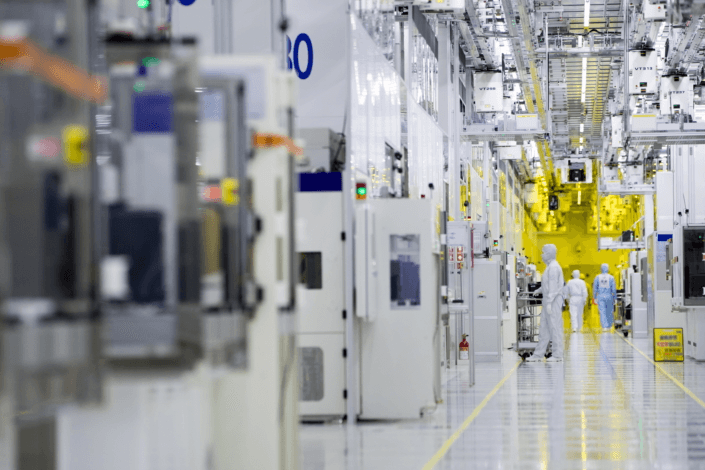
The South Korean government today announced a 900 trillion won, or $584 billion, initiative to grow the country’s chip manufacturing capacity. Officials also plan to build about $357 billion worth of artificial intelligence data centers. The chip manufacturing initiative will be led by Samsung Elect
Key Insights
10 editorial insights.
The South Korean government has announced a monumental $584 billion initiative to enhance its chip manufacturing capacity, emphasizing its commitment to becoming a global leader in semiconductor production. This strategic move is significant given the increasing global demand for chips, driven by the surge in technology adoption across industries such as automotive and consumer electronics.
Key players in this initiative include Samsung Electronics and SK hynix, both of which are already giants in the semiconductor industry. Samsung's leadership in memory chips and SK hynix's advancements in DRAM technology position them at the forefront of this initiative, making them critical to South Korea's ambition of capturing a larger market share in global semiconductor supply.
This development is strategically important as it aligns with global trends toward self-sufficiency in semiconductor production, especially in the wake of recent supply chain disruptions caused by geopolitical tensions and the pandemic. By bolstering its domestic capabilities, South Korea aims to reduce dependency on foreign manufacturers, particularly in a time of rising U.S.-China tensions over technology.
For companies like Samsung and SK hynix, this initiative could translate into significant business growth, potentially elevating their market valuations and expanding their production capacities. End users, particularly in tech and automotive sectors, may benefit from improved chip supply, which could stabilize prices and enhance product availability in the long term.
This announcement reflects a broader trend in the tech industry over the past two years, where countries like the U.S. and EU are also ramping up investments in semiconductor production. The global semiconductor market is projected to reach approximately $1 trillion by 2030, with a compound annual growth rate of around 8%, highlighting the urgency for countries to develop robust domestic industries.
The South Korean plan involves a staggering $357 billion investment in AI data centers, which underscores the pivotal role of artificial intelligence in the future of technology. As AI applications continue to expand across sectors, the demand for high-performance computing and data processing capabilities will likely surge, positioning South Korea strategically within this growth area.
Despite the ambitious goals, the initiative faces several risks and challenges, including potential delays in construction, the need for skilled labor, and the ongoing global semiconductor shortage. Additionally, regulatory hurdles related to environmental impact assessments may slow down the implementation of these projects, creating uncertainty in timelines.
Competitors like Taiwan Semiconductor Manufacturing Company (TSMC) and American firms such as Intel may respond aggressively to South Korea's initiative by ramping up their own investments and innovations. This competitive landscape may lead to a technological arms race, where each company aims to outpace the others in semiconductor capabilities and production efficiencies.
In the next 6-12 months, stakeholders should watch for regulatory approvals and partnerships between the South Korean government and these tech giants. Milestones such as groundbreaking ceremonies for new facilities and announcements of collaborations with AI and tech startups will provide insights into the initiative's progress and its effects on the industry.
For technology professionals and investors, this initiative represents a crucial opportunity to engage with a rapidly evolving semiconductor landscape. With South Korea positioning itself as a central player, there may be lucrative investment opportunities in related sectors, including AI and high-performance computing, making it essential for stakeholders to stay informed and adaptable.
South Korea has unveiled a monumental initiative worth 900 trillion won ($584 billion) aimed at significantly boosting its semiconductor manufacturing capabilities. This strategic move comes at a critical time as the global demand for chips surges, influenced by advancements in AI and IoT. The initiative not only strengthens South Korea's position in the semiconductor landscape but also has extensive implications for the global tech supply chain.
The initiative focuses on enhancing South Korea's chip production capacity, with Samsung Electronics and SK Hynix leading the charge. The government plans to allocate funds for cutting-edge fabrication plants and R&D facilities, targeting advanced process technologies such as 3nm and below. This investment will support the development of next-generation chips, including those crucial for AI applications, thereby ensuring that South Korea maintains its competitive edge in a market where speed and efficiency are paramount.
In the broader context, the semiconductor industry is experiencing an unprecedented boom, fueled by increasing demand from sectors such as automotive, consumer electronics, and telecommunications. Competitors in the U.S. and China are also ramping up their chip production capabilities, with the U.S. CHIPS Act aiming to bolster domestic semiconductor manufacturing. As a result, South Korea's initiative positions it as a formidable player amid these global shifts, with potential ramifications for market pricing and availability.
For India, this initiative could catalyze significant developments in its own semiconductor ecosystem. Indian companies like Tata and Wistron, which are exploring chip manufacturing, could benefit from technology transfers and partnerships with South Korean firms. Additionally, India's burgeoning tech landscape, particularly in AI and IoT, stands to gain from advancements in semiconductor technology, potentially fostering local innovation and job creation.
Key Highlights
- South Korea launches a $584 billion chip manufacturing initiative
- Focus on advanced process technologies like 3nm and below
- Global semiconductor market projected to exceed $1 trillion by 2025
- Samsung and SK Hynix set to lead the initiative, enhancing their market share
- Expect rapid advancements in AI chip technology within the next 3-5 years
Real-World Impact
This initiative will have immediate repercussions across various sectors, leading to the creation of thousands of jobs in semiconductor engineering, manufacturing, and research roles. Industries such as automotive, consumer electronics, and telecommunications will especially feel the impact, as a more robust supply chain could stabilize prices and improve product availability.
Why This Matters
Strategically, this initiative represents a significant shift in the global semiconductor landscape, highlighting the importance of national policies in tech development. CTOs and developers should reassess their supply chains and consider collaboration opportunities with South Korean firms, which may offer innovative solutions and technologies that can enhance their product offerings.
In the coming years, watch for increased collaboration between South Korean and Indian tech firms, particularly in the semiconductor sector. This partnership could lead to innovations that redefine AI and IoT applications, impacting both markets.
Found this useful? Share it!