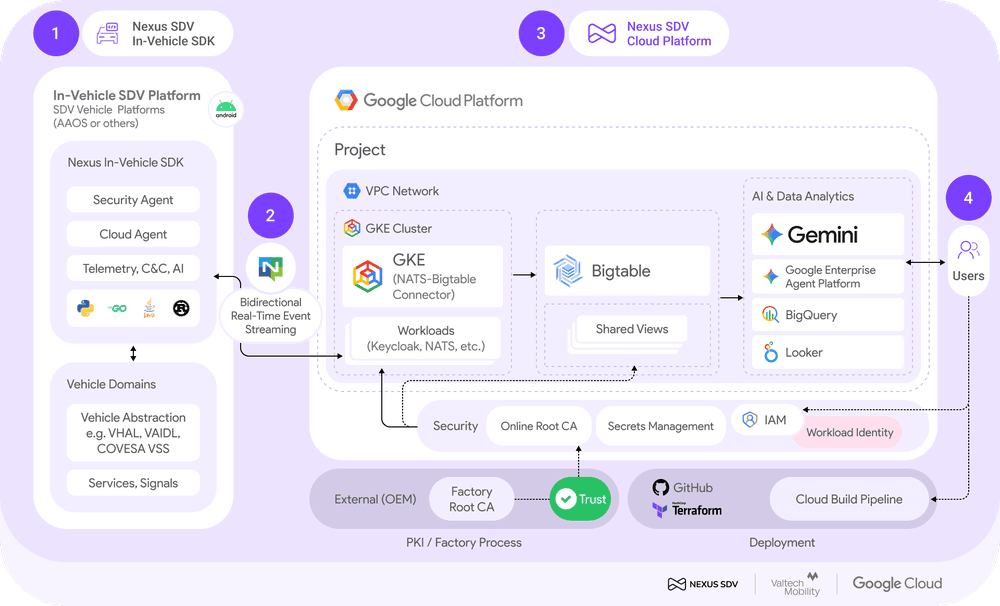
The automotive industry is at a pivotal crossroads as it hits the gas on adopting new technology. The era of the traditional connected vehicle has shifted into the age of the software-defined vehicle (SDV), notable for rapid innovation with many new capabilities delivered over the air. By integratin
Key Insights
10 editorial insights.
The automotive sector is undergoing a transformative shift toward software-defined vehicles (SDVs), characterized by enhanced capabilities and over-the-air updates. This evolution is crucial as the industry seeks to leverage cloud-based agents to secure and optimize these vehicles, addressing the growing demand for innovative features and improved safety standards.
Software-defined vehicles integrate multiple systems, allowing for significant enhancements through cloud technologies. By employing cloud-based agents, manufacturers can continuously update software and deploy new features in real-time. This model utilizes edge computing and AI to analyze vast amounts of data generated by vehicle sensors, thereby improving performance and security. The architecture ensures that vehicles are not only connected but also intelligent, adapting to conditions and user preferences dynamically.
The automotive landscape is becoming increasingly competitive as major players, including Tesla and traditional manufacturers like Ford and GM, invest heavily in SDV technology. The global market for software-defined vehicles is projected to exceed $100 billion by 2030, driven by consumer demand for advanced safety features and enhanced driving experiences. Additionally, regulatory frameworks are evolving to support this shift, mandating higher standards for cybersecurity in connected vehicles.
In India, the push for electric vehicles (EVs) and connected technologies positions local manufacturers, such as Tata Motors and Mahindra & Mahindra, to capitalize on SDV advancements. The Indian governmentโs initiatives for smart transportation and digital infrastructure further bolster this ecosystem. As cloud-based agents become integral to vehicle development, Indian tech companies are poised to innovate in areas like vehicle-to-everything (V2X) communication and real-time data processing.
Key Highlights
- Automakers are integrating cloud-based agents to enhance SDV security.
- Cloud technologies enable real-time updates and feature enhancements.
- The software-defined vehicle market could surpass $100 billion by 2030.
- Consumers benefit from improved safety and personalized features.
- Expect increased collaboration between automotive and tech sectors in the coming years.
Real-World Impact
The implementation of cloud-based agents in SDVs will significantly impact roles within the automotive industry, from software engineers to cybersecurity experts. As vehicles become more reliant on cloud technology, professionals skilled in these areas will be in high demand. Additionally, sectors such as insurance and fleet management will need to adapt to the evolving landscape of connected vehicles.
Why This Matters
This transition to software-defined vehicles represents a critical shift in the automotive industry toward greater connectivity and intelligence. CTOs should prioritize cloud integration and cybersecurity in their development strategies, ensuring vehicles are not only innovative but also secure against potential threats. Developers must adapt to new paradigms of continuous delivery and real-time data analysis.
As the automotive industry embraces cloud-based technologies, the focus will increasingly shift toward enhancing user experience and safety. Keeping an eye on regulatory developments and technological partnerships will be crucial for stakeholders in this evolving landscape.
Deep Analysis
Multi-Source Intelligence
Found this useful? Share it!