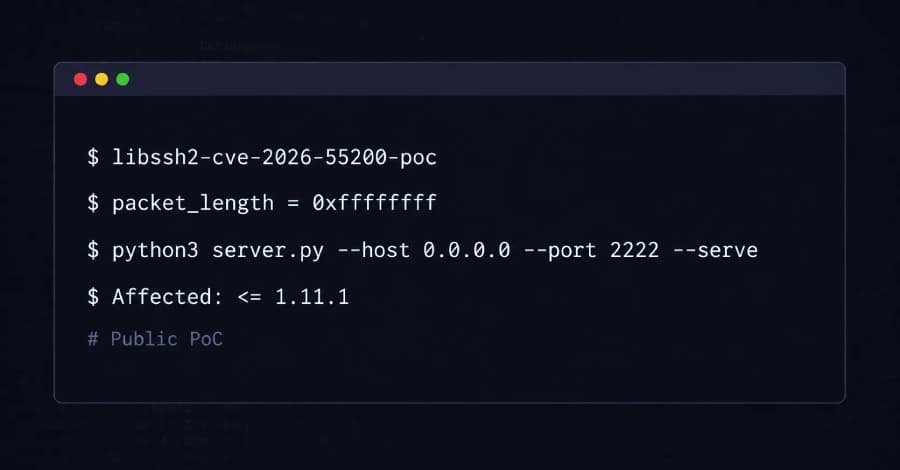
A public proof-of-concept is now out for CVE-2026-55200, a critical flaw in libssh2 that lets a malicious or compromised SSH server trigger memory corruption on a connecting client, with possible code execution. No credentials, no user interaction. The bug affects every release up to and including 1
Key Insights
10 editorial insights.
The release of a public proof-of-concept for CVE-2026-55200 is significant as it exposes a critical flaw in libssh2 that can lead to memory corruption and potential code execution without user interaction. This vulnerability affects all versions up to and including 1.9.0, highlighting an urgent need for users to patch their systems to avoid exploitation.
Key players in the SSH space, particularly those utilizing libssh2, include major cloud service providers and enterprises relying on secure shell access. Companies like Amazon Web Services and Google Cloud Platform, which integrate SSH functionalities, are especially vulnerable and must act swiftly to mitigate risks posed by this flaw.
This development underscores the increasing scrutiny on open-source software security, as vulnerabilities in widely used libraries can have cascading effects across numerous applications and services. The incident reinforces the importance of robust security practices and the need for continuous vigilance within the software development community.
For businesses employing libssh2, the immediate impact could be significant, particularly for those in regulated industries where data breaches can lead to hefty fines. The potential for remote code execution means that companies must prioritize security updates, which could incur costs related to downtime and emergency patching efforts.
This incident reflects a broader trend in cybersecurity where the attack surface is continually expanding due to the widespread adoption of open-source libraries and frameworks. Over the past 12-24 months, there has been a marked increase in the number of critical vulnerabilities disclosed, emphasizing the need for proactive security measures in software development.
The market for cybersecurity solutions is projected to reach $345 billion by 2026, growing at a CAGR of 10.5%. As vulnerabilities like CVE-2026-55200 emerge, there will likely be increased investment in both preventive and responsive cybersecurity technologies, driving further growth in this sector.
The primary risk stemming from this vulnerability is the potential for widespread exploitation, particularly as the proof-of-concept becomes publicly available. Organizations face challenges in ensuring that all systems are patched promptly, given the diversity of environments where libssh2 is deployed.
Competitors in the cybersecurity space are likely to respond by emphasizing their own security offerings, particularly those that provide real-time monitoring and automated patch management. Companies may also ramp up marketing efforts around secure software development practices to attract security-conscious clients.
In the next 6-12 months, watch for regulatory milestones that may arise from this incident, potentially leading to increased compliance requirements for software vendors. Additionally, we may see industry-wide calls for better security standards in open-source software development.
The ultimate significance of this flaw for technology professionals and investors lies in the growing awareness of software security risks. Companies that prioritize secure coding practices and proactively address vulnerabilities will likely gain a competitive advantage in the market, attracting investment and customer trust.
A public proof-of-concept has emerged for CVE-2026-55200, a significant vulnerability in libssh2 that could allow attackers to execute arbitrary code on connecting clients without requiring user interaction. This flaw raises urgent concerns for developers and organizations relying on secure shell protocols, as it could lead to widespread exploitation and data breaches.
CVE-2026-55200 is a critical vulnerability that affects all versions of libssh2 up to and including 1. This flaw enables a malicious SSH server to induce memory corruption within a client application, potentially leading to unauthorized code execution. The exploitation process does not depend on user credentials or interaction, making it particularly dangerous. The technical intricacies involve manipulating the SSH protocol, and due to the library's widespread use in various applications, the scale of potential impact is considerable.
The broader industry context indicates a growing trend in the exploitation of SSH vulnerabilities. With the rise of remote work and cloud services, secure access has become paramount. Competing libraries and frameworks are now under scrutiny as organizations seek alternatives or additional layers of security. According to market analysts, the global SSH market is projected to grow significantly, which raises the stakes for addressing vulnerabilities like CVE-2026-55200.
In India, the tech ecosystem is particularly vulnerable given the rapid adoption of cloud services and remote infrastructure management by enterprises. Indian companies relying on libssh2, especially in sectors like IT services, financial technology, and e-commerce, must act swiftly to patch systems. The local developer community may also find opportunities in creating enhanced security tools or alternative libraries to mitigate such vulnerabilities.
Key Highlights
- Public proof-of-concept released for CVE-2026-55200 flaw
- Memory corruption and potential code execution without user interaction
- SSH market anticipated to grow, increasing need for secure solutions
- Developers and IT teams benefit from heightened awareness and security measures
- Expect rapid patches and updates to be rolled out by affected organizations
Real-World Impact
The immediate effects of CVE-2026-55200 will be felt by IT security professionals, software developers, and systems administrators across various industries. Organizations must prioritize vulnerability assessment and patch management roles to safeguard against potential exploitation. The financial services sector, in particular, is at risk, as it relies on secure transactions and data integrity.
Why This Matters
This vulnerability signifies a critical shift towards the need for proactive security measures in the development lifecycle. CTOs and developers must integrate security best practices, such as regular vulnerability assessments and code reviews, to mitigate risks. Emphasizing secure coding standards will help prevent similar issues in the future, fostering a culture of security awareness.
As organizations react to CVE-2026-55200, a key point to monitor will be the response from the libssh2 community and the cybersecurity landscape overall. Future developments may include enhanced security protocols or the emergence of alternative libraries better equipped to handle such vulnerabilities.
Found this useful? Share it!