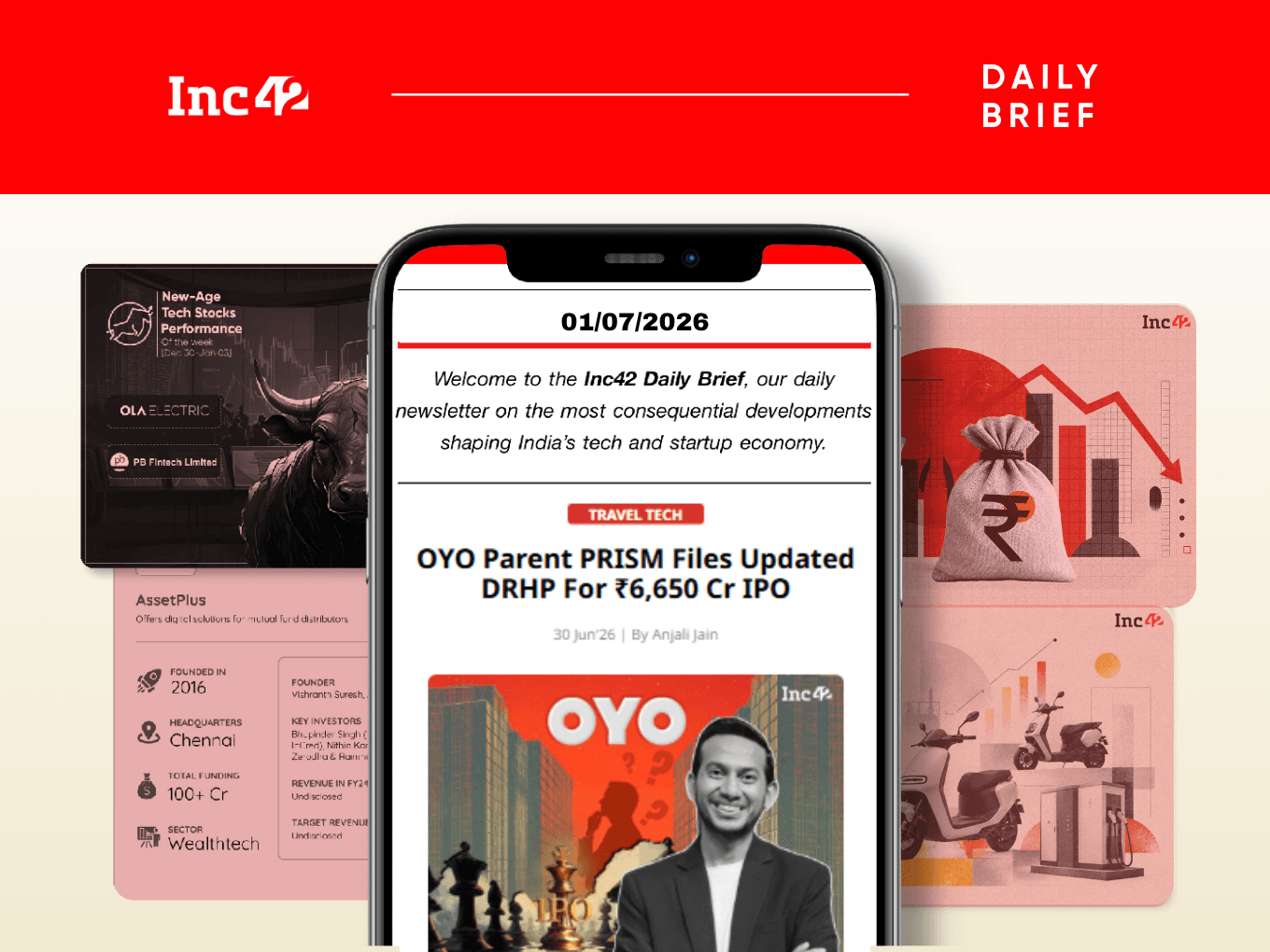
OYO Files UDRHP For ₹6,650 Cr IPO OYO is making its third attempt at the Indian bourses. The hospitality unicorn’s…
Key Insights
10 editorial insights.
OYO's filing of the UDRHP for a ₹6,650 crore IPO marks its third attempt to go public and signifies a renewed confidence amidst previous funding challenges. This move comes as the company seeks to stabilize its financial position after grappling with losses and operational disruptions during the pandemic, indicating a potential recovery trajectory for the hospitality sector in India.
Key players in this IPO include OYO's founder Ritesh Agarwal and major investors like SoftBank, which has invested over $1.5 billion in the company. Their involvement is critical as it reflects the trust of significant financial backers in OYO's business model, especially as they aim to leverage India's growing travel and tourism market.
This development is strategically important as it highlights the resilience of the Indian hospitality industry, which is gradually rebounding post-COVID-19. OYO's success could set a precedent for other startups in the sector to explore public offerings, potentially leading to an influx of capital that could accelerate growth within the industry.
For OYO, a successful IPO could provide much-needed capital to enhance its technology infrastructure and expand its portfolio, which currently includes over 43,000 hotels across 800 cities. This could improve service delivery for end users, offering better customer experiences and increased operational efficiency in the long run.
The resurgence of OYO's IPO ambitions connects to a broader trend of digital transformation within the hospitality sector over the last 12-24 months, where companies are increasingly adopting technology to streamline operations and enhance customer engagement. This trend is exemplified by the rise of contactless services and mobile app-based solutions to meet changing consumer preferences in travel.
The Indian hospitality market is projected to grow at a CAGR of around 10% over the next five years, reaching approximately $30 billion by 2026. OYO’s IPO attempt is a strategic move to capitalize on this growth, positioning itself to capture a larger market share as travel demand continues to rebound post-pandemic.
However, OYO still faces significant risks, including ongoing competition from established players like Marriott and Airbnb, which could impact market share. Additionally, unresolved questions about profitability and sustainable growth remain, particularly in light of economic fluctuations and evolving consumer behavior in travel.
Competitors are likely to respond aggressively to OYO's IPO news by enhancing their own offerings and potentially considering public listings as well. Companies like MakeMyTrip and Cleartrip may strategize to improve their customer service and innovate their product lines to maintain market relevance amid OYO's anticipated resurgence.
In the coming 6-12 months, it's essential to monitor regulatory responses, particularly the approval process for OYO’s IPO and any potential regulatory changes affecting the hospitality sector in India. These milestones will be crucial in determining the pace at which OYO can advance its plans and affect its capital-raising strategy.
For technology professionals and investors, OYO's IPO represents a vital case study in the intersection of technology and hospitality, emphasizing the growing importance of tech-enabled services in enhancing customer experiences. Investors should consider the implications of OYO's performance for broader market trends, including the potential for increased investment in tech-driven hospitality solutions.
OYO has officially submitted its Draft Red Herring Prospectus (DRHP) for an initial public offering (IPO) worth ₹6,650 crores, marking its third attempt to enter the Indian stock market. This move is significant as it highlights OYO's ongoing efforts to stabilize and grow amid a challenging funding environment and competitive landscape.
Technically, OYO's IPO is structured to raise funds that will be allocated towards multiple initiatives, including debt repayment, enhancing operational capabilities, and possibly expanding their portfolio of hotel properties. The filing follows the regulatory norms set by the Securities and Exchange Board of India (SEBI), with OYO detailing its business strategy and financial position for investor assessment. This time around, the company's focus appears to be on demonstrating improved financials and a clear path to profitability.
The broader hospitality sector is witnessing significant shifts, especially as travel rebounds post-pandemic. Competitors like Airbnb and MakeMyTrip are also vying for market share, which is anticipated to grow, with the Indian travel market projected to reach substantial figures in the coming years. However, OYO's unique value proposition lies in its technology-driven approach to hotel management and customer experience, setting it apart from traditional players.
In the context of India's tech ecosystem, OYO's IPO could signal renewed investor confidence in Indian startups, particularly in the hospitality sector. Companies that have pivoted towards digital solutions and customer engagement are expected to benefit from this trend. Furthermore, as OYO seeks to raise capital, tech developers and service providers in the hospitality tech space may see increased demand for innovative solutions that enhance operational efficiencies.
Key Highlights
- OYO files DRHP for ₹6,650 crores, signaling renewed market ambitions
- Focus on technology-driven hotel management and operational improvements
- Indian travel market projected to grow significantly, impacting competitors
- Hospitality tech developers stand to gain from OYO's renewed focus
- Expect clarity on the IPO timeline as regulatory approvals unfold
Real-World Impact
The immediate effects of OYO's IPO filing will be felt across various job roles in the hospitality and tech sectors. Positions in financial analysis, marketing, and operations may see heightened demand as OYO gears up for its public offering. This could also lead to a ripple effect in the startup ecosystem, encouraging other companies to consider IPOs as a viable funding route.
Why This Matters
This move represents a pivotal moment for OYO and the broader Indian startup landscape. By successfully launching an IPO, OYO could become a benchmark for others, demonstrating that capital markets are accessible even in challenging economic climates. It's essential for CTOs and developers to reassess their strategies in light of evolving investor expectations and the increasing importance of technology in scaling hospitality businesses.
As OYO prepares for its IPO, one key aspect to monitor is the regulatory approval timeline and how it shapes market sentiment. This could set a precedent for other startups contemplating public offerings in the near future.
Found this useful? Share it!