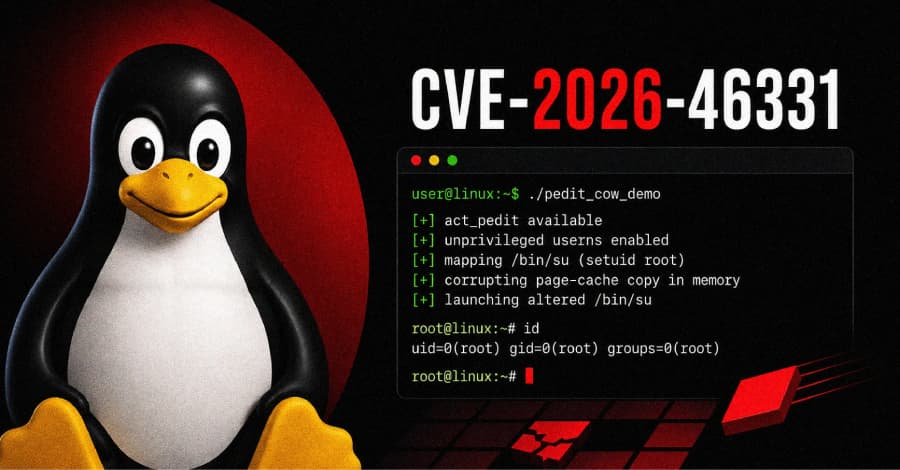
A flaw in the Linux kernel's traffic-control subsystem can let a local unprivileged user gain root on affected systems. CVE-2026-46331, nicknamed "pedit COW," is an out-of-bounds write in the packet-editing action (act_pedit) that corrupts shared page-cache memory. A public, working exploit appeared
Key Insights
10 editorial insights.
The recent discovery of CVE-2026-46331, a critical vulnerability in the Linux kernel's traffic-control subsystem, poses an immediate threat as it enables local unprivileged users to escalate their privileges to root. This flaw, which corrupts shared page-cache memory, highlights a significant security concern for Linux-based systems, potentially affecting millions of devices globally that rely on Linux for operating their servers and infrastructure.
Key players involved in addressing this vulnerability include major Linux distributions such as Red Hat, Ubuntu, and SUSE, which must swiftly implement patches to protect their users. The response from these organizations is crucial, as they not only serve enterprise customers but also provide foundational support for many cloud services and IoT devices, emphasizing their role in the broader tech ecosystem.
The emergence of this vulnerability underscores the growing importance of security in the open-source community, especially as organizations increasingly rely on Linux for critical infrastructure. This incident may catalyze a renewed focus on secure coding practices and vulnerability management within the open-source community, potentially leading to stricter security protocols in future kernel developments.
Businesses that utilize Linux-based systems may face operational disruptions and increased security risks if they do not promptly mitigate this vulnerability. For example, companies like Google and Amazon, which deploy Linux in their cloud services, might need to allocate additional resources for patch management and incident response, affecting their operational efficiency and potentially increasing costs.
This incident connects to a larger trend of increasing cyber threats targeting open-source software, which has gained prominence over the last 12-24 months. As the adoption of open-source solutions rises, the security landscape becomes more complex, raising concerns about vulnerabilities that could be exploited in a rapidly evolving threat environment, such as the rise of ransomware attacks.
The Linux market is substantial, with estimates suggesting it holds around 30% of the server operating system market share, valued at approximately $25 billion. The growth rate in the adoption of Linux for cloud and enterprise solutions continues to escalate, meaning that vulnerabilities like CVE-2026-46331 could affect a significant portion of the market, leading to potential financial repercussions for vendors and users alike.
The primary risks associated with this vulnerability include the potential for widespread exploitation, leading to unauthorized access and data breaches. Additionally, unresolved questions remain regarding the extent to which affected systems could be compromised before patches are applied, creating a critical window of exposure for organizations relying on Linux.
Competitors in the cloud and open-source market, such as Microsoft with its Azure Linux offerings, may leverage this vulnerability to emphasize the security features of their platforms. They might invest in enhanced security measures and marketing strategies to attract customers looking for more secure alternatives, thereby shifting market dynamics in response to vulnerabilities like this one.
In the coming 6-12 months, technology professionals should watch for regulatory developments and industry standards that emerge from this incident, particularly regarding open-source software security. Additionally, organizations may push for more stringent compliance frameworks and certifications to ensure that vulnerabilities are effectively managed and mitigated in the future.
Ultimately, the significance of this vulnerability for technology professionals and investors lies in its potential to reshape investment strategies and development priorities. As security becomes a paramount concern, companies may prioritize investing in cybersecurity measures, leading to a shift in resource allocation and strategic focus towards building more resilient tech infrastructures.
A recently identified vulnerability in the Linux kernel's traffic-control subsystem raises serious security concerns, allowing unprivileged local users to potentially gain root access. This flaw, identified as CVE-2026-46331 or 'pedit COW', enables malicious exploitation through an out-of-bounds write that corrupts shared page-cache memory. The emergence of a public exploit underscores the urgent need for system administrators and developers to address this critical issue.
The vulnerability affects the act_pedit function within Linux’s traffic control, which handles packet editing. An attacker can exploit this flaw by executing specially crafted packets, leading to an out-of-bounds write in memory. This corruption can grant unauthorized access and elevate user privileges to root level, allowing complete control over affected systems. Given the integral role of the Linux kernel in powering servers and devices globally, the implications of this vulnerability are significant, underscoring the need for prompt patching.
In the larger context of cybersecurity, the Linux ecosystem has been under increasing threat as more organizations turn to open-source solutions. Growing adoption of cloud services and containerization technologies further amplifies the risk, as vulnerable systems can be exploited at scale. According to recent reports, over 70% of enterprise servers run on Linux, making the prompt resolution of this flaw essential for maintaining security integrity across industries.
In India, the tech landscape heavily relies on Linux-based systems, particularly in sectors like IT services, cloud computing, and telecommunications. Companies such as Infosys, TCS, and Wipro utilize Linux for their service delivery platforms. This vulnerability could pose risks to clients relying on these companies, potentially leading to data breaches and financial losses. Indian developers and system administrators must prioritize patching their systems to safeguard against this exploit.
Key Highlights
- Urgent patches have been released to mitigate the vulnerability
- CVE-2026-46331 allows unauthorized root access through memory corruption
- Over 70% of enterprise servers globally run on Linux, amplifying the impact
- Organizations prioritizing security patches will benefit most by mitigating risks
- Expect a wave of updates and security advisories from major Linux distributions
Real-World Impact
The immediate effects of this vulnerability are likely to be felt across multiple job roles, particularly among system administrators and cybersecurity professionals. Industries heavily reliant on Linux, such as finance and cloud services, may face heightened risk of breaches if patches are not applied swiftly. Enterprises may need to reassess their security protocols and update their systems to protect sensitive data.
Why This Matters
This vulnerability represents a significant shift in the cybersecurity landscape, particularly for organizations that depend on open-source software. As threats become more sophisticated, it is essential for CTOs and developers to adopt a proactive approach to security, prioritizing regular updates and vulnerability assessments. This incident highlights the importance of robust security practices in an increasingly interconnected world.
Looking ahead, it will be crucial to monitor how quickly organizations implement the necessary patches and whether any major exploits arise from this vulnerability. The tech community’s response will be key in shaping future security protocols for Linux systems.
Found this useful? Share it!