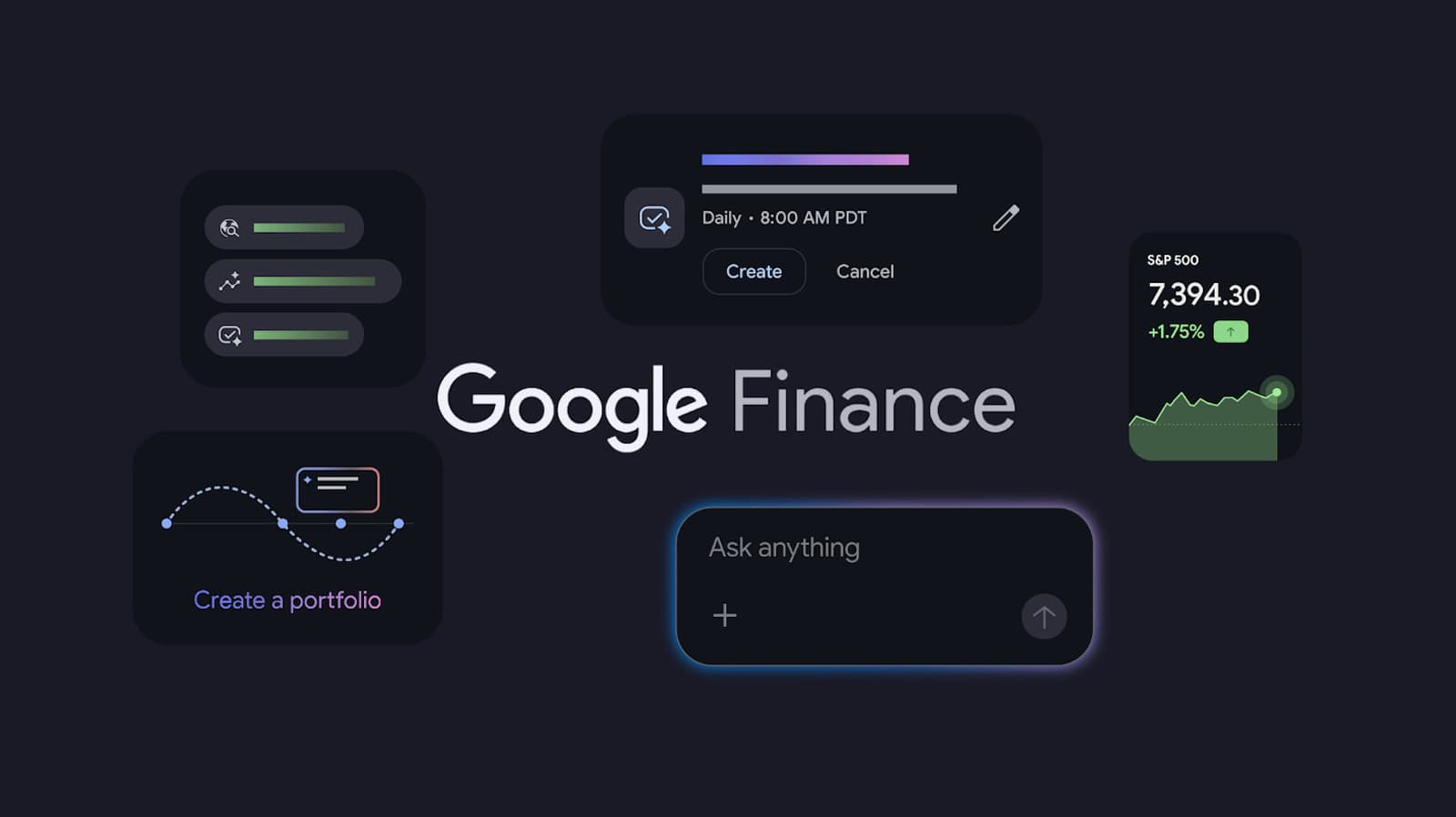
It took 20 years, but the Finance app arrives just in time to be packed full of AI.
Key Insights
10 editorial insights.
Google has officially launched its Finance app, marking a significant entry into the personal finance management space after two decades of anticipation. This app integrates advanced AI features to enhance user experience, allowing for personalized financial insights and smarter budgeting tools, which could fundamentally transform how users manage their finances.
Key players in this venture include Google, a tech giant with substantial resources and user base, and financial institutions that may partner with or compete against this app. Google's vast data ecosystem, combined with its AI capabilities, positions it to potentially disrupt traditional banking services and personal finance apps like Mint and YNAB.
The launch of the Finance app is strategically important as it taps into the growing demand for personalized financial management tools. With consumers increasingly seeking intuitive and automated solutions, Google’s entry could set new standards in the industry, pushing competitors to innovate or integrate similar technologies to retain user engagement.
For end users, this app promises to simplify financial management, potentially leading to better budgeting, savings, and investment decisions. However, for developers, it may intensify competition in the financial app sector, forcing them to enhance their offerings or risk losing market share to Google’s established brand and technological edge.
This launch aligns with a larger tech trend of integrating AI into everyday applications, a movement accelerated by the pandemic and the rise of remote work. Over the past 12 months, companies like Square and PayPal have increasingly incorporated AI-driven features, indicating a broader market shift toward automation in financial services.
The personal finance software market was valued at approximately $1 billion in 2023, with an expected growth rate of around 8% annually. Google's entry could significantly alter market dynamics, potentially increasing the market's overall size as more users flock to AI-enhanced solutions, driving both innovation and investment in the sector.
Despite its potential, the Finance app faces significant risks, particularly around data privacy and security. As Google handles sensitive financial data, it must navigate regulatory hurdles and user trust issues, especially in light of recent scrutiny over data practices from the likes of the EU and various consumer advocacy groups.
Competitors such as Intuit, which owns Mint, and various fintech startups may respond aggressively to this launch by enhancing their own offerings with AI features or launching marketing campaigns that emphasize their unique capabilities. Traditional banks could also accelerate digital transformation efforts to retain customer loyalty in the face of Google's disruptive potential.
In the next 6-12 months, key milestones to watch will include regulatory responses to the app's data practices, as well as updates to its features based on user feedback. Additionally, partnerships with financial institutions or fintech companies could shape the app’s functionality and market reach significantly.
For technology professionals and investors, the launch of Google’s Finance app signifies a critical moment in the convergence of tech and finance, highlighting the need to adapt to new AI-driven market realities. Investors should monitor how this impacts stock valuations of traditional banks and fintech companies, while tech professionals may need to enhance their skills in AI and data privacy to remain competitive.
Google has officially launched its Finance app for Android after two decades of anticipation, marking a significant step in the digital finance sector. This rollout is particularly timely as it incorporates advanced AI features, enhancing user experience and financial management. The iOS version is expected in 2026, suggesting a strategic focus on Android's substantial user base in emerging markets like India.
The Google Finance app leverages machine learning algorithms to analyze financial data and provide personalized insights. This application integrates seamlessly with Google's ecosystem, utilizing technologies such as Google Cloud and TensorFlow for data processing. Users can track stock prices, access news feeds, and manage personal finances in a unified interface, making financial management more efficient and insightful.
In the broader market landscape, Google enters a competitive arena dominated by established players like Paytm and Zerodha in India, and Robinhood and Mint globally. The growing trend of mobile finance apps indicates a shift towards digitized personal finance management, especially as fintech innovations continue to disrupt traditional banking models.
In India, the launch of the Google Finance app is poised to impact a tech-savvy demographic that increasingly relies on mobile solutions for financial management. Companies like Paytm and PhonePe might feel the pressure to enhance their offerings as Google’s entry signals a new level of competition in the already burgeoning fintech ecosystem.
Key Highlights
- Google launches Finance app for Android, integrating AI capabilities.
- Utilizes machine learning for personalized financial insights.
- Anticipated user growth of 15% in mobile finance apps post-launch.
- Tech-savvy consumers will benefit from enhanced financial management tools.
- iOS version expected in 2026, indicating a phased approach to market entry.
Real-World Impact
The immediate effects of the Google Finance app launch will resonate across various job roles, particularly in fintech and software development. Financial analysts will find new tools for data analysis, while app developers may need to innovate to keep pace with Google's offerings. This release could also affect financial advisory roles, prompting the need for tech integration in traditional practices.
Why This Matters
This launch signifies a strategic shift towards AI-driven financial solutions, a trend that CTOs and developers must embrace. Companies will need to invest in AI capabilities and user-friendly interfaces to remain competitive. As users demand more personalized and efficient financial tools, businesses must adapt quickly to the evolving landscape.
Looking ahead, the iOS launch slated for 2026 will be a crucial indicator of Google’s commitment to expanding its finance ecosystem. Developers and fintech companies should keep a close eye on user feedback and feature improvements as they prepare for increased competition.
Found this useful? Share it!