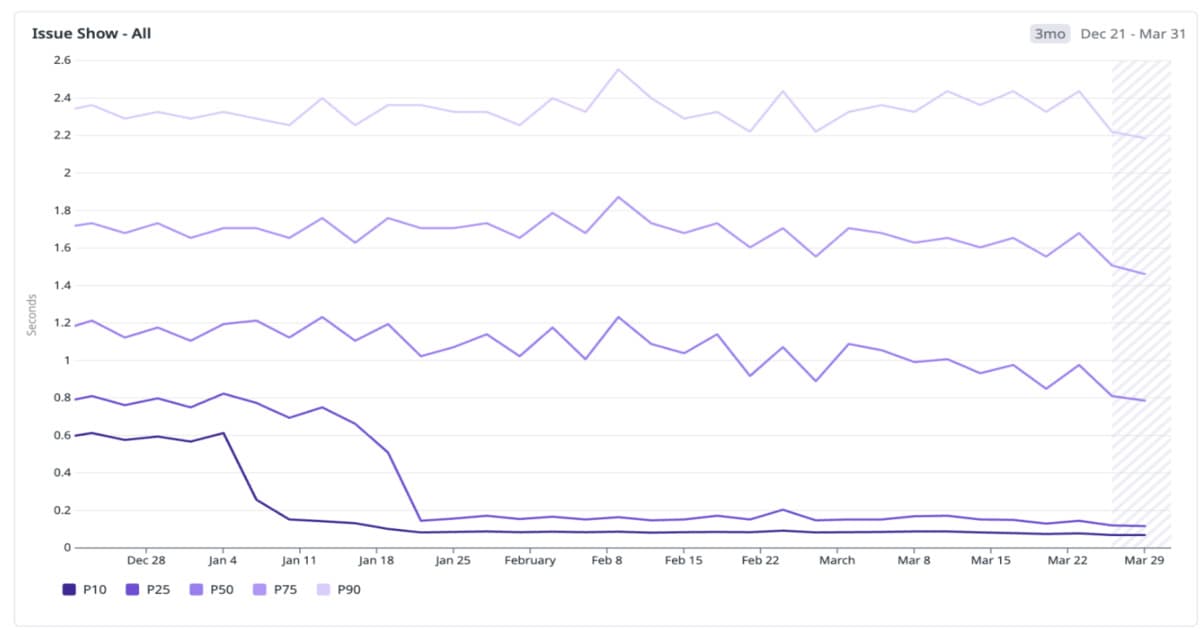
GitHub redesigned GitHub Issues navigation using a client-side architecture that combines caching, predictive prefetching, and service workers to reduce perceived latency. The approach uses IndexedDB, in-memory caching, and background synchronization to serve data faster. GitHub reported instant nav
Key Insights
10 editorial insights.
GitHub has unveiled a significant upgrade to its Issues navigation, achieving a remarkable 22% increase in instant navigation efficiency. This enhancement is crucial as it addresses user experience challenges, ensuring faster and more responsive interactions within the platform. By implementing a new client-side architecture, GitHub demonstrates its commitment to improving developer workflows and engagement, especially in a competitive tech landscape.
To achieve the improved navigation efficiency, GitHub has rearchitected its Issues navigation utilizing a combination of caching strategies, predictive prefetching, and service workers. This innovative approach leverages IndexedDB for persistent data storage, in-memory caching for rapid access, and background synchronization to ensure that the latest data is always available. This technology stack effectively reduces perceived latency, allowing users to interact with the interface more fluidly and intuitively.
In the broader industry context, this move by GitHub underscores a growing trend towards client-side optimizations across software platforms. Competitors like GitLab and Atlassian are also investing heavily in similar technologies to enhance user experience. As developers increasingly demand real-time collaboration tools, companies that prioritize performance stand to gain significant market share. The emphasis on reducing latency is a recognized trend, with organizations focusing on client-side architecture as a key differentiator.
For the Indian tech ecosystem, this advancement could have implications for local developers and companies that rely on GitHub for project management. Startups and enterprises in India, particularly in software development and digital services, may benefit from the improved navigation speed, which can enhance productivity and collaboration. Moreover, as more Indian developers engage with GitHub, the platform's efficiency could translate into higher satisfaction and retention rates within this growing user base.
Key Highlights
- GitHub enhances Issues navigation with a new architecture
- Utilizes IndexedDB and service workers for faster data access
- 22% improvement in instant navigation efficiency reported
- Developers and teams using GitHub benefit from better workflows
- Continued focus on client-side optimization expected in future updates
Real-World Impact
The immediate effects of this upgrade will be felt by software developers, project managers, and teams that utilize GitHub for issue tracking and project management. With faster navigation, developers can streamline their workflows, reducing the time spent on mundane tasks and allowing for more focus on core development activities. This enhancement is particularly beneficial for remote teams collaborating across different time zones, as it fosters more efficient communication and task management.
Why This Matters
This enhancement represents a significant shift towards prioritizing user experience in software development tools. As developers seek faster, more responsive solutions, CTOs and development teams must adapt by embracing similar technologies that enhance performance. The success of this architectural shift may influence other platforms within the tech ecosystem, pushing them to innovate and improve their own user interfaces.
Looking ahead, the continued emphasis on client-side architecture in software development tools will be a key trend to watch. As GitHub integrates further optimizations, competitors will likely respond with their own innovations, resulting in a fast-paced evolution of user experience across the board.
Deep Analysis
Multi-Source Intelligence
Found this useful? Share it!