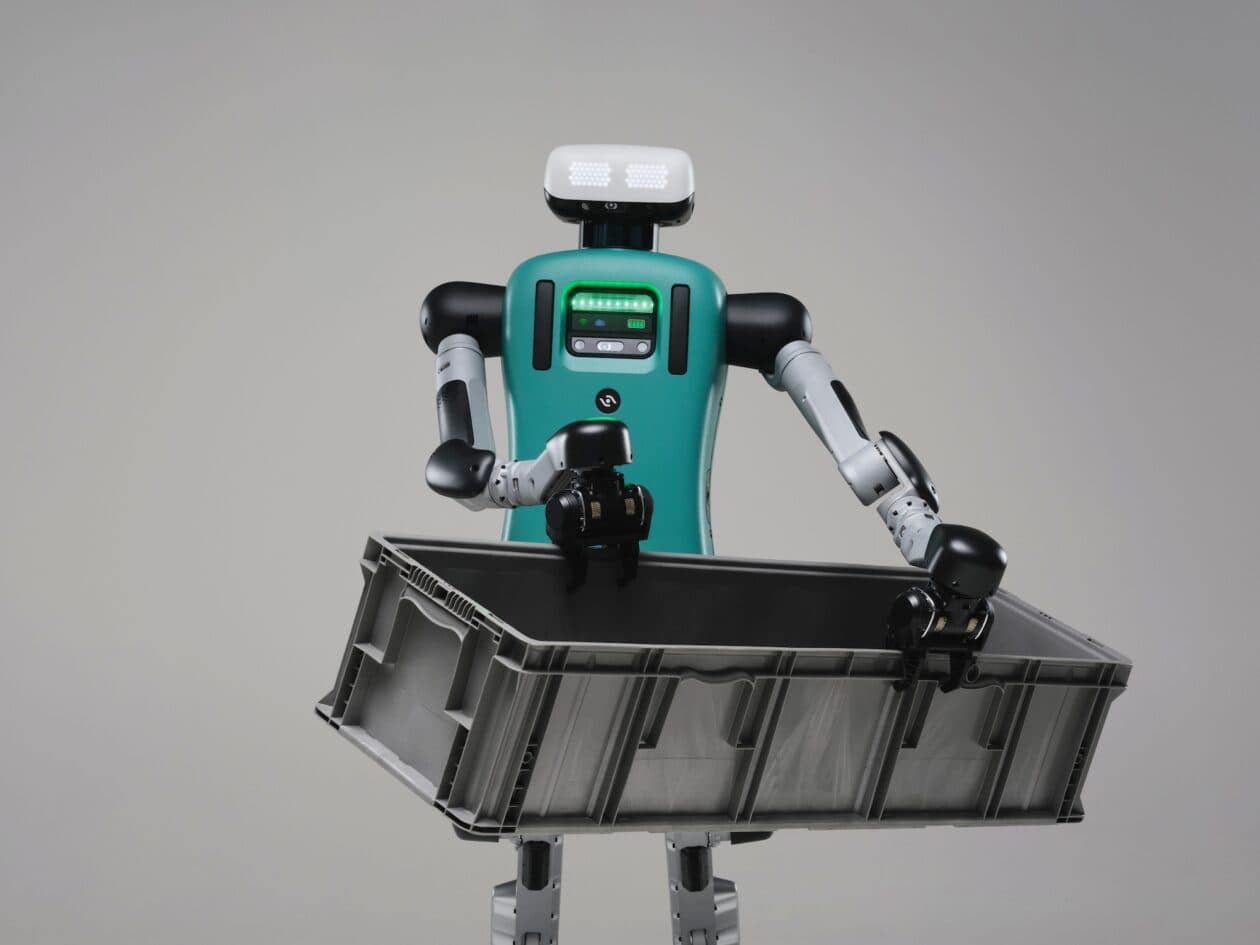
Salem, Ore.-based Agility Robotics, whose two-legged Digit robots have been tested inside Amazon warehouses, is set to become the first publicly traded U.S. company dedicated solely to humanoid robots, beating its Silicon Valley and East Coast rivals to Wall Street. Read More
Key Insights
10 editorial insights.
Agility Robotics, a pioneer in humanoid robotics, is set to go public through a $2.5 billion deal, marking a significant milestone as the first U.S. company solely focused on this sector. This development is crucial as it validates the commercial viability of humanoid robots in logistics and other industries, particularly following successful trials in Amazon warehouses.
The key players in this deal include Agility Robotics itself, along with strategic partners like Amazon, which has tested the Digit robot in its operations. Amazon's involvement not only lends credibility to Agility's technology but also highlights the potential for robotic automation to streamline operations in large-scale logistics environments.
This public offering represents a strategic pivot towards the acceptance of humanoid robots in everyday business operations, positioning Agility Robotics as a leader in a rapidly evolving industry. By being the first to market, Agility sets a precedent that could encourage increased investment and innovation in humanoid robotics across various sectors.
For companies like Amazon, the deployment of Digit robots could significantly reduce labor costs and increase operational efficiency. As Agility Robotics expands its offerings, end users may benefit from improved productivity and lower service costs, ultimately reshaping the landscape of warehouse and logistics operations.
The rise of Agility Robotics aligns with a broader trend of increased investment in automation and robotics, which has seen a surge over the past 12-24 months. With the global robotics market projected to reach $210 billion by 2025, Agility's IPO is timely, as companies increasingly turn to automation to address labor shortages and supply chain challenges.
As of 2022, the global humanoid robotics market was valued at approximately $2 billion and is expected to grow at a CAGR of 30% over the next five years. This rapid growth underscores the lucrative potential of the sector, which Agility Robotics aims to capitalize on through its innovative products and public offering.
Despite its groundbreaking achievements, Agility Robotics faces challenges such as public skepticism over the reliability of humanoid robots and competition from established players like Boston Dynamics. Additionally, navigating regulatory frameworks around robotics in workplaces remains an unresolved question that could impact its growth trajectory.
Competitors, including established firms like Boston Dynamics and emerging startups, are likely to ramp up their efforts in humanoid robotics following Agility's IPO. This could lead to increased innovation, as well as potential partnerships or mergers as firms seek to enhance their technological capabilities in an increasingly competitive landscape.
In the upcoming 6-12 months, key milestones to watch will include regulatory approvals for the deployment of humanoid robots in various sectors and Agility's ability to demonstrate the practical applications of its technology in real-world settings. Success in these areas will be critical for gaining market traction and investor confidence.
For technology professionals and investors, Agility Robotics' IPO represents a significant opportunity to engage with a rapidly evolving sector characterized by high growth potential. The move signals a broader acceptance of robotics in everyday business processes, suggesting that investing in robotic technologies could yield substantial returns as the market matures.
Agility Robotics, based in Salem, Oregon, is poised to make history with a $2.5 billion public offering, becoming the first U.S. company exclusively focused on humanoid robots. This significant milestone not only showcases the company's dominance in the market but also highlights a growing acceptance of robotics in various sectors, particularly in logistics and manufacturing.
Agility Robotics' flagship product, Digit, is a two-legged humanoid robot designed to navigate complex environments, which includes testing within Amazon warehouses. The underlying technology incorporates advanced machine learning algorithms for real-time navigation and obstacle avoidance, enabling Digit to perform tasks such as package handling and delivery. The robots are equipped with sophisticated sensors and AI capabilities that allow them to adapt to dynamic workspaces, making them suitable for a variety of industrial applications.
The humanoid robotics sector has seen significant growth over the past few years, driven by advancements in AI and automation. Agility Robotics faces competition from both established tech companies and startups focusing on robotics and AI. Industry giants like Boston Dynamics and newer entrants are racing to innovate, making the market more competitive. The global humanoid robot market is projected to reach $10 billion by 2025, indicating a robust demand for these technologies.
In India, the rise of robotics and automation is gaining traction, particularly in manufacturing and logistics. Companies like GreyOrange and Netradyne are developing automation solutions that may intersect with humanoid robotics applications. The Agility Robotics IPO could inspire Indian startups to pursue similar ventures, potentially leading to increased investment in humanoid robotics and automation solutions tailored for local industries.
Key Highlights
- Agility Robotics announces a landmark $2.5 billion IPO.
- Digit robot features advanced AI and navigation capabilities.
- Humanoid robotics market projected to hit $10 billion by 2025.
- Logistics and manufacturing sectors stand to benefit the most.
- Next steps include further development of humanoid capabilities.
Real-World Impact
The Agility Robotics IPO is expected to influence various job roles, particularly in logistics, manufacturing, and robotics engineering. As companies increasingly adopt humanoid robots, roles in robotics programming, systems integration, and maintenance will become crucial. Additionally, sectors such as supply chain management may see a shift in operational dynamics as automation solutions are integrated.
Why This Matters
This IPO signals a pivotal shift in the robotics industry, indicating that humanoid robots are becoming mainstream. CTOs and developers should re-evaluate their automation strategies and consider integrating advanced robotics solutions into their operations. The move also emphasizes the importance of investing in AI and machine learning to stay competitive in an evolving market.
As Agility Robotics takes its first steps on Wall Street, the industry will be closely monitoring its progress and market response. The future of humanoid robotics holds exciting possibilities, particularly for sectors reliant on automation.
Found this useful? Share it!