● LIVE
OpenAI releases GPT-5 APIIndia AI startup raises $120MBitcoin ETF hits record inflowsMeta Llama 4 benchmarks leakedOpenAI releases GPT-5 APIIndia AI startup raises $120MBitcoin ETF hits record inflowsMeta Llama 4 benchmarks leaked
📅 Sat, 21 Mar, 2026✈️ Telegram
AiFeed24

AI & Tech News

🔍
✈️ Follow
🏠Home🤖AI💻Tech🚀Startups₿Crypto🔒Security🇮🇳India☁️Cloud🔥Deals
✈️ News Channel🛒 Deals Channel
Defining AI Safety Paradigms: Constitutional AI and RLHF
☁️Cloud & DevOps

Defining AI Safety Paradigms: Constitutional AI and RLHF

Home/Cloud & DevOps/Defining AI Safety Paradigms: Constitutional AI and RLHF

Originally published at adiyogiarts.com Examine AI safety in 2026, comparing Constitutional AI and Reinforcement Learning from Human Feedback (RLHF). Discover critical tradeoffs for ethical, AI development and future alignment. HOW IT WORKS Understanding the emergent field of AI safety requires a cl

⚡Quick SummaryAI generating...
A

Aditya Gupta

📅 Mar 21, 2026·⏱ 8 min read·Dev.to ↗
✈️ Telegram𝕏 TweetWhatsApp
📡

Original Source

Dev.to

https://dev.to/aditya_gupta_india/defining-ai-safety-paradigms-constitutional-ai-and-rlhf-5c80
Read Full ↗

Originally published at adiyogiarts.com

Examine AI safety in 2026, comparing Constitutional AI and Reinforcement Learning from Human Feedback (RLHF). Discover critical tradeoffs for ethical, AI development and future alignment.

HOW IT WORKS

Defining AI Safety Paradigms: Constitutional AI and RLHF

Understanding the emergent field of AI safety requires a clear distinction between its leading paradigms. Reinforcement Learning from Human Feedback (RLHF) is a machine learning technique designed to optimize large language models (LLMs), like ChatGPT and Claude, to better align with human preferences and values. This approach integrates direct human feedback into the reward function of a reinforcement learning process, refining model behavior based on human judgment.

Defining AI Safety Paradigms: Constitutional AI and RLHF

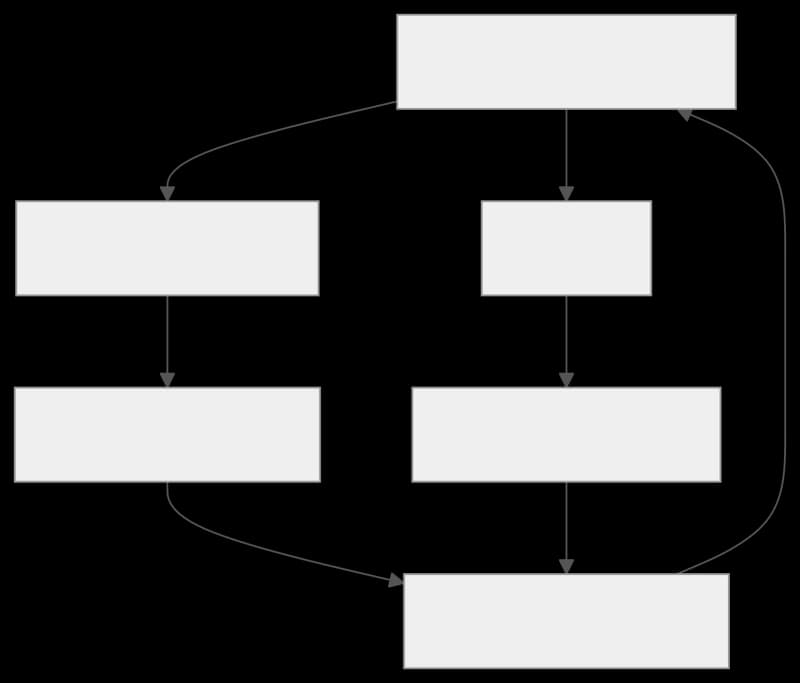
Fig. 1 — Defining AI Safety Paradigms: Constitutional AI an

Conversely, Constitutional AI (CAI) aims for AI alignment through a comprehensive set of explicit, human-articulated principles, effectively a “constitution.” CAI systems train models to critically evaluate and improve their own outputs against these written principles. This method frequently s Reinforcement Learning from AI Feedback (RL-AIF), allowing the AI to learn self-correction guided by its foundational guidelines.

Definition:### Mechanism of Action: Aligning AI with Human Values Through RLHF

The operational mechanics of Reinforcement Learning from Human Feedback (RLHF) involve a sophisticated multi-stage process for aligning AI with human values. This procedure typically encompasses three core steps: initial pretraining of a language model, meticulous data gathering to train a reward model, and subsequent fine-tuning of the LM using reinforcement learning. An initial language model is first extensively pretrained on a vast corpus of text data to establish foundational linguistic capabilities.

Following pretraining, human annotators play a crucial role by ranking multiple responses generated by the LLM. This human-labeled data is then used to train a separate “reward model,” which learns to accurately predict how much a human would reward a particular text sequence. Finally, the language model undergoes fine-tuning with reinforcement learning, where the trained reward model serves as the critical reward function, guiding the model’s learning process. Algorithms like Proximal Policy Optimization (PPO) are typically d for this fine-tuning stage.

Pro Tip:### Self-Correction and Principles: The Constitutional AI Framework

The Constitutional AI (CAI) framework distinguishes itself by operating on the principle of self-supervision, meticulously guided by a “constitution” composed of natural language rules. This innovative process generally unfolds in two major, distinct phases: Supervised Learning through Critique and Revision (SL-CAI) and Reinforcement Learning from AI Feedback (RL-AIF). During the SL-CAI phase, a base model autonomously critiques its own generated responses using the established constitutional principles.

The model then revises its output to ensure full compliance with these guiding rules, effectively learning to self-correct. In the subsequent RL-AIF phase, a separate, specialized AI model, often referred to as an “AI judge,” takes on the critical role of evaluating which of two generated samples better adheres to the constitutional principles. The content of this constitution can draw inspiration from established ethical frameworks, such as the UN Declaration of Human Rights, providing a foundation for AI alignment.

Key Takeaway:WHY IT MATTERS

Navigating 2026: Performance vs. Interpretability Tradeoffs

By 2026, the paramount challenge in enterprise AI is markedly shifting from merely demonstrating raw capability to ensuring behavioral reliability and trustworthiness. Both Reinforcement Learning from Human Feedback (RLHF) and Constitutional AI (CAI) are fundamentally designed to enhance performance in terms of helpfulness and harmlessness, crucial aspects for real-world deployment. However, their approaches present different tradeoffs, especially regarding transparency.

Navigating 2026: Performance vs. Interpretability Tradeoffs

Fig. 2 — Navigating 2026: Performance vs. Interpretability

RLHF can lead to models where the alignment process remains opaque, often described as a “black box” due to the complex, implicit nature of the reward model. Conversely, Constitutional AI offers significantly greater transparency and interpretability because its alignment is explicitly based on human-readable principles. Nonetheless, defining truly comprehensive, clear, and adaptable constitutional principles for CAI is an inherently complex task, which can potentially lead to inconsistent results or even introduce an unintended “constitutional bias.”

Definition:### Scalability and Deployment Challenges for Each Approach

Reinforcement Learning from Human Feedback (RLHF) confronts significant scalability challenges that hinder its widespread and rapid deployment. The process is inherently labor-intensive and consequently very costly, requiring substantial human involvement at various stages. Coordinating thousands of human reviewers across diverse domains for RLHF becomes a slow and expensive undertaking, creating a formidable “human bottleneck” that impedes progress.

The ultimate quality and effectiveness of RLHF performance are directly tied to the quality and consistency of these human annotations, which can often be subjective or inconsistent. This “human bottleneck” in RLHF struggles notably to keep pace with the exponential growth in model complexity and the increasing demand for advanced AI systems. As models grow larger and more intricate, the human effort required to align them through feedback becomes a disproportionately massive resource drain.

Key Takeaway:### Ethical Quandaries: Mitigating Bias in Value Alignment

Mitigating bias in value alignment presents profound ethical quandaries for both Constitutional AI (CAI) and Reinforcement Learning from Human Feedback (RLHF). In RLHF, biases present in the human annotators’ preferences or the initial training data can be implicitly reinforced and amplified within the reward model. This creates an opaque challenge, as the subtle biases embedded in human feedback become difficult to trace or correct once integrated into the system.

For CAI, the ethical dilemma shifts to the source and interpretation of its guiding principles. The selection of a “constitution” and who defines these rules can introduce inherent biases, potentially reflecting a narrow worldview or cultural perspective. The interpretation of these principles by the AI judge in RL-AIF might also subtly deviate from human intent, leading to outcomes that are constitutionally compliant but ethically questionable in broader contexts. Ensuring universality and fairness in ethical directives remains a critical, unresolved issue.

LOOKING AHEAD

Key Data

Metric
Value

026
2

— Defining AI Safety Para
1

: Performance vs
2026

26
20## Anticipating Convergence: Hybrid Models and Future Directions

As AI safety research progresses, anticipating a convergence of methodologies becomes increasingly plausible, leading to more hybrid models. Future directions suggest that combining the strengths of Constitutional AI (CAI) with aspects of Reinforcement Learning from Human Feedback (RLHF) could yield superior alignment strategies. For instance, explicit constitutional principles could provide a foundational, auditable layer of ethical guidelines, while targeted human feedback refines nuanced behaviors.

Anticipating Convergence: Hybrid Models and Future Directions

Fig. 3 — Anticipating Convergence: Hybrid Models and Future

Hybrid approaches might RLHF for initial broad alignment and user preference shaping, then employ CAI for fine-grained self-correction against specific safety directives. This would address the scalability issues of RLHF while enhancing the adaptability and interpretability of CAI. Iterative refinement loops, where human oversight informs principle evolution and AI feedback guides model adjustments, represent a promising path toward highly aligned and adaptive AI systems capable of navigating complex ethical landscapes.

Regulatory Impact on AI Safety Development by 2026

The regulatory impact on AI safety development by 2026 is expected to be substantial, influencing how models are designed, deployed, and aligned. Emerging frameworks like the EU AI Act are pushing for greater transparency, accountability, and explainability in AI systems, which directly affects both RLHF and Constitutional AI (CAI). The opacity of RLHF‘s reward models might face increased scrutiny, demanding methods to articulate the underlying human preferences more clearly.

CAI, with its explicit, human-readable principles, appears to be better positioned to meet demands for auditable alignment, but regulators will likely challenge the scope and neutrality of its “constitution.” Compliance will necessitate rigorous testing and documentation of alignment processes, favoring approaches that can clearly demonstrate adherence to legal and ethical standards. This regulatory push will likely accelerate research into more interpretable alignment methods and quantifiable safety metrics, shaping future AI development priorities significantly.

Quantifying Success: Metrics for AI Alignment in Practice

Quantifying success in AI alignment presents a complex challenge, as objective metrics must capture inherently subjective concepts like helpfulness and harmlessness. In practice, evaluating Reinforcement Learning from Human Feedback (RLHF) often involves assessing user satisfaction scores, the reduction of undesirable outputs (e.g, toxicity or bias), and performance on specific safety benchmarks. However, the qualitative nature of human preferences can make consistent measurement difficult, requiring sophisticated evaluation frameworks.

For Constitutional AI (CAI), success metrics would center on the model’s adherence to its explicit constitutional principles, potentially through automated or human-assisted auditing of outputs against these rules. Consistency in applying principles across diverse scenarios and the ness of the system to adversarial attempts to bypass its safety guardrails are crucial. Ultimately, a combination of quantitative performance indicators and qualitative assessments of ethical compliance will be vital to truly measure AI alignment efficacy in 2026 and beyond.

Published by Adiyogi Arts. Explore more at adiyogiarts.com/blog.

Tags:#cloud#dev.to

Found this useful? Share it!

✈️ Telegram𝕏 TweetWhatsApp

Read the Full Story

Continue reading on Dev.to

Visit Dev.to ↗

Related Stories

☁️
☁️Cloud & DevOps

Majority Element

about 2 hours ago

☁️
☁️Cloud & DevOps

Building a SQL Tokenizer and Formatter From Scratch — Supporting 6 Dialects

about 2 hours ago

☁️
☁️Cloud & DevOps

Markdown Knowledge Graph for Humans and Agents

about 2 hours ago

Moving Beyond Disk: How Redis Supercharges Your App Performance
☁️Cloud & DevOps

Moving Beyond Disk: How Redis Supercharges Your App Performance

about 2 hours ago

📡 Source Details

Dev.to

📅 Mar 21, 2026

🕐 about 2 hours ago

⏱ 8 min read

🗂 Cloud & DevOps

Read Original ↗

Web Hosting

🌐 Hostinger — 80% Off Hosting

Start your website for ₹69/mo. Free domain + SSL included.

Claim Deal →

📬 AiFeed24 Daily

Top 5 AI & tech stories every morning. Join 40,000+ readers.

✦ 40,218 subscribers · No spam, ever

Cloud Hosting

☁️ Vultr — $100 Free Credit

Deploy cloud servers in 25+ locations. From $2.50/mo. No contract.

Claim $100 Credit →
AiFeed24

India's AI-powered tech news hub. Daily coverage of AI, startups, crypto and emerging technology.

✈️🛒

Topics

Artificial IntelligenceStartups & VCCryptocurrencyCybersecurityCloud & DevOpsIndia Tech

Company

About AiFeed24Write For UsContact

Daily Digest

Top 5 AI stories every morning. 40,000+ readers.

No spam, ever.

© 2026 AiFeed24 Media.Affiliate Disclosure — We earn commission on qualifying purchases at no extra cost to you.
PrivacyTermsCookies