South Korea's Chip Boom: Navigating the Tech Market Surge
South Korea’s Kospi stock market has hit record highs thanks to AI, but experts urge caution over boom-bust cycles and a heavy reliance on two chipmakers South Korea has leapfrogged India to become the world’s sixth largest share market, leaving equity markets in the UK, Germany and France trailing
South Korea has reached a significant milestone as its Kospi stock market hits record highs, propelled by advancements in AI and semiconductor technology. This surge underscores the nation's evolving role in the global tech landscape, yet experts warn of potential pitfalls stemming from overdependence on a few key players in the semiconductor sector.
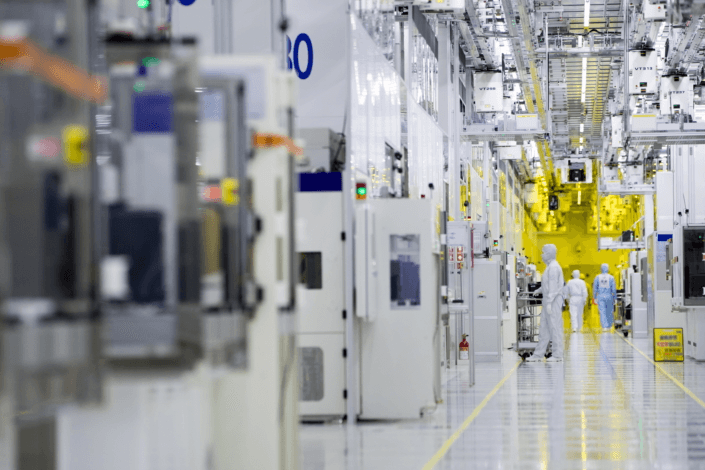
At the heart of South Korea's stock market ascendancy is the burgeoning demand for chips, driven by artificial intelligence applications and broader digital transformation. Major semiconductor manufacturers, notably Samsung and SK Hynix, are innovating with advanced process technologies like 5nm and 3nm nodes, enhancing performance and reducing power consumption. These technologies facilitate the development of AI-optimized processors that are critical for machine learning and data analytics, reinforcing their dominance in the global market.
In a competitive landscape, South Korea's semiconductor firms are not without rivals. The U.S. and Taiwan remain formidable competitors, with companies like Intel and TSMC pushing the envelope in chip design and fabrication. The global semiconductor market is projected to reach $1 trillion by 2030, with South Korean firms aiming to capture a significant share. However, the reliance on just a couple of players raises concerns about the market's vulnerability to cyclical downturns, akin to the boom-bust cycles witnessed in the past.
For India, this South Korean tech surge presents both challenges and opportunities. As local companies like Reliance Jio and Tata Consultancy Services expand their tech capabilities, they may find themselves in competition for semiconductor resources and talent. Furthermore, India's push towards self-reliance in semiconductor manufacturing through initiatives like the Production Linked Incentive (PLI) scheme could be influenced by South Korea's developments, prompting Indian firms to innovate rapidly and diversify their supply chains.
Key Highlights
- South Korea's Kospi stock market reaches unprecedented highs.
- Samsung and SK Hynix leverage advanced 5nm and 3nm chip technologies.
- The global semiconductor market is expected to reach $1 trillion by 2030.
- Tech sectors relying on semiconductors, like AI and automotive, stand to gain significantly.
- Watch for emerging semiconductor policies from the Indian government in response.
Real-World Impact
The immediate effects of this market surge are felt across various sectors reliant on semiconductor technology. Job roles in AI development, data science, and semiconductor engineering are likely to see increased demand. Industries such as automotive, healthcare, and consumer electronics will need to adapt quickly to the evolving chip landscape, ensuring they have access to the latest technologies to remain competitive.
Why This Matters
This trend represents a strategic shift in the global tech ecosystem, highlighting the importance of semiconductor manufacturing as a national priority. CTOs and developers should reassess their supply chain strategies and invest in partnerships that prioritize resilient and diverse sourcing of semiconductor technologies.
As South Korea's semiconductor market continues to grow, keeping an eye on the potential regulatory changes and investment trends in India will be crucial. The tech community should prepare for shifts that could redefine competitive landscapes in the coming years.
Found this useful? Share it!