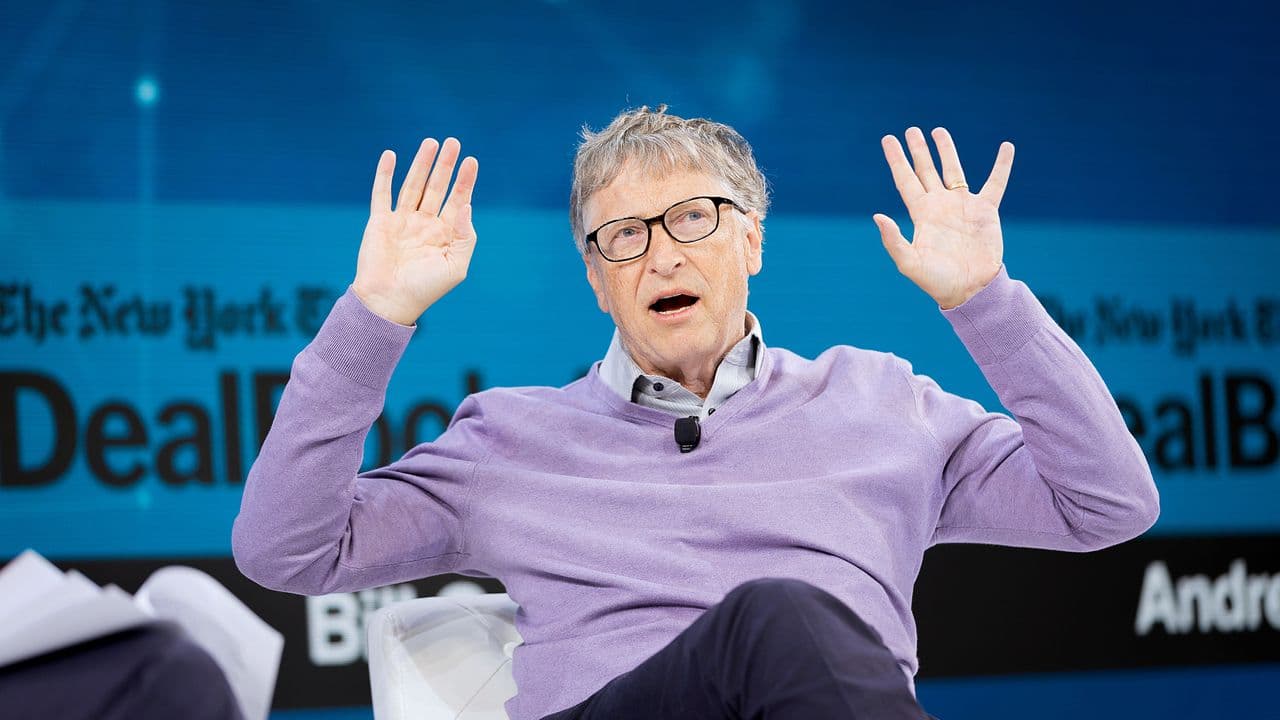
Bill Gates says only four jobs are safe from AI, but his prediction record isn't perfect. Here are seven times his tech forecasts missed the mark.
Key Insights
10 editorial insights.
Bill Gates' assertion that only four jobs are safe from AI highlights a growing concern over automation's impact on employment. As AI technologies like ChatGPT and autonomous systems gain traction, industries are redefining workforce needs, prompting businesses to invest in reskilling programs for employees to mitigate job displacement risks.
Key players such as Microsoft and Google are at the forefront of AI development, significantly influencing how industries will adapt to automation. Microsoft's investments in AI tools, including Azure's AI capabilities, underscore its strategic importance in supporting businesses transitioning to AI-driven models, thereby shaping the future of work.
The significance of Gates' predictions lies in the urgency for companies to innovate and pivot in an AI-centric landscape. Firms that fail to adapt to these shifts risk losing competitive advantage, while those that embrace AI technologies can enhance efficiency and improve customer experiences, solidifying their market positions.
The business impact is profound as companies like Amazon and Tesla deploy AI to streamline operations and enhance productivity. For instance, Amazon's use of AI in logistics and delivery has reportedly increased efficiency by over 30%, illustrating how digital transformation can lead to substantial cost savings and improved service delivery.
This development connects to a broader market trend where, over the past 12-24 months, businesses have accelerated their digital transformations in response to the pandemic. The global AI market is projected to grow from $93.5 billion in 2021 to $126 billion by 2025, reflecting a paradigm shift toward integrating AI solutions across various sectors.
The risks associated with Gates' predictions include potential job losses, economic inequality, and the ethical implications of AI decision-making. Companies face challenges in implementing AI responsibly while ensuring compliance with emerging regulations, raising questions about accountability and transparency in AI applications.
Competitors in the AI space, such as IBM and Salesforce, are likely to enhance their offerings to counter Microsoft's dominance in AI solutions. This could lead to increased innovation and collaboration within the industry as companies strive to differentiate themselves while addressing customer concerns about AI's impact on jobs.
Key technical milestones to watch in the next 6-12 months include regulatory frameworks regarding AI ethics and privacy standards, as governments worldwide are beginning to draft legislation. Developments in responsible AI usage and the establishment of industry standards will be crucial in shaping how companies implement AI technologies.
For technology professionals and investors, the bottom-line significance of Gates' predictions underscores the need to stay informed about AI trends and workforce implications. As companies increasingly adopt AI, there is a growing demand for skilled professionals who can navigate this landscape, suggesting lucrative opportunities in AI-related fields and investments.
Ultimately, Bill Gates' past predictions serve as a reminder of the unpredictability of technology's evolution and market dynamics. For investors, understanding these trends can guide strategic decisions, while professionals must prepare for an AI-driven future with continuous learning and adaptability to remain relevant in their careers.
Bill Gates recently claimed that only four job roles are secure from the encroaching influence of artificial intelligence (AI). This assertion highlights both the urgency of addressing workforce displacement and the need for a nuanced understanding of AI's capabilities. However, Gates' historical predictions in technology have often faltered, prompting scrutiny of his current perspective.
Gates' assertion about job security amid AI advancements stems from an understanding of the technologies driving these changes. AI systems rely on machine learning and deep learning algorithms, which analyze vast datasets to identify patterns and make decisions. Tasks that require creativity, emotional intelligence, or complex human interactions are less likely to be fully automated. The four roles Gates identifies as safe likely involve these human-centric skills, which are challenging for AI to replicate.
In the broader tech landscape, AI's rapid evolution is reshaping industries. Companies like Google, Microsoft, and Amazon are heavily investing in AI research, leading to an arms race for talent and innovation. As firms adopt AI capabilities, traditional job roles are evolving. For example, while data entry positions may dwindle, demand for AI specialists and data scientists has surged. The competition to harness AI effectively is reshaping the labor market.
In India, the tech ecosystem faces significant transformations due to AI. Indian IT firms like TCS, Infosys, and Wipro are already integrating AI into their services, which may lead to job reallocation rather than outright loss. Emerging sectors such as agritech and fintech are leveraging AI for efficiency, creating new opportunities for skilled workers. However, the challenge remains for unskilled laborers to transition into these new roles.
Key Highlights
- Gates highlights four job roles as AI-safe amid concerns
- Technologies like machine learning and deep learning drive AI advances
- AI job displacement could reach 800 million globally by 2030
- AI specialists and data scientists stand to benefit the most
- Expect further job transformation as companies adopt AI tools
Real-World Impact
The immediate effects of AI advancements are being felt across various sectors. Roles such as data entry clerks, telemarketers, and assembly line workers are particularly at risk, while positions in AI development, data analysis, and creative industries may experience growth. Professionals in these fields must adapt quickly to the changing landscape.
Why This Matters
This situation represents a significant shift in how we understand work and technology. For CTOs and developers, it emphasizes the need for continuous learning and adaptability. Embracing AI tools can enhance productivity, but companies must also invest in workforce retraining and upskilling to mitigate the risks of job displacement.
As companies integrate AI further into their operations, the job market will continue to evolve. Stakeholders should monitor emerging trends in AI capabilities and labor market changes to stay ahead of the curve.
Found this useful? Share it!