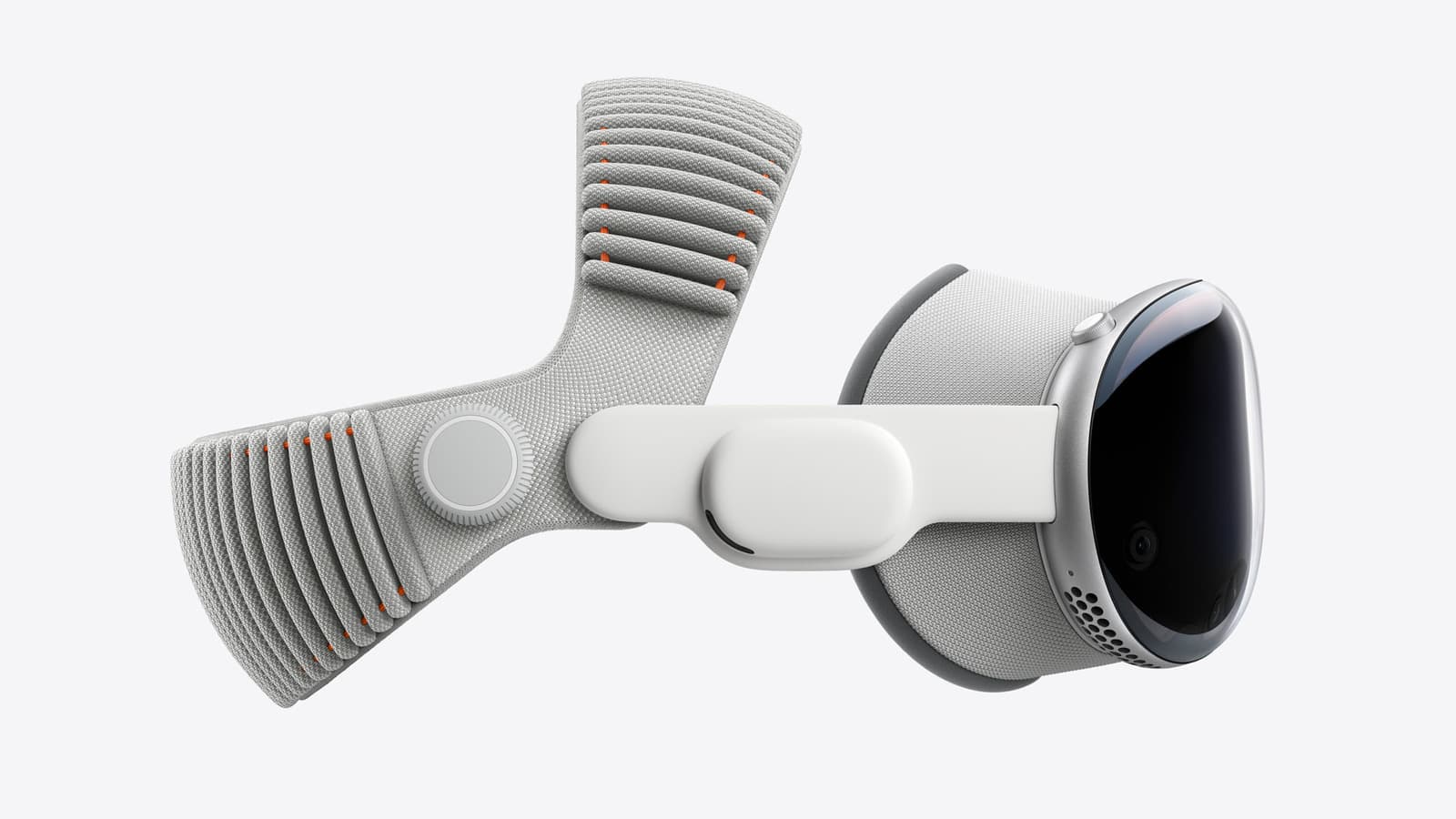
Apple's Vision Pro chief is reportedly leaving for OpenAI to start a hardware division.
Key Insights
10 editorial insights.
The departure of Apple's Vision Pro chief to OpenAI is a significant shift, indicating OpenAI's intention to expand into hardware. This move not only highlights the competitive pressure on Apple in immersive technologies but also suggests a strategic pivot for OpenAI, which has primarily focused on software-driven AI solutions until now.
Key figures in this transition include Apple's Vision Pro head, who played a crucial role in developing Apple's ambitious mixed-reality headset. His expertise in hardware design and user experience will be invaluable for OpenAI, as they seek to integrate AI with tangible products, thus bridging the gap between software and hardware innovation.
This development is strategically important as it marks a convergence of AI and hardware, which has been a growing trend across the tech industry. Companies like Meta and Google have already been investing heavily in AI-integrated hardware, and OpenAI's entry could intensify competition, pushing the boundaries of what AI can achieve in consumer products.
For Apple, losing a top executive from the Vision Pro team could delay product development and diminish the innovation potential of their mixed-reality offerings. For OpenAI, this hire could catalyze new product lines, potentially enhancing their market share in the AI hardware segment, which is projected to grow significantly in the coming years.
This move reflects a broader trend in tech where companies are increasingly melding AI capabilities with hardware solutions. Over the past 12-24 months, we have seen significant investments by firms like Nvidia and Intel in AI-driven hardware, suggesting a market shift towards creating more integrated systems that leverage both hardware and AI seamlessly.
The global AI hardware market was valued at approximately $10 billion in 2022, with a projected CAGR of around 30% through 2030. OpenAI's venture into this space could not only capture a share of this burgeoning market but also redefine the competitive landscape, particularly against established players like Nvidia.
Key challenges include the potential difficulty in aligning OpenAI's software-centric focus with hardware development. Questions remain about whether OpenAI can effectively translate its AI capabilities into compelling hardware products and whether it can compete against established hardware firms with significant market experience.
Competitors like Apple, Google, and Meta are likely to respond by accelerating their own hardware innovations and AI integrations. This could manifest in increased R&D spending and strategic partnerships aimed at fortifying their positions in the rapidly evolving hardware space, particularly in areas like mixed reality and AI-driven devices.
In the next 6-12 months, milestones to watch include OpenAI's announcements regarding new hardware developments and any subsequent partnerships with manufacturers. Regulatory scrutiny on AI usage in hardware, particularly regarding privacy and ethical implications, will also be critical to monitor as these products develop.
For technology professionals and investors, this shift signifies a crucial juncture where AI and hardware convergence could unlock new revenue streams. Understanding the implications of this move will be essential for navigating future investments and innovations in the tech landscape, particularly as the demand for integrated AI solutions continues to rise.
The departure of Apple Vision Pro's chief to OpenAI marks a significant shift in the tech landscape, signaling OpenAI's ambitions to expand into hardware. This move is crucial as it highlights the growing intersection of artificial intelligence and hardware development, a trend that could redefine user experiences in technology.
Apple's Vision Pro, a cutting-edge augmented reality headset, utilizes an array of advanced technologies, including high-resolution micro-OLED displays, bespoke processors, and sophisticated spatial audio systems. This technical prowess sets the device apart in the competitive AR landscape. The former chief's expertise in integrating AI with hardware will be pivotal for OpenAI as they explore new frontiers in creating smart, responsive devices that leverage their AI models for enhanced user interaction.
The tech industry is currently witnessing a surge in AI-driven hardware solutions, with major players like Meta and Google also exploring similar paths. OpenAI's pivot towards hardware is a strategic move to stay competitive in a market where AI integration has become critical. As AI continues to influence product development, the demand for innovative hardware capable of harnessing these advancements will likely grow, shaping the future of consumer electronics.
In the Indian tech ecosystem, this transition could catalyze growth among local startups focusing on AI and hardware integration. Companies like Zebra Medical Vision and Niramai are already leveraging AI to create innovative solutions. As OpenAI forges ahead, Indian developers could find new opportunities to collaborate on AI-driven hardware projects, enhancing India's position in the global tech arena.
Key Highlights
- OpenAI expands its team with a key Apple executive
- Expertise in augmented reality and AI integration
- AI hardware market projected to grow by 30% annually
- Startups leveraging AI will benefit from new hardware trends
- Expect product announcements within the next 12 months
Real-World Impact
Immediate effects include shifts in roles within AI-driven hardware companies, particularly in R&D and product development. Startups and established firms focusing on AI integration in hardware will feel the impact, as they may need to adapt their strategies to keep pace with advancements driven by OpenAI's new initiatives.
Why This Matters
This move signifies a broader trend of convergence between AI and hardware, prompting CTOs and developers to rethink their product strategies. The integration of AI into hardware not only enhances functionality but also transforms user experiences, making it essential for tech leaders to pivot towards more integrated development approaches.
As OpenAI embarks on this hardware journey, one key area to watch will be how they leverage their AI capabilities to create innovative products. This could lead to groundbreaking advancements that redefine user interaction across various sectors.
Multi-Source Intelligence
Editorial Summary
127wApple’s senior hardware lead for the Vision Pro headset, Mike Rockwell, has been recruited to head OpenAI’s burgeoning hardware division, a move announced in early June 2024. The transition brings a veteran of Apple’s high‑precision optics and silicon integration into a firm that is rapidly building its own AI‑accelerator chips to power next‑generation models. As OpenAI seeks to reduce reliance on external cloud providers, Rockwell’s expertise is expected to accelerate the design of custom processors and possibly inform a future consumer mixed‑reality device. The hiring occurs amid intensifying competition among tech giants—Meta, Microsoft, and Google—each racing to blend generative AI with immersive experiences. Analysts view the shift as a signal that OpenAI is positioning itself as both a software and hardware innovator in the AI‑AR convergence market.
Verified Common Facts
3 confirmedApple’s senior hardware leader for the Vision Pro, Mike Rockwell, has joined OpenAI’s hardware division.
The hiring was publicly announced in early June 2024.
The move is part of OpenAI’s strategy to develop its own AI accelerator chips and reduce reliance on third‑party cloud providers.
Unique Insights
Editorial analysisOne source suggests the hire could speed up OpenAI’s plans for a consumer mixed‑reality headset that integrates its generative models.
Another source notes that Rockwell’s presence may give OpenAI leverage in negotiating favorable terms with semiconductor foundries such as TSMC.
Perspectives & Nuances
Where viewpoints divergeSome outlets emphasize that Rockwell’s role is primarily to advance AI inference hardware, while others argue his main task will be to improve AR display technology for future OpenAI devices.
Sources diverge on the expected timeline for OpenAI’s hardware releases, with estimates ranging from late‑2025 to early‑2026.
Editorial Conclusion
The convergence of generative AI and immersive reality is moving from speculative research to concrete product roadmaps, and OpenAI’s recruitment of Apple’s Vision Pro hardware chief underscores that shift. By importing Apple‑grade expertise in optical engineering, thermal management and system‑level silicon integration, OpenAI can shorten the development cycle of its own custom AI chips and lay the groundwork for a consumer‑facing headset that rivals Apple’s offering. In the broader industry, this signals a blurring of lines between pure‑software AI firms and traditional hardware powerhouses, accelerating a race that will likely see at least three major AI‑centric AR devices launched by 2026. For India, the development opens opportunities for local chip design houses and system‑integrators to supply components or design services to a nascent supply chain, while Indian talent can target roles in cross‑disciplinary teams. Tech professionals should therefore deepen their knowledge of both AI accelerator architectures and mixed‑reality ergonomics to stay relevant in the emerging AI‑hardware ecosystem.
Found this useful? Share it!

