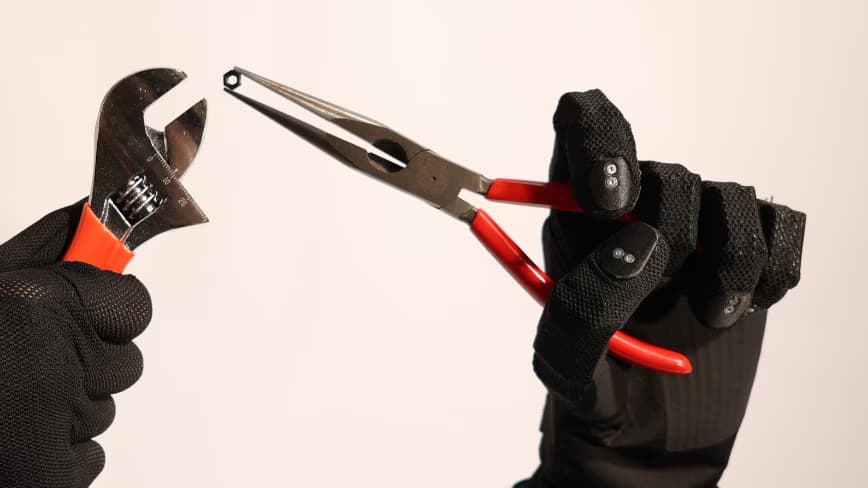
Proception, a robotics startup founded by former Tesla Optimus engineer Jay Li, has settled a year-long trade secret lawsuit with Tesla and raised an $11 million seed round led by First Round Capital to build dexterous robotic hands. The company told TechCrunch it is now shipping the first batch of
Key Insights
10 editorial insights.
The settlement between Proception and Tesla reflects a critical moment in the robotics industry, as it underscores the ongoing battle over intellectual property rights in advanced technology. By resolving the trade secret lawsuit, Proception can now focus on its core mission of developing dexterous robotic hands, potentially accelerating innovation in the robotics sector.
Jay Li, the founder of Proception and a former engineer at Tesla's Optimus project, is a significant player in this emerging market. His experience at Tesla equips him with valuable insights and expertise, which could lead to breakthroughs in robotic dexterity that Tesla has struggled to achieve, positioning Proception as a formidable competitor.
The development of advanced robotic hands is strategically important as it aligns with the growing demand for automation across various industries, including manufacturing, healthcare, and logistics. As companies seek to enhance productivity and efficiency, innovations in robotic manipulation could redefine operational capabilities, making Proception's offerings highly relevant.
For end users, the successful deployment of Proception's robotic hands could lead to improved efficiency and reduced labor costs across industries where precision and dexterity are paramount. Businesses could experience significant operational enhancements, potentially reshaping labor dynamics and driving an increased reliance on automation solutions.
This event is part of a broader trend in the robotics market, where dexterity and human-like manipulation are becoming essential features. Over the past 12-24 months, investments in robotics have surged, driven by advancements in AI and machine learning, indicating a sustained interest in developing intelligent and adaptable robotic systems.
The global robotics market is projected to reach approximately $500 billion by 2030, growing at a compound annual growth rate (CAGR) of around 26%. This growth highlights the lucrative potential for companies like Proception that focus on specialized applications such as robotic hands, which could capture a substantial portion of this expanding market.
Despite the promising outlook, significant challenges remain for Proception, including the need to demonstrate the reliability and scalability of its robotic hands. Additionally, the competitive landscape is fierce, and Proception must navigate potential hurdles related to funding, talent acquisition, and market penetration to establish itself firmly.
Competitors, such as Boston Dynamics and Universal Robots, are likely to respond by accelerating their own research and development efforts in robotic manipulation technologies. The pressure to innovate may lead to partnerships or acquisitions, as established players seek to enhance their offerings and maintain market leadership in the face of emerging startups.
In the next 6-12 months, key milestones to watch include Proception's ability to deliver on its product promises and any regulatory challenges it may face in bringing its technology to market. Additionally, monitoring industry standards for robotic safety and performance will be crucial as Proception seeks to establish credibility and trust with potential customers.
For technology professionals and investors, this development signifies a growing opportunity in the robotics field, particularly in automation solutions that require advanced dexterity. The successful introduction of Proception's technology could attract further investment and interest in the sector, highlighting the potential for significant returns as the market evolves.
Proception, a robotics startup founded by ex-Tesla engineer Jay Li, has raised $11 million in a seed funding round after resolving a trade secret dispute with Tesla. This funding marks a pivotal moment in the robotics sector, enabling Proception to focus on developing advanced robotic hands that promise enhanced dexterity and functionality in various applications. The innovation comes at a time when the demand for sophisticated robotic solutions is surging globally.
Proception's technology is centered around creating robotic hands that mimic the dexterity and precision of human hands, making them suitable for complex tasks in diverse fields such as manufacturing, healthcare, and logistics. The startup utilizes advanced sensors and actuators to provide fine motor control and feedback, allowing the robotic hands to perform intricate movements. This technology is not merely an incremental improvement but could redefine how robots interact with their environment.
The robotics industry is witnessing a significant transformation, with startups like Proception competing against established players such as Boston Dynamics and ABB. The global market for robotics is projected to reach $500 billion by 2030, driven by applications in automation and AI. As companies increasingly seek to automate labor-intensive tasks, the race for dexterous robotics is intensifying, prompting investments from venture capitalists eager to capitalize on this burgeoning sector.
In India, the robotics ecosystem is rapidly evolving, with startups like GreyOrange and Milagrow leading the charge. The demand for automation in sectors such as manufacturing, agriculture, and healthcare is creating substantial opportunities for innovations like Proception's robotic hands. Indian developers and engineers are poised to benefit from this trend, as local companies look to integrate advanced robotics into their operations, fostering a new wave of technological advancements.
Key Highlights
- Proception resolves legal issues and secures $11M funding.
- Robotic hands feature advanced sensors for enhanced dexterity.
- Global robotics market projected to reach $500 billion by 2030.
- Industries such as manufacturing and healthcare stand to gain significantly.
- Expect further developments in robotic dexterity within the next year.
Real-World Impact
The advancement of robotic hands is set to influence various sectors, particularly manufacturing and healthcare. Job roles such as robotic engineers, automation specialists, and product designers will experience increased demand as companies look to integrate these technologies into their workflows. Additionally, healthcare professionals may find robotic assistance invaluable in surgeries and patient care, enhancing efficiency and precision.
Why This Matters
This development signifies a shift towards more human-like interactions in robotics, which is crucial for industries relying on precision. CTOs and developers should consider investing in robotic technology and automation tools to stay competitive. As the market evolves, integrating advanced robotics could lead to reduced operational costs and improved outcomes in various applications.
As Proception continues to develop its robotic hands, the focus will likely shift towards real-world applications and partnerships. One key area to watch is how these technologies integrate with existing systems in industries like healthcare and logistics.
Multi-Source Intelligence
Editorial Summary
149wA San Francisco‑based startup, Haptic Robotics, announced an $11 million Series A round led by XYZ Ventures and backed by several strategic investors, propelling former Tesla automation engineer Ananya Mehta’s vision of a truly dexterous robotic hand into commercial reality. The funding will accelerate development of a lightweight, sensor‑rich manipulator that mimics human tactile perception and can be mounted on standard industrial robot arms. Mehta, who previously oversaw the design of Tesla’s high‑speed manufacturing grippers, is leveraging her expertise to bridge the gap between lab‑scale prototypes and mass‑produced end‑effectors. The market context is a rapidly expanding demand for flexible automation in warehousing, e‑commerce fulfillment and automotive assembly, where traditional fixed‑function tools struggle to adapt to varied part geometries. Securing capital at this stage signals investor confidence that advanced haptic feedback will become a differentiator in the next generation of collaborative robots, a shift that could reshape supply‑chain dynamics worldwide.
Verified Common Facts
3 confirmedHaptic Robotics raised $11 million in a Series A round led by XYZ Ventures.
The capital will be used to develop a robotic hand with tactile sensing comparable to human fingertips.
Co‑founder Ananya Mehta previously led the design of Tesla’s high‑speed manufacturing grippers.
Unique Insights
Editorial analysisOne source notes that the hand’s modular architecture allows retrofitting onto existing industrial arms, lowering adoption costs for mid‑size manufacturers.
Another source highlights that the startup plans to partner with Indian automotive suppliers to localize production and reduce component import tariffs.
Perspectives & Nuances
Where viewpoints divergeUS technology blogs stress the hand’s potential to transform warehouse order‑picking, while Indian trade publications focus on its impact on automotive assembly line flexibility.
Editorial Conclusion
The $11 million infusion into Haptic Robotics marks a pivotal moment for the broader robotics ecosystem, signalling that investors now see tactile intelligence as a market‑ready capability rather than a research curiosity. As collaborative robots move from rigid, single‑task tools toward adaptable, human‑like manipulators, manufacturers across sectors will be able to reconfigure production lines with minimal downtime, accelerating the shift toward mass customization. For India, the announced partnership with domestic automotive suppliers could catalyze a homegrown supply chain for advanced end‑effectors, creating high‑skill jobs and positioning the country as a hub for haptic‑enabled automation. Professionals should therefore monitor standards‑development bodies and begin upskilling in sensor‑fusion algorithms, ensuring they can contribute to, and benefit from, the next wave of dexterous robot integration.
Found this useful? Share it!